
If you’re staring down a surprise mouth swab test for a new job or a random check, the online noise about miracle cures is deafening. This review cuts straight to it. We’re putting Clear Choice Oral Clear Gum saliva neutralizing gum under the microscope.
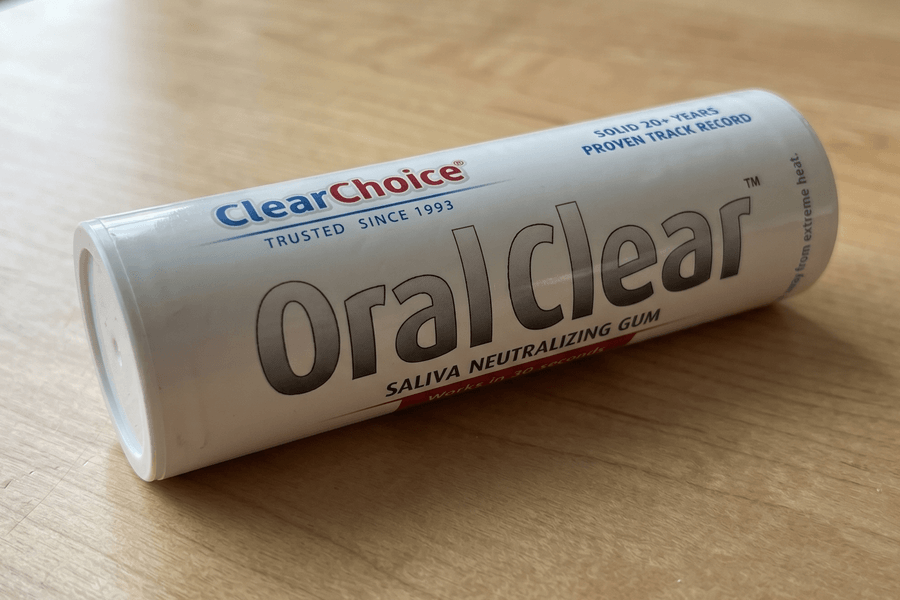
Is it a legitimate tool or just expensive hype? Forget the myths. This is a no-nonsense evaluation built for the heavy smoker who needs real answers, not a sales pitch. We’ll break down what this oral clear gum detox product actually is, who it might help, and the critical variables the ads won’t tell you. Let’s separate the facts from the fiction.
Myth #1: Oral Clear Gum Is Just Like Regular Chewing Gum
Let’s get one thing straight right out of the gate: thinking Oral Clear Gum is just a stick of Wrigley’s is the first and biggest mistake folks make. That’s Myth #1. This isn’t about freshening your breath for a date. Oral Clear Gum is a specialized, single-use product designed for a single, high-stakes purpose: to temporarily neutralize the toxins in your saliva right before a mouth swab drug test. It’s a tool in the toolbox for how to pass a mouth swab test for THC, but it’s in a completely different category than what you’d grab at a gas station.
Here’s the critical difference in the scenario. Regular chewing gum is a salivary stimulant. When you chew it, you mechanically increase your saliva flow rate—that’s just a fact. The science shows stimulated saliva can flow at about 1.8 to 2.0 milliliters per minute, compared to a trickle when your mouth is idle. This increased flow can dilute the concentration of drug residues sitting in your oral cavity. Think of it like running water over a dirty dish; you’re washing some of the grime away, but you’re not chemically breaking it down.
Oral Clear Gum claims to work on a different variable. It’s not just stimulating spit. The product consists of a piece of gum with an inner liquid-filled capsule. When you bite down, that capsule bursts, releasing a proprietary blend that’s supposed to coat your mouth and neutralize the toxins on contact. The manufacturer markets it as a masking agent, not a true detox. The key distinction here is the mechanism: one is about dilution through increased flow, the other is about chemical neutralization through a released agent.
Now, a major caveat for your estimate: this product is not an FDA-approved medication. It’s sold as a consumer oral product. To this date, there are no peer-reviewed clinical trials that confirm its neutralization claims for specific drug metabolites like THC. The exact active ingredients in that liquid capsule are part of a proprietary blend that isn’t fully disclosed, which is a variable that should give any stickler for details pause. So, while it’s fundamentally different from a stick of Juicy Fruit, understanding how it’s different is the first step in forming a realistic expectation.
How Oral Clear Gum Works: Separating Science from Speculation
So what’s the science behind the claim? The company’s scenario is this: you bite down on the gum, it releases a proprietary liquid blend, and this blend coats your oral tissues to “neutralize” drug metabolites for a window of about 30 minutes. The marketing points to ingredients like a hydrogen peroxide derivative (perhydrol), BHT, and citric acid as the active agents adjusting the mouth’s environment to inactivate toxins.
Now, let’s separate that speculation from established pharmacology. The actual clearance of drugs from saliva is a two-phase process. There’s a rapid initial phase, driven by high saliva flow and mechanical rinsing, which can clear loose oral residue—think leftover smoke particles from a recent session. Then there’s a slower phase dealing with drugs that have already diffused into saliva from your bloodstream or bound to oral tissues.
Here’s the variable that complicates the “neutralization” story: drugs enter saliva through different mechanisms. THC, for example, shows up in high initial concentrations primarily from oral contamination after smoking, not from efficient excretion from the blood. Stimulating saliva flow with any sour candy or regular gum can temporarily dilute those loose residues and increase the flow rate. This can, in theory, lower concentrations of some drugs temporarily through a general dilution effect and pH changes. The company’s citric acid component would do this, stimulating flow and potentially altering pH.
But my best estimate, based on the pharmacology, is that this is where the mechanism likely hits its limit. Chewing gum stimulates saliva, it doesn’t perform a targeted chemical neutralization. Rinsing or stimulation clears the surface, but it doesn’t remove drugs already absorbed into oral tissues or those continuously re-entering saliva from your plasma. Concentrations can rebound quickly once the stimulation stops. Furthermore, modern lab tests are sticklers for sample integrity. A sudden, drastic change in pH or the presence of unusual chemicals can flag a sample as adulterated or tampered with, leading to an invalid result or a retest under stricter observation. So, while the gum might create a temporary dilution scenario, the claim of a proprietary neutralization that reliably beats a lab’s cutoff remains an unverified variable.
Myth #2: One Chew Does Not Guarantee Passing Any Test
Let’s get one thing straight right away: the idea that chewing one piece of Oral Clear Gum is a magic bullet that guarantees you’ll pass any saliva test is a dangerous myth. It’s the kind of oversimplification that gets folks into trouble, especially when the stakes are a job or passing a drug screen for probation. The reality is, outcomes depend on a handful of critical variables, and ignoring them is like walking into a test blind.
Think of it as a scenario with moving parts. The gum’s claimed effect has a short operational window—manufacturer estimates suggest a minimum of 30 minutes, with peak performance in the first 10. If your test gets delayed, or you chew it too early, that window closes. But timing is just one variable. Your individual physiology is another major player. Your saliva flow rate, which is influenced by your hydration, age, and even medications, directly impacts how quickly drug residues are naturally cleared from your mouth. If you’re dehydrated, that clearance slows down dramatically, potentially working against the gum’s temporary dilution effect.
Then you have the specific test itself. An instant, on-site swab with a standard cutoff level is a very different scenario than a sample packaged and sent to a lab for confirmation via gas chromatography-mass spectrometry (GC-MS). The latter is a stickler for detail; it can detect metabolites in diluted samples and may flag a sudden, unnatural change in your saliva’s chemistry as tampering. No independent lab tests verify the gum can reliably get drug levels below these strict analytical cutoffs.
Finally, your own consumption pattern is a massive factor. A light, occasional user has a completely different contamination profile than someone who smokes concentrates daily. For heavy users, drug residues can be bound to oral tissues or continuously secreted from plasma into saliva, creating a persistent source that can overwhelm a short-term masking agent.
So, when you see a success story online, it’s fair to wonder about the full context: What was the test type? How long had they abstained? Were they a light or heavy user? This isn’t about dismissing those experiences, but about understanding that the gum’s effectiveness is not a fixed property—it’s an estimate that interacts with all these other variables. This honest assessment of limitations naturally leads us to ask: okay, so what do real people report when all these factors are in play?
Oral Clear Gum Reviews: Real-World User Experiences
So you’re digging through the internet, typing in “oral clear gum reviews,” trying to find the real scoop. You’re right to be skeptical. A lot of what you’ll find feels like a sales pitch or a single, lucky success story. Let’s cut through that. Based on a wide scan of community feedback—from forums to review sites—a clear pattern emerges. It’s not a simple “works” or “doesn’t work” scenario. The outcomes people report are heavily tied to the specific variables we’ve been discussing.
Here’s the breakdown of what real users are saying.
Reported Success Scenarios
When the gum works, users consistently point to a few key factors aligning. The most common success stories come from people who:
- Combined the gum with a short period of abstinence (even just 24-48 hours) and meticulous oral hygiene beforehand.
- Faced an instant, on-site mouth swab test rather than one sent to a lab.
- Managed the timing perfectly, using the gum within its 30-minute effective window right before the swab was collected.
- Were light or moderate users, not daily, heavy consumers of high-potency concentrates.
The feedback here often highlights the product’s value as a discreet, last-minute tool. People appreciate the 30-second activation and the ability to use it in a car minutes before walking in.
Reported Failure Patterns
The failure stories, however, are just as instructive. They often involve:
- Testing delays: The single biggest complaint. If you’re stuck in a waiting room for 45 minutes, the consensus is that the effects wear off.
- Heavy, chronic use: Multiple users who smoke daily, especially wax or dabs, report failures even when they followed the instructions. The theory is their saliva metabolite levels are just too high for the temporary neutralization.
- Lab-based tests: There’s significant anxiety and some confirmed failures when the swab is sent to a laboratory for analysis. The fear is that these labs use more sensitive equipment (lower cutoff levels) that can detect trace amounts the gum might miss.
- Simple user error: Eating a mint, drinking coffee, or even nervousness causing excessive saliva flow after using the gum are all cited as reasons for failure.
The Unpleasant Realities
Beyond pass/fail, users consistently mention two drawbacks: the taste is often described as “chemical” or unpleasant, and some report mild mouth irritation, likely from the active ingredients. There’s also the constant stress of using it discreetly if an observer is strict.
The core takeaway from the community is this: Oral Clear Gum is viewed as a high-risk, high-cost tool that can provide a slight advantage under ideal conditions, not a guaranteed loophole. The high price point ($90-$124 for a single use) is a major point of criticism, especially for someone unemployed.
This honest look at the mixed results naturally leads to the next critical question: if the margin for error is this thin, what is the exact procedure you need to follow to even have a chance? Let’s get into the protocol.
Myth #3: Oral Clear Gum Is Not Foolproof Without Instructions
Alright, let’s get into the nuts and bolts. The biggest myth out there is that you can just pop this gum in your mouth, chew for a minute, and walk in feeling confident. That is a scenario for a failed test. This is not a simple, foolproof “chew and pass” solution. Its effectiveness is almost entirely dependent on precise adherence to a specific protocol. If you deviate, you risk wasting your money and failing. Let’s break down the procedure.
The 48-Hour Foundation
This is the first and most critical variable. For the gum to have a fighting chance, you need to stop putting new metabolites into your system. That means a strict 48-hour abstinence from all toxins and unnecessary medications before your test. I know, for a heavy, daily user, that sounds like a lifetime. But this step optimizes everything that follows. Think of it like trying to clean a dirty fish tank; you have to stop adding new dirt first.
The Final Hour: Precision Under Pressure
From there, the protocol gets very specific. About an hour before your test, you need to create a clean oral surface. That means a thorough brushing and flossing—get all the nooks and crannies. Then, in the final 10 to 30 minutes before you walk in, you cannot eat, drink, or smoke anything. This prevents sample dilution and fresh contamination. This is where you have to be a stickler for the rules.
Activation: The 30-Second Swish
When it’s time, you take out the gum capsule. Seal your lips tight before you bite down—you don’t want to spill a drop of that neutralizing liquid. Once you bite and puncture the inner capsule, you have to work fast. Use your tongue to aggressively swish that fluid over every single surface: your cheeks, gums, the roof of your mouth, under the tongue, and along the gumline. You need to do this for a solid 30 to 60 seconds. Incomplete coverage means an incomplete result.
The Critical 30-Minute Window
Here’s the estimate on timing. The “clear” window starts about 30 seconds after you activate the gum. That window lasts for a maximum of 30 minutes, with the absolute best results happening in the first 10 minutes. During this entire half-hour, you cannot swallow the gum or the liquid, and you absolutely cannot eat or drink anything. A sip of water can wash away that protective coating you just worked to apply. For a lab-based test, where they’re looking for nanograms per milliliter, this precision is what might—might—give you a slight advantage. Following these steps doesn’t guarantee anything, but it does mean you’re using the tool exactly as it was designed. That careful approach naturally leads to the next question: with all these chemicals swishing around, is this even safe to do?
15-Minute Pre-Test Checklist for Oral Clear Gum Use
Alright, so you’ve got the gum, you’ve read the instructions, and now the test is in 15 minutes. This is the moment where all the theory has to become action. Think of this like a pre-flight checklist for a pilot. Every single item matters because there’s no going back once you’re in the air—or in this case, once that swab touches your tongue. Let’s walk through it, step by step.
1. The “Clean Window” Confirmation
First things first: check the clock. You need to confirm that you have not eaten or drunk anything—no food, no coffee, no water, nothing—for at least the last 15 minutes. This isn’t a suggestion; it’s a hard rule. Eating or drinking stimulates your saliva production, which is the exact opposite of what you want. All that extra flow can wash away the neutralizing agents from the gum before the swab even happens. Double-check this. If you had a sip of water 10 minutes ago, you’re already behind.
2. The Gum Activation and Full-Coverage Swish
Okay, it’s time. Take the gum out, bite down firmly to burst that inner capsule. Keep your lips sealed tight so you don’t lose any of that liquid. Now, use your tongue as a squeegee. You have to swish that liquid over every single surface in your mouth: the insides of your cheeks, your gums, the roof of your mouth, and critically, under your tongue. Don’t just move it around; actively try to coat everything for a solid 30 seconds. Incomplete coverage is a common point of failure. The goal is a complete, even layer.
3. The Hold and the “No Swallow” Rule
After the swish, you need to hold all that liquid and gum residue in your mouth. Do not swallow any of it. The instructions are clear on this. You’re creating a temporary environment in your mouth, and swallowing disrupts it. Let it sit there and do its job. The manufacturer says the window is 30 minutes, but the peak effect is estimated to be in the first 10 minutes after you activate it. So, if your test is in 15 minutes, you’re in the optimal zone.
4. The Mirror Check for Blue Tint (If Possible)
If you can discreetly check your mouth in a car mirror or a bathroom, do it. Look for a slight blue tint on your tongue or the inside of your cheeks. This is a physical indicator that the liquid from the capsule has been distributed. Seeing it doesn’t guarantee a pass, but not seeing it might mean you missed a spot or didn’t swish effectively. It’s a quick visual confirmation that the process has physically occurred.
5. The Anxiety Breath and Dry Mouth Check
Your nerves are your enemy right now. Stress can mess with your salivary flow and pH. Take a slow, deep breath in through your nose for four counts, hold it for four, and exhale slowly through your mouth for four. Do this two or three times. You need to calm your system. At the same time, pay attention to your mouth. If it feels bone-dry, that’s a problem. The test collector needs a moist swab to get a sample. If you have “cottonmouth” from anxiety, try gently pressing your tongue to the roof of your mouth to stimulate a little natural moisture, but do not drink water.
6. The Final Audit: What Did You Consume Today?
Quick mental scan. Did you have any acidic or carbonated drinks in the last hour, like a soda or an energy drink? These can temporarily alter your mouth’s pH and potentially interfere. If you did, note it—it’s a variable you can’t change now. Also, confirm you haven’t used any other toxins or unnecessary medications in the last 48 hours, as the manufacturer recommends that “optimization window.” This is about knowing your scenario.
7. Timing and Wrapper Disposal
Confirm the test is happening within the next 15-30 minutes. If there’s a delay beyond that half-hour window, the effectiveness is estimated to drop significantly. Finally, put the used gum wrapper in your pocket. You’ll need it to discreetly dispose of the gum later. Do not throw it away in the testing center’s trash.
This checklist is about controlling the variables you can control. You’re following the protocol precisely to create the best possible scenario for yourself. Is it a guarantee? No. There are too many individual variables for any guarantee. But if you’re going to use this tool, this is how you use it exactly as designed. All right, you’re as ready as you can be. Now, walk in there.
Safety and Side Effects: Who Should Be Cautious with Oral Clear Gum
But what about the risks? You’re putting something in your mouth right before a high-stakes test. The last thing you need is to cause yourself pain or a new problem. Let’s break down the safety profile, because this isn’t for everyone.
Who Should Avoid This Gum Entirely
First, the absolute contraindications. If you have Phenylketonuria (PKU), you cannot use this. It contains aspartame, which has phenylalanine—a serious issue for folks with PKU. If you have a soy allergy, stay away; it uses soy lecithin. The manufacturer also states that if you’re pregnant or breastfeeding, you should talk to a doctor first because there’s no safety data. That’s a hard stop.
Potential Side Effects and Oral Irritation
Now, for the reported side effects. The active ingredients, like perhydrol (a peroxide derivative), can cause burning, numbness, or general irritation in your mouth. If you already have sensitive gums, this could be uncomfortable. The citric acid and pH adjusters can also irritate compromised tissue. Some users report mild digestive upset—gas or diarrhea—likely from sugar alcohols in the formula. The taste is often described as unpleasant or medicinal.
High-Risk Oral Conditions
This is critical. If you have mouth sores, canker sores, ulcers, or bleeding gums, do not use this gum. The chemicals will aggravate those conditions painfully. Be cautious if you have gingivitis, periodontal disease, or recent dental work. Conditions like severe gum disease or xerostomia (dry mouth) change your saliva’s chemistry and may increase irritation, making the whole process riskier and less predictable.
The Unknowns and Usage Warnings
Remember, the “active neutralizing agents” are proprietary. We don’t know their full safety profile. The manufacturer advises using it no more than twice a month to limit irritation risk. It is not FDA-approved, and long-term data doesn’t exist. If the capsule looks damaged or is expired, toss it. Compromised product is an unknown variable you don’t want.
The bottom line: this is a tool with a specific risk profile. For a healthy mouth, the side effects are often temporary irritation. But if you fall into any of the caution categories, the risk of pain or a complicating reaction likely outweighs the potential benefit. Your safety comes first. All right, with that understood, let’s look at whether the cost makes sense for your scenario.
Is Oral Clear Gum Worth the Cost? Comparing Alternatives
So, is it worth the money? Let’s break down the scenario. You’re looking at a price tag of $90 to $125 for a single-use capsule. That’s the core variable here. For someone who’s currently between paychecks or watching every dollar, that’s a significant chunk of change. The question becomes: does the convenience and potential reliability of Oral Clear Gum justify that cost versus the free or cheap methods you might already be trying?
Let’s compare the options. First, the DIY or “broke” methods. Things like rigorous mouthwash, hydrogen peroxide rinses, or intense brushing cost next to nothing. Their mechanism is mostly mechanical—they aim to physically flush or scrub metabolites from your mouth’s surfaces. The estimate from studies is that this can produce a significant immediate reduction in concentration. The major caveat, and this is a big one, is the timeline. The effect is extremely short-lived, often just a few minutes, before metabolites from your saliva and oral tissues re-equilibrate back into your mouth. If your test is delayed or you miscalculate the window, the risk of failure rises quickly. There’s also the physical risk of chemical irritation or burns from overdoing it with peroxide.
Now, the other commercial detox mouthwashes and gums. Products like Toxin Rid Rescue Wash or Kleaner typically run from $15 to $35 a bottle, which is a fraction of the cost. A bottle might even last for multiple uses. The trade-off is in the protocol and discretion. You need to swish about a third of the bottle for three minutes and then find a place to spit it out—that’s a harder maneuver to pull off discreetly in a car or a bathroom right before a supervised test. There’s also a critical reliability question: at least one clinical study on a product like Kleaner showed it had no substantial effect on THC concentrations in chronic users. Other detox gums, like Drug Smart, often require you to have been abstinent for 24 to 38 hours to hit their claimed success rates, which defeats the purpose for a last-minute scenario. While these options target the mouth, those looking for a full-body cleanse might want to research the best detox for weed options.
So, where does Oral Clear Gum fit? You’re paying a premium for a specific set of features: speed, portability, and stealth. It’s designed to work in 30 seconds, not minutes. It’s a single piece of gum, not a bottle you have to hide. In a scenario where you’re about to walk into a testing facility and need to act immediately without suspicion, that format has a distinct advantage. The cost isn’t for a better cleaning agent; it’s for the convenience of the delivery system in a high-pressure, time-sensitive situation.
For the “broke” audience, the calculation is stark. If you have the time and privacy to execute a DIY method perfectly and the test is unsupervised and happens within minutes of your prep, the free method might be your best estimate. But if there’s any uncertainty about timing, supervision, or if you’re a heavy, daily user where the stakes are highest, the gum’s premium is essentially an insurance payment. It’s buying a tool engineered for the exact scenario of a last-minute, supervised test. It doesn’t guarantee success—nothing can—but it’s built to mitigate the specific variables of convenience and timing that cause free methods to fail. The decision hinges on how much you value reducing those particular risks for your specific test.
Where to Buy Oral Clear Gum Safely: Avoiding Scams
Alright, let’s talk about where to actually get this stuff without getting ripped off. This is a major pain point because the market is flooded with fakes and marked-up garbage. Your first and best estimate is to go directly to the source.
The primary verified purchase locations are the official manufacturer’s website or a handful of authorized resellers. I can’t stress this enough: this product is not on Amazon, Walmart, or Walgreens. If you see it there, it’s almost certainly a counterfeit or someone reselling it at a massive markup. Legitimate shipments typically come from warehouses in New York or Nevada.
So, how do you spot a scam? Here are the variables to check:
- The Price is a Dead Giveaway. The standard market rate for a genuine, single-use unit is between $90 and $124. If you see a site offering it for $50 or $60, that’s a massive red flag. It’s likely a cheap imitation that won’t work when you need it to.
- Check the Packaging Details. When your package arrives, inspect it. Authentic product has a strong, secure seal. The package should contain exactly one gum capsule in a tube with wrapping. It must have a clear expiration date, guaranteeing at least a six-month shelf life. Weak seals, missing components, or no expiration date mean you got a fake.
- Look for Official Instructions. A genuine unit includes a specific instructions PDF for proper use. No instructions? Question the source.
A practical tip: before you order, check the website for a verifiable customer service contact—a real email or phone number. Shady sites often hide this information. Remember, all sales are final for this product, so there’s no money-back guarantee if you buy a dud. Your best estimate for a safe purchase is sticking to the known, official channels, even if the price stings a bit. It’s the only way to control the variable of getting a product that actually has a chance of working.
Strategies for Heavy Smokers: Beyond Oral Clear Gum Myths
Alright, let’s talk directly to the folks in the stoner nation who are hitting the wax pen all day, every day. If you’re a heavy, chronic user—especially of concentrates—you’re playing the game on the hardest difficulty. Your challenge is unique because you’re not just dealing with metabolites circulating in your blood; you’re dealing with direct physical contamination. When you inhale, THC and other residues physically deposit in your mouth, throat, and lungs. This isn’t just about what’s in your saliva from your bloodstream; it’s about the gunk stuck to your tissues.
Here’s my best estimate for a multi-faceted strategy, because relying on any single product alone is a risky scenario for a heavy user.
First, and this is the variable most people want to ignore: the tolerance break. I know, I know. But the science is clear on clearance. The initial, massive drop in detectable residue happens fast—within minutes—after your last exposure. But after that, clearance slows dramatically. For a heavy user, even a 48-hour break before your test is a non-negotiable foundation. It allows your body’s natural saliva flow to start flushing out the deeply embedded residues. This is your single biggest lever to pull. If you have more time, even better. The goal is to stop adding new contamination so your mouth can begin to clean itself. For a deeper dive on the natural clearance timelines you’re working against, you can check out our guide on how long it takes to get weed out of your system.
Second, you need a rigorous oral hygiene protocol in the days leading up to the test. This isn’t about scrubbing your gums raw the night before—that can cause inflammation and trap more particles. This is about improving your mouth’s natural cleaning capacity over 2-3 days:
- Hydrate relentlessly. Dehydration crushes your saliva flow rate. A dry mouth is a contaminated mouth. Drink water constantly.
- Brush and floss meticulously, but gently. You’re trying to remove plaque and debris that can harbor drug residues. Poor oral hygiene is directly linked to prolonged detection times.
- Consider a therapeutic mouthwash (non-alcohol, as alcohol can dry you out) in the days prior to support gum health and flow.
Third, manage your expectations for a lab test. A lab uses lower cutoff levels and is looking for specific metabolites. A product like Oral Clear Gum gives you a temporary, 30-minute window by neutralizing the saliva in your mouth. For an instant test, that might be enough. For a lab, you’re hoping to get your sample below that strict cutoff during that window. It’s not a guarantee; it’s a calculated move that stacks the odds in your favor when combined with your break and hygiene.
The gum’s advantage is discretion—you can use it in a supervised setting without anyone knowing. But understand its limitation: it’s a temporary rinse, not a permanent cleanse. It doesn’t address the residues in your tissues that will re-equilibrate back into your saliva after that 30-minute window closes.
This is a battle of variables: your usage level, your time, your oral health, and the test’s sensitivity. The strategy isn’t about finding a magic bullet; it’s about controlling every variable you can.
Stoner Nation Tips: Community Lessons for Oral Clear Gum
All right, let’s get into the real-world, battle-tested stuff. This is where the “stoner nation” comes together—folks who’ve been in your exact shoes, sweating bullets in a parking lot, trying to remember the steps. These aren’t theories; they’re the hard lessons and specific hacks learned from the trenches. Think of this as your final pep talk from the collective.
Timing is Everything, and the Clock is Brutal
The single biggest variable you can control is when you use the gum. The community is unanimous on this: the effective window is shockingly short—about 30 minutes, give or take. That’s your entire mission window.
- The #1 Reported Cause of Failure: Waiting room delays. You chew it, you’re golden… then you sit for 45 minutes while the receptionist processes paperwork. By the time you’re called back, the neutralizing effect is fading. The protocol is a 30-second chew to activate it, then you’re on the clock.
- The “Don’t Be an Idiot” List: This is critical. Do not smoke, hit a dab pen, or eat an edible on the way to the test. I’m serious. Oral contamination from recent use can spike your saliva concentrations for a solid 1-2 hours after you dose. Using the gum right after smoking is like trying to put out a fire with a squirt gun while still pouring gasoline on it.
- The Post-Chew Rule: Once you’ve chewed that gum and swished the liquid around, do not eat or drink anything. That includes water, coffee, or a celebratory “I passed” soda. You’ll wash the neutralizing agent right out of your mouth and blow the whole thing.
Handling the Swab and Your Nerves
This is where anxiety becomes a physical enemy. Your nerves can work against you.
- The Moisture Check Dilemma: The collector needs a saturated swab. If you’re a heavy user, you might suffer from “cottonmouth” (xerostomia), which can make it hard to produce enough saliva. Ironically, chewing gum before the test can stimulate saliva flow 2- to 10-fold, which might help you pass the moisture check. But be warned: this increased flow can also potentially mobilize deeper, protein-bound residues. It’s a tightrope walk.
- Anxiety = Excessive Saliva: For others, anxiety does the opposite—it makes you salivate like crazy. This excess flow can dilute the neutralizer faster, potentially shortening your 30-minute window. Try to stay calm. Deep breaths in the car beforehand.
Hard Lessons and What to Avoid
These are the community’s scars, shared so you don’t repeat them.
- The Observation Problem: Some testing sites are strict. A collector watching you like a hawk can make discreet gum use impossible and might lead to accusations of tampering. Have a disposal plan for the wrapper and chewed gum.
- The Taste and Sensation: Be prepared. Multiple users report a strong, unpleasant chemical taste. Some mention mild mouth irritation or sensitivity. It’s not a pleasant chewing experience; it’s a medicinal one.
- Check the Expiration Date! This is a non-negotiable. Using expired gum is a verified, guaranteed path to failure. That $90 capsule is useless if it’s past its date. Check it when you buy it, and check it again the morning of your test.
- The Cost Reality Check: Let’s be blunt: at $90-$124 for a single-use product, this is a major investment for someone who’s broke and needs a job. The community criticism on cost is fierce. You are paying a premium for a specialized, time-sensitive tool.
These tips come from people who learned the hard way. They’ve controlled every variable they could, and now they’re passing that knowledge to you. Use it to stack the deck in your favor. With this ground-level intel in hand, we can finally pull everything together and answer the big question: is this gamble worth it for your specific scenario?
Final Verdict: Should You Trust Oral Clear Gum for Your Test?
So, is this gamble worth it for your specific scenario? Let’s pull the threads together. After busting the myths, the picture becomes clearer. This isn’t regular gum; it’s a single-use capsule of neutralizing liquid. It’s not a foolproof guarantee; its effectiveness is a moving target, influenced by your use patterns, oral hygiene, and the exact test protocol. And success is deeply context-dependent.
Here is the nuanced verdict. Oral Clear Gum can be a useful tool, but only within a very specific scenario and as part of a combined strategy. Its core value is its unique portability and discreet, 30-second activation. This makes it a potential last-resort option for an instant-test situation where you have literally minutes to prepare and no other choice. However, anecdotal reports from the community suggest it works best when paired with other actions—like a prior 48-hour abstinence period or a detox mouthwash—to create a layered defense.
For you, the heavy, daily user, facing a test that gets sent to a strict laboratory, this is not a magic bullet. The persistent THC metabolites lodged in your oral membranes and plaque can easily overwhelm its temporary, 30-minute masking window. The lack of any peer-reviewed clinical validation for its “neutralization” claim is a significant scientific caveat. Furthermore, the steep cost for a single-use item ($90-$124) demands a sober cost-benefit analysis against cheaper, multi-use detox mouthwashes.
My final recommendation is this: base your decision on the evidence, not on hype or desperation. Prioritize the foundational strategy of abstinence and rigorous oral hygiene first. View Oral Clear, if you choose to, as a potential supplemental tool for a very narrow, last-second situation—not as your primary plan. Your informed decision, weighing its high cost and lack of guarantees against its unique portability, is the only trustworthy path forward.
