
You’ve just landed the job interview. Or maybe it’s the final step for your CDL license, or a court date that decides custody. Everything hinges on one thing: passing a hair follicle test. And in that panic, one question screams louder than any other: does Zydot Ultra Clean work?
Here’s my best estimate, based on the variables involved: most people who fail a hair test don’t fail because the test is unbeatable. They fail because of a simple, avoidable mistake in their preparation.
They pick the wrong strategy for their situation, apply it incorrectly, or fall for bad information. This guide is built to walk you through those exact pitfalls. We’ll start with the most common error of all, the one that sets people up for failure before they even open a bottle.

Mistake #1: Assuming All Detox Shampoos Work Like Zydot Ultra Clean
The first mistake is the most foundational, and it happens before you even read the instructions: assuming that any shampoo labeled “detox” or “clean” will do the same job as Zydot Ultra Clean. This is a critical error in categorization. Let me be clear: most products in this space are simply cleansers. They might wash your hair, but they aren’t designed to perform a specific chemical intervention on the day of your test.
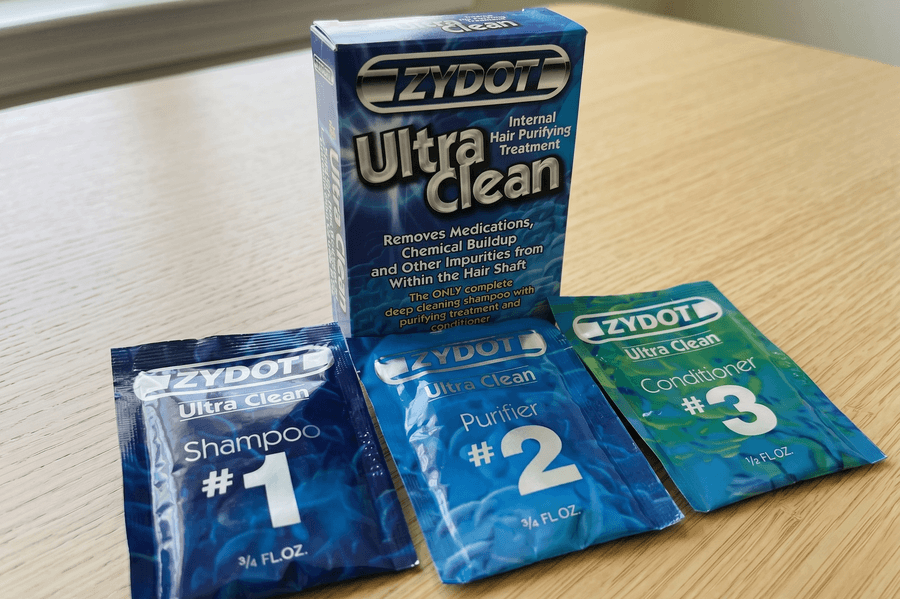
Zydot Ultra Clean is not a regular shampoo. It’s a two-step chemical treatment. You have to think of it differently. A regular shampoo, or even a one-step “detox” shampoo, primarily works on the surface—it cleans oils and dirt from the outside of the hair shaft. The problem is that drug metabolites aren’t sitting on the surface; they are locked inside the cortex of the hair, bound to the melanin. A simple wash won’t reach them.
This is where the chemical treatment protocol of Zydot comes in. It’s engineered to temporarily open up that hair shaft and flush out those embedded metabolites. You might see it marketed under different names internationally, like Zydot Ultra Propre, but the core function is the same. It’s a targeted procedure, not a general-purpose cleanser.
So, when you see a bottle claiming to “detoxify,” you have to ask: is this a daily cleanser, or is it a specialized treatment for a specific scenario? Zydot is the latter. Its entire value is in that temporary, chemical alteration of your hair’s state on the exact day of your test. Believing it’s just another shampoo is like believing a surgical scalpel and a butter knife are the same because they both cut. One is a precise tool for a specific job; the other is for everyday use.
All right, so we’ve established what it is—a specialized chemical treatment, not a simple wash. But knowing that isn’t enough. The critical next step is understanding the exact how—the specific mechanism of that two-step process—and, more importantly, pinpointing exactly where that process can break down for you.
Best Practice: How Zydot Ultra Clean Works and Its Limitations
All right, so let’s get into the mechanics. To understand the boundary, you first have to understand the protocol. Zydot Ultra Clean operates on a two-step, chemical decontamination scenario designed for the hair shaft itself.
The first step is the shampoo. This isn’t your average cleaning agent. The key active ingredient here is typically Sodium Lauryl Sulfoacetate. Now, that’s a mouthful, but the variable you need to estimate is its function: it’s a potent surfactant. Think of it as a heavy-duty degreaser for your hair. Its job is to aggressively break down and strip away the outer layers of油脂, styling products, and environmental grime that can trap metabolites against the hair. It’s trying to create a clean surface for the second step.
That second step is the purifier, and this is the core of the treatment. This is where you’ll often find Sodium Thiosulfate. This chemical has a specific action: it’s a reducing agent. In this scenario, its protocol is to interact with the disulfide bonds in the hair’s cuticle—the outer,鳞片状 layer. The estimate is that by temporarily altering these bonds, it can help release or neutralize drug metabolites that are physically adhered to that outer layer. It’s not dissolving the hair; it’s more like chemically persuading the outer shell to let go of what it’s holding.
So, the combined procedure is: the shampoo degreases and cleans the surface, and the purifier then attempts to release bound metabolites from the cuticle. For a metabolite to be detected, it has to be present in the hair cortex, which is the inner core. Zydot’s mechanism is, by its design, focused on that outer cuticle layer.
Here is the critical limitation, and this is where the process can break down for you. If you are a heavy, chronic, or long-term user, the metabolites aren’t just sitting on the surface. Through your bloodstream, they become incorporated into the hair cortex itself as the hair grows. They are part of the hair’s structure from the inside out. Zydot Ultra Clean’s chemical protocol has a limited ability to deeply penetrate that cortex. It’s a surface-level treatment for a problem that, in heavy users, is embedded deep within the material.
So, the honest broker assessment is this: for occasional use, where metabolite levels in the cortex may be lower and more surface contamination is the primary variable, Zydot has a chance to be effective. For heavy use, its mechanism simply cannot reach the depth required. It’s trying to clean the paint off a wall by scrubbing the wallpaper.
All right, so we have the mechanism and we have its clear boundary. That naturally leads to the next logical question for your specific scenario: if it has this limitation, who is it actually for?
Mistake #2: Using Zydot Without Checking Suitability—Who It Helps
That’s the critical question, and it’s where many folks make their second major mistake: using a product without first checking if it matches their specific drug use scenario. You have to diagnose your own usage level before you pick your tool. Let’s break down the variables.
Zydot Ultra Clean is designed for the occasional user. By “occasional,” my best estimate, based on the available data, points to scenarios like a single use several weeks ago, or very light, infrequent use—say, a few times socially over a month. Here’s the logic: a single exposure, like one codeine dose, can deposit a detectable amount in a narrow zone of hair. But if that single event is averaged over the typical 1.5-inch hair sample taken for a test, the concentration may be diluted below the standard cutoff. The research shows THC metabolite levels in hair increase linearly with reported frequency. So, for light or occasional use, the overall metabolite load in the cortex is lower, and a surface-focused cleanser like Zydot has a reasonable chance to address external contamination and what’s nearer the surface.
Now, here’s the handoff. If your scenario is heavy, daily, or long-term use—whether it’s THC, cocaine, meth, or opioids—the variables change completely. Repeated use leads to accumulation. Metabolites aren’t just on the surface; they are incorporated deep into the hair cortex as it grows. The data shows that detox shampoos have limited penetration; they primarily affect surface contamination. Studies indicate a single Zydot treatment might reduce THC concentrations by a percentage, but for heavy users, that reduction is often not enough to get you below the detection cutoff. It’s a surface clean for a deep-core problem.
For that deep-core problem, you need a different protocol. The expert consensus and the logical evidence-based recommendation point to Old Style Aloe Toxin Rid Shampoo as the necessary, deeper-cleaning solution. Its formulation, specifically with propylene glycol, is designed to work over multiple days to penetrate the hair shaft. For heavy users, the standard approach is to use Old Style Aloe Toxin Rid repeatedly in the days leading up to the test, and then use Zydot Ultra Clean as the final, same-day cleansing step. One prepares the ground; the other does the final rinse.
So, the mistake isn’t just about picking a shampoo—it’s about misdiagnosing your own usage level and applying a surface solution to a deep-tissue problem. Getting this match right is the first step. Once you’ve identified the correct product for your scenario, the next logical question is how to actually use it correctly, because even the right product can fail with the wrong application.
Self-Diagnosis: Which Detox Strategy Matches Your Drug Use Level?
All right, so you’ve heard the warning about misdiagnosing your situation. The core variable here is your own specific scenario. The product that might work for your cousin who smoked once at a concert two months ago is not the same protocol that has a chance for someone who uses daily. To figure out which path you’re on, you need to run a quick self-assessment. This isn’t about judgment; it’s about chemistry and logistics. Let’s break it down into a few key questions.
Answer these as honestly as you can. Your answers will point you toward either the Zydot Ultra Clean path for a same-day cleanse or the more involved Old Style Aloe Rid protocol for deeper, repeated cleansing.
- How often have you used in the last 90 days? This is the biggest factor. Think in terms of frequency.
- Scenario A: A single or very occasional use (like once or twice in the last three months).
- Scenario B: Regular or chronic use (multiple times a week, or daily, over an extended period). Remember, repeated use leads to metabolite accumulation across multiple hair growth segments, which raises the overall concentration the test looks for.
- What is your hair type and length? This affects how much “sample” the tester has to work with and how deeply a cleansing agent can penetrate.
- Is your hair short, long, thick, thin, or chemically treated (bleached, permed)?
- Do you have high-porosity hair (often feels dry, tangles easily, absorbs water quickly) or low-porosity hair (often feels smooth, resists moisture, takes a long time to dry)? High-porosity hair with a raised cuticle may allow for slightly easier washout of some superficial contaminants, but it also means substances can penetrate more readily from external contamination.
- When is your test? The timeline dictates your entire strategy.
- Is it tomorrow or within the next 24 hours? You’re in the “day-of” window.
- Do you have 3, 5, or 7+ days until your appointment? More time allows for a preparatory cleansing regimen.
- What substances are we estimating are involved, and at what dose level? The dose-concentration relationship is a key variable. Higher doses generally lead to higher concentrations in the hair shaft, though the correlation strength varies by drug.
- Was it a low-dose, single occasion?
- Or a higher-dose, repeated scenario? For example, studies show THC concentrations increase linearly with reported frequency of use.
Based on your answers, you’ll likely fall into one of two broad categories. The Occasional User with a test very soon may find that Zydot Ultra Clean, used correctly within that 24-hour window, is their best estimate for a surface-level cleanse. Its reported efficacy shows a 36% decrease in THC concentrations after one wash, but remember, all originally present drugs remain detectable after a single treatment.
The Chronic or Heavy User, especially one with a test several days away, is in a different scenario. For you, relying solely on Zydot is likely a misapplication of the tool. Your hair has had months for metabolites to accumulate deep in the cortex. The more appropriate strategy involves a preparatory phase with a deeper-cleansing shampoo like Old Style Aloe Toxin Rid in the days leading up to the test, followed by Zydot as the final, same-day step. One works to reduce the baseline contamination over time; the other aims to clear the surface just before the test.
Getting this self-diagnosis right is critical. It’s the difference between applying a targeted solution and just hoping for the best. Once you’ve identified which scenario fits your situation, the next step is understanding the exact protocol for whichever product matches your needs.
Best Practice: Step-by-Step Application of Zydot Ultra Clean
Using the right product incorrectly is its own form of failure. So, let’s assume you’ve done the self-diagnosis and determined that Zydot Ultra Clean is the appropriate step-by-step application for your scenario—a same-day, surface-level cleanse. The zydot ultra clean instructions are not a suggestion; they are a chemical protocol. Deviating from them, especially in timing or sequence, can render the entire process ineffective. This isn’t about lathering up like any old shampoo. It’s a timed, multi-packet procedure designed to work in a specific window.
The Step-by-Step Protocol
Here is the exact, manufacturer-directed sequence. Do not improvise.
- Packet #1 (First Half): The Initial Cleanse. Wet your hair with lukewarm water. Apply about half of the Packet #1 shampoo. Massage it thoroughly into your scalp and hair for a full 10 minutes. Focus on the roots and scalp—this is where metabolites are trapped in oils. Rinse completely until the water runs clear.
- Packet #2 (Purifier): The Core Treatment. This is the critical step. Apply the entire contents of Packet #2, the purifier. Comb it through with a new, clean comb to ensure even distribution. Let it sit for exactly 10 minutes. Do not rinse early. The active ingredients, like sodium thiosulfate, need this contact time to disrupt the bonds holding residues. After 10 minutes, rinse thoroughly.
- Packet #1 (Second Half): The Repeat Cleanse. Apply the remaining half of Packet #1 shampoo. Massage for another 10 minutes. This second wash helps remove the residues loosened by the purifier. Rinse completely.
- Packet #3 (Conditioner): The Final Step. Apply all of Packet #3 conditioner. This is mandatory, not optional. It contains soothing agents like aloe vera to calm the scalp after the aggressive cleansing. Leave it on for 3 minutes, then rinse well.
Why This Sequence Matters
The zydot ultra clean shampoo ingredients are engineered to work in this order. The surfactants in the shampoo (like sodium laureth sulfate) open the hair cuticle. The purifier’s chelators then go to work on the exposed residues. The final conditioner helps restore manageability and, crucially, doesn’t re-seal the cuticle in a way that would trap new contaminants. The entire process takes about 30-40 minutes.
A critical point on how long does zydot ultra clean last: its protective effect is estimated to be a 24-hour window. This is why it’s a day-of or night-before treatment. You must avoid re-contamination during this period—no old hats, no sweaty workouts, no environments with smoke. The protocol creates a temporary state of cleanliness on the hair shaft itself.
Following these steps is one thing. Trusting they actually work is another, especially when you see videos where the bottle still looks full. That’s a valid skepticism. The proof isn’t in a full bottle; it’s in the empty packets and the real-world outcomes, which we’ll get to next.
Mistake #3: Trusting Hype Over Real-World Evidence for Zydot Ultra Clean
So, folks, you’ve seen the promises online. You’ve probably waded through a swamp of forum comments, YouTube testimonials, and slick ads all claiming to have the answer. The pain is real: one site says it’s a miracle, the next calls it a complete scam. How do you cut through the noise? You look for patterns in the zydot ultra clean shampoo reviews, not just the outliers.
Let’s start with the hard numbers from a controlled lab setting. In one evaluation, a single application of Zydot Ultra Clean reduced detectable THC concentrations by approximately 36%. For cocaine, the reduction was about 5%, and for opioids like morphine, around 26%. Now, here’s the critical variable: a 36% reduction might be enough to drop a light user below the lab’s cutoff threshold. For a heavy, daily user with metabolites packed deep in the hair cortex, that same 36% reduction may still leave them well above the positive line. The does zydot ultra clean work? question doesn’t have a universal answer—it has a scenario-based one.
The real-world success and failure patterns align with this. Across communities, you see a clear trend: reports of success cluster heavily among occasional or light users who followed the instructions precisely. A warehouse applicant with weekend-only use, for example, reported a pass after using two kits—one the night before, one the morning of—and being a stickler about avoiding re-contamination. Conversely, a daily cannabis user who used a single kit on the morning of their test reported a fail. The zydot ultra clean shampoo and conditioner reviews that express deep skepticism often come from this latter group or from users who misunderstood the product’s role as a standalone, one-wash solution for heavy use.
This brings us to the “empty bottle” skepticism. It’s a fair point. If you see a reviewer holding a full bottle, you’re right to question the proof. The real evidence isn’t in the bottle’s fill level; it’s in the used, torn-open packets and the reported test outcome. Credible reviews detail the specific steps taken, the user’s history, and the result. They acknowledge the variables. The hype fails when it ignores these variables and presents the shampoo as a magic bullet for everyone. It’s not. It’s a tool with a specific function and a narrow window of effectiveness, which, if you use it outside of its design parameters, is likely to disappoint. And that window of effectiveness is the next crucial piece of the protocol you need to understand to avoid a different kind of failure.
Best Practice: Understanding Zydot Ultra Clean’s Duration and Protection Limits
Alright, so you’ve got your Zydot kit and you’re ready to use it. But here’s a critical variable a lot of folks miss: this isn’t a permanent fix. It’s not like you wash your hair on Tuesday and you’re clean for a test on Friday. My best estimate, based on the product’s own design, is that Zydot Ultra Clean provides a temporary cleaning window. The entire protocol is engineered to work for up to 24 hours, making it a strictly day-of-test treatment. You use it, you go take your test. That’s the scenario it’s built for.
The reason for this short window is a process called re-contamination. Think of your hair like a freshly cleaned surface. In the hours after you use the kit, that surface is vulnerable. Your scalp starts producing oils—sebum—and you sweat. These substances can act as a vehicle, potentially pulling any lingering contaminants from your skin or environment and depositing them back onto your hair shaft. Then there’s direct contact. If you put on an old hat, rest your head on a car headrest, or even sleep on the same pillowcase you’ve used for weeks, you risk transferring drug residues right back onto the hair you just cleaned. It’s a shoddy way to undo all your work.
So, the protocol demands a protection phase. To maximize that clean window, you have to avoid re-contamination for those critical hours. Here are the best practices:
- Time it right: Apply the treatment as close to your sample collection time as is practically possible.
- Isolate your hair: After treatment, avoid touching it. Don’t style it with old combs or brushes.
- Control your environment: Stay away from smoky places, gyms, or saunas where you’ll sweat heavily. Do not put on old hats, hoodies, or beanies.
- Sanitize your sleep: Sleep on a clean, freshly washed pillowcase the night before your test.
Following this protocol doesn’t just protect the treatment’s effectiveness; it also addresses a major fear that naturally comes next. If you’re using a chemical product to strip your hair, you’re probably wondering: can the lab detect that I did this? Will this shampoo itself cause me to fail? That’s a smart question, and it gets to the heart of safety and side effects—the next piece of the puzzle you need to understand.
Mistake #4: Neglecting Safety and Detectability with Zydot Ultra Clean
Let’s talk about the physical side of this equation, because it’s a real variable. If you’ve been researching online, you’ve probably seen the harsh Macujo method steps—the vinegar, the salicylic acid, the Tide detergent. That protocol is aggressive. Repeated cycles can lead to scalp irritation, redness, severe dryness, flaking, and in some cases, actual chemical burns. It’s a shoddy way to treat your skin and hair, and it carries a risk of diminishing returns after about ten washes.
Now, compare that scenario to Zydot Ultra Clean. The manufacturer formulates it to be gentler, with aloe vera for conditioning. That said, it’s not water. Common side effects include hair dryness, especially if your hair is already bleached, permed, or color-treated. Some folks with sensitive skin report mild scalp irritation. The preservatives and surfactants in the formula—like DMDM hydantoin or sodium laureth sulfate—can trigger a reaction in a small subset of users. If you have a pre-existing scalp condition like eczema or dermatitis, your risk of irritation is higher. The protocol is clear: if you experience intense burning, a rash, or swelling, rinse immediately and discontinue use. For most people, however, the side effects are manageable and far less severe than the chemical burns from a DIY acid wash.
But here’s the critical variable, and the one that probably keeps you up at night: detectability. Can the lab see that you used this? Zydot Ultra Clean is specifically designed to be undetectable as an adulterant in a hair sample. It doesn’t leave a unique chemical signature that a GC-MS machine is scanning for.
The real red flag for a lab isn’t a detox shampoo; it’s severe, obvious cosmetic damage. Methods that rely on aggressive bleaching or straightening can alter the hair’s biomarkers. A lab technician is a stickler for procedure, and if they see hair that’s been fried by repeated chemical assault, it raises a flag. Some testing programs may even reject a sample that’s too damaged, which could lead to a whole new set of problems for you. Zydot, when used as directed, doesn’t create that kind of physical evidence. It aims to clean the hair without announcing that a cleaning occurred.
So, when you estimate the risks, Zydot presents a scenario with a lower physical cost and a lower detectability risk compared to the more aggressive, household-chemical protocols. It’s a trade-off, but for many, it’s the more prudent one. Of course, understanding a single product’s safety profile naturally leads to the next logical question: how does it stack up against the other options on the table?
Best Practice: Comparing Detox Options and Combining Strategies for Success
Alright, so you’ve looked at the safety profile of Zydot Ultra Clean on its own. That brings us to the core decision-making scenario: how do you choose your actual strategy? It’s not just about one bottle; it’s about picking the right tool for your specific level of risk. Let’s break down the options.
The Standalone Showdown: Surface Clean vs. Deep Clean
First, you have to estimate your own situation. The primary variable here is your usage pattern.
- Zydot Ultra Clean Alone: Think of this as a powerful, day-of-test surface wash. Its protocol is designed to strip external contaminants and some metabolites clinging to the hair shaft. The data suggests it can reduce metabolite levels—some studies point to around a 36% reduction in certain scenarios. For an occasional user, where metabolites are less concentrated and haven’t been embedded over months of growth, this standalone cleansing might be enough to get you under the cutoff. It’s your same-day, last-line defense.
- Old Style Aloe Toxin Rid Alone: This is a multi-day deep-cleaning regimen. We’re talking 10 to 15 washes over a period of 3 to 10 days. Its formula, with propylene glycol and microsphere technology, is designed to penetrate the hair cuticle over repeated exposures to reach metabolites lodged in the cortex. This is the protocol engineered for heavy, chronic, or long-term users. Using it just once on test day won’t work; its power is in the cumulative, multi-day process.
So, the first question is a simple estimate: are you an occasional user or a heavy user? That answer dictates your starting point.
The Combined Protocol: An Advanced Strategy for High-Risk Scenarios
Now, this is where we get into the advanced best practice, the strategy often discussed in expert circles for higher-risk scenarios. You don’t always have to choose one or the other. You can combine them.
The most common and legitimate combined protocol looks like this:
- Use Old Style Aloe Toxin Rid as your multi-day, deep-cleansing foundation. You follow its full protocol in the days leading up to your test.
- Then, use Zydot Ultra Clean as your final, same-day finisher. You apply it hours before your test to remove any surface residue loosened by the deeper cleaning process.
This old style aloe toxin rid and zydot ultra clean synergy is part of the comprehensive strategies to pass a hair follicle test. The Aloe Rid does the heavy lifting in the cortex, and the Zydot polishes the surface. For a heavy user facing a high-stakes test, this combination is often the recommended approach. It’s also why you’ll see the macujo aloe rid + zydot ultra clean shampoo combo mentioned—even the aggressive Macujo Method incorporates Zydot as its final step for surface cleansing.
The DIY Dilemma: Household Chemicals and Their Costs
Then you have the DIY methods—the Macujo and Jerry G protocols. These are essentially multi-day chemical assaults on your hair using vinegar, salicylic acid, bleach, ammonia-based dye, and laundry detergent.
Yes, they are cheaper in raw material cost. But you must weigh the variables:
- Effectiveness: They are anecdotal and unreliable. Success depends on brutal, precise repetition.
- Physical Cost: The risk of severe scalp burns, rashes, and permanent hair damage or loss is extremely high. You might pass the test but show up with a visibly damaged scalp, which can raise its own flags.
- Detectability: Labs are trained to spot chemically fried hair. A protocol that destroys your hair’s integrity can itself become evidence of tampering.
For a heavy user, a multi-day protocol with Aloe Rid is the more controlled, less physically destructive deep-cleaning option. The DIY path is a high-risk, high-damage scenario.
The Strategic Recommendation
So, to frame the decision:
- For the Occasional User: Zydot Ultra Clean, used correctly on test day, is a logical, lower-risk standalone strategy.
- For the Heavy User: A standalone Zydot is likely insufficient. Your best estimate for success involves a multi-day deep cleanser like Old Style Aloe Toxin Rid. For the highest-risk scenarios, the advanced protocol of combining Aloe Rid (prior days) and Zydot (test day) is the strategic best practice. It addresses both deep and surface contamination.
Yes, the price of Aloe Rid is high. But you’re estimating the cost against the value of passing your test. Cheaper household methods carry a severe physical cost and a lower probability of success, which is a different kind of expensive if you fail.
All right. But here’s the critical point: knowing the perfect strategy is completely futile if you can’t get your hands on the real product in time. And that brings us to the next major pitfall—avoiding fakes and ensuring your purchase actually arrives before your deadline.
New: Avoiding Counterfeits and Ensuring Timely Purchase of Zydot Ultra Clean
All right. So you’ve identified the strategy. You know your usage level, you understand the protocol. But now you’re staring at a test date, maybe only days away, and the panic is setting in. The first logistical nightmare is simple: where do you actually buy this stuff, and how do you make sure it’s the real deal and not some useless knockoff that will sink your chances before you even start?
Let’s address the search query that’s probably running through your mind: “zydot ultra clean shampoo near me.” You want it now. You’re hoping to find it at a local Walmart or Walgreens to avoid shipping anxiety. Here’s my best estimate on that scenario: finding authentic Zydot Ultra Clean on a physical store shelf is a long shot. It’s a specialty product. You might find it at some independent head shops or smaller supplement stores, but relying on that hunt with a ticking clock is a massive risk.
Your most reliable, time-sensitive option is to go directly to a known, trusted online source. For this specific product, based on retailer reputation and consistent availability, TestClear is a consistently authorized seller. The official Zydot website itself is another primary source, though they note they only ship to USA addresses and orders placed after noon process the next business day. This is critical information for your timeline.
This leads to the core fear: worry that you’re buying a ‘fake’ or ‘wrong’ version. Counterfeits are a real variable on platforms like Amazon, eBay, or TikTok Shop. The risk isn’t just wasting $30; it’s walking into your test with zero protection because the counterfeit packet contained nothing but regular shampoo. The signs of a fake can be subtle—odd printing, missing lot numbers, a strange scent, or broken seals. The safest protocol is to verify the seller is an authorized retailer or buy direct.
So, the practical, urgent advice is this: first, check the shipping times from a trusted source like TestClear or the official site. Factor in processing time. If your test is in less than a week, you may need to pay for expedited shipping—that’s a cost you have to estimate against the consequence of failing. Do not wait until the day before and hope you get lucky at a convenience store. That’s a scenario with a very low probability of success. Get the authentic product ordered with a shipping buffer, and then you can focus entirely on the application protocol for your specific hair scenario.
New: Advanced Tips for Special Hair Scenarios and Re-Contamination Prevention
Alright, let’s get into some of the more complex scenarios, because the standard protocol doesn’t cover every variable. If you’re facing a body hair test, or you have thick, textured hair, or you’re just paranoid about re-contamination, these are the specific adaptations you need to consider. My best estimate is that overlooking these details is where a lot of otherwise solid attempts fail.
The Body Hair Scenario: A Longer Detection Window
Here’s the first major variable: if the tester takes hair from your leg, chest, arm, or armpit, you’re dealing with a different biological timeline. Body hair grows much slower than head hair. While head hair gives a roughly 90-day window, body hair can retain metabolites for up to 12 months. Furthermore, because the growth cycles are asynchronous, the lab can’t segment it month-by-month; they just get one big, averaged picture of your use over the past year.
The concentrations can also be statistically higher in certain body hair—leg hair for THC, beard hair for cocaine metabolites, for example. This means a standard, short-duration detox protocol is less likely to be sufficient. If you know the test will use body hair, the strategy shifts. You need a deeper, longer-term cleansing approach. In this scenario, Old Style Aloe Rid Shampoo is the recommended primary tool for its deep-cleansing action over multiple washes leading up to the test. Zydot Ultra Clean then becomes your critical, day-of adjunct to mask any residual surface metabolites right before you walk in.
Thick, Ethnic, or Dense Hair: Saturation is Everything
For those of you with coarse, curly, or very thick hair, the challenge is physical: getting the solution to penetrate fully. If the shampoo just sits on top, it’s not doing the work. You have to section your hair—into at least four parts, maybe eight if it’s really dense. Apply a generous amount to each section and use a wide-tooth comb to work it through from root to tip. The dwell time may also need to be longer, around 15 minutes, to allow for full saturation. If your hair is also oily, a pre-wash with a gentle clarifying shampoo can remove that barrier first. The goal is to ensure every strand, especially those closest to the scalp where the newest growth is, gets full contact.
The Re-Contamination Checklist: The Final 24 Hours
You can do everything right and still fail if you re-contaminate your hair after your final wash. Metabolites from old smoke can linger on surfaces and transfer back. Think of your hair as a clean sponge; you don’t want to dip it back in dirty water. Here is a concrete checklist for the hours before your test:
- Bedding: Sleep on a freshly washed pillowcase the night before.
- Headwear: Do not wear any hats, beanies, or hoodies you’ve worn during or since your use period. If you must wear something, use a brand-new, clean item.
- Towels & Combs: Use a fresh towel to dry your hair and a clean comb or brush.
- Styling Products: Avoid all gels, sprays, or mousses on test day. They can create a film.
- Environment: Stay away from smoky environments. Second-hand smoke can deposit drugs directly onto the hair shaft, and while some external contamination can be washed off, why introduce the variable?
These scenarios add layers of complexity, but addressing them methodically is how you control for the variables that lead to unexpected failures. It brings up a lot of specific, situational questions, which is why we’re going to move into a rapid-fire Q&A format next to tackle those final, lingering doubts head-on.
Frequently Asked Questions: Clear Answers on Zydot Ultra Clean and Hair Tests
Frequently Asked Questions: Clear Answers on Zydot Ultra Clean and Hair Tests
Let’s tackle some of the most common scenarios and worries head-on. My goal here is to give you my best estimate based on the available data, but remember, this is general information, not a personal guarantee.
Q: I’ve bleached or dyed my hair. Can I still use Zydot Ultra Clean, and will it help?
A: This is a complex scenario. Bleaching and dyeing are chemical processes that can reduce drug concentrations in hair—bleaching more so than dyeing. However, this damage also increases hair porosity. Using a strong cleanser like Zydot Ultra Clean on already processed hair may cause more noticeable dryness. The key variable is that visible, severe damage from repeated bleaching cycles can draw scrutiny from a lab technician, flagging your sample for potential tampering. A single Zydot wash is unlikely to trigger that concern on its own.
Q: I used drugs very recently, like yesterday or a few days ago. Will Zydot get that out?
A: Here’s the timeline you need to understand. Drugs enter the hair root via your bloodstream within hours of use. However, for a standard test, the lab needs a hair sample that has grown out enough to be cut—typically about 1.5 inches representing 90 days. That new growth with the very recent use isn’t even above your scalp for collection until roughly 5-7 days after you used. So, a test isn’t designed to detect use from just yesterday. The more immediate risk is urine testing. Zydot’s effect is temporary, lasting up to 24 hours, so timing its application for the day of the test is the protocol.
Q: What if they don’t take head hair and use my armpit, leg, or chest hair instead?
A: This is a major variable that changes the scenario. Body hair grows much slower than head hair. Because of this, it can provide a detection window of up to 12 months, compared to the 90-day standard for head hair. The cleansing protocol for body hair is also less studied. If you are bald or have very short head hair, this is a significant risk factor. Zydot Ultra Clean is formulated for the scalp and head hair; its efficacy on thicker body hair is not well-established.
Q: Does using Zydot Ultra Clean guarantee I will pass?
A: No. I cannot give you that guarantee, and no honest source should. A single application of Zydot Ultra Clean has been shown in studies to reduce drug concentrations only slightly—think 36% for THC, 5% for cocaine. It does not drop levels below the detection cutoff for a standard test on its own. Its role is as a day-of-test cleanser to remove external contaminants and provide a temporary masking effect, not to perform a deep, permanent detoxification of metabolites locked in the hair cortex.
Q: Can the lab tell I used this shampoo?
A: My best estimate is no. The ingredients in Zydot Ultra Clean are common to many cosmetic shampoos. The lab’s protocol is to test for specific drug metabolites, not for the presence of standard cleansing agents. They are looking for the drugs, not the soap.
Q: Is it safe for my hair and scalp?
A: It’s a strong clarifying shampoo. For most people, it’s safe for occasional use. However, it contains surfactants and preservatives that can cause irritation, dryness, or an allergic reaction, especially if you have sensitive skin or existing scalp damage from methods like the Macujo protocol. Performing a patch test on a small area first is a wise precaution. If you experience severe burning, rash, or swelling, rinse immediately and discontinue use.
Q: I’m a heavy, daily user. Will Zydot work for me?
A: This is the most critical suitability question. For a heavy or chronic user, the concentration of drug metabolites embedded deep within the hair shaft is significantly higher. The evidence indicates that detox shampoos like Zydot are ineffective alone in this scenario. The metabolites are simply too entrenched. If this is your usage pattern, you need to explore specialized hair follicle detox shampoos designed for a more intensive, multi-day cleansing protocol. Zydot’s strength is for the occasional user needing a final, day-of wash.
Q: Can I just shave all my body hair to avoid the test?
A: This is a common thought, but it’s a risky strategy. If you present for a test with no collectible hair, the collector will note it. Depending on the testing authority’s protocol—especially for probation, court, or DOT-regulated jobs—this can be interpreted as a refusal to test, which carries the same consequences as a positive result. You cannot outmaneuver the procedure by removing the specimen; they have a protocol for that scenario, and it’s not in your favor.
Passing Your Hair Test: Recap of Mistakes and Best Practices to Follow
So, let’s bring this all together. The core problem is clear: you’re facing a high-stakes hair test, and the internet is full of conflicting, often damaging, advice. The agitation comes from costly mistakes—using the wrong product for your usage level, botching the application, or falling for hype—that can lead directly to failure.
The solution is an informed, disciplined approach. Here’s a concise recap of the critical pitfalls and the best practices to follow:
- Mistake: Assuming all detox shampoos are equal.
Best Practice: Understand that temporary cleansers like Zydot Ultra Clean work differently than deep, multi-day treatments like Old Style Aloe Toxin Rid. - Mistake: Using a product without checking if it matches your drug use level.
Best Practice: Honestly assess your usage. Zydot is a day-of polish for occasional users. Heavy, chronic users require the deeper protocol of Old Style Aloe Rid. - Mistake: Rushing or misapplying the treatment.
Best Practice: Follow the exact step-by-step protocol for your chosen product, including proper dwell time and frequency. - Mistake: Trusting hype over evidence and risking re-contamination.
Best Practice: Rely on documented mechanisms, understand the temporary protection window, and avoid re-exposure after treatment.
Your path forward is a personal calculation. Assess your usage level with clarity. If you’re an occasional user, Zydot Ultra Clean, applied correctly on test day, is your tool. If your history is heavier, Old Style Aloe Toxin Rid is the necessary investment for a multi-day preparation. Choose the right protocol for your scenario, follow it precisely, and you give yourself the strongest possible chance to protect your future.
