
If you’re staring down a drug test, you’ve likely heard whispers about a device called the Whizzinator. Let’s get right to the point: the Whizzinator is a prosthetic device, specifically a prosthetic penis, designed to deliver synthetic urine during a drug test. Its core purpose is to solve the problem of providing a sample that appears authentic and is at the correct temperature, aiming to bypass the test entirely.
The device is manufactured by Alternative Lifestyle Systems, Inc. and has become notoriously famous in certain circles. The kit typically includes the prosthetic, a belt to secure it, a supply of pre-mixed synthetic urine, a syringe for filling, heating pads, and a temperature strip. The original Whizzinator set the template, and newer models like the Whizzinator 5000 have since entered the market. It’s available in several skin tones to match the user.
All right, so that’s the basic definition and overview. It’s a complex tool built for one specific, high-pressure scenario.
The Drug Test Challenge: Understanding the Stakes and Lingering THC
All right, let’s talk about the actual problem you’re facing. If you’re looking at a Whizzinator, it’s because you’re staring down a drug test, and you’re probably feeling a lot of stress. That’s completely understandable. The core of this challenge, the thing that makes it so uniquely difficult, is THC itself.
Here’s the variable that changes everything: how long THC stays in your system. Unlike many other substances, THC metabolites are fat-soluble. They get stored in your body’s fat cells and are released slowly over time. This is why, for a chronic user, THC can be detectable in urine for 30 days or even longer. Compare that to a substance like cocaine, which might clear in 2-4 days, and you see the unfair math at play.
The stakes of this test are high. We’re estimating scenarios like losing a job offer you desperately need, violating probation and facing jail time, or being removed from a safety-sensitive position like a DOT-regulated truck driver. A failed test can mean immediate consequences—job loss, legal trouble, a major setback for your family’s stability.
Common testing scenarios—pre-employment screening, random workplace tests, court-ordered probation tests—are designed to catch recent use. The initial screening has a cutoff level, and if you’re over it, a more precise confirmatory test is often triggered. The protocol is strict.
So, you’re dealing with a substance that overstays its welcome in your system, facing a test with serious consequences. This naturally leads to the question: what’s the most reliable way to present a clean sample? That’s where devices like the Whizzinator enter the conversation, promising a way to submit a synthetic sample at the right temperature.
The Whizzinator Kit: Components and Their Functions Explained
Alright, so you’re considering the Whizzinator as a potential solution. The first step in evaluating any tool is to understand what’s actually in the box. Let’s break down the standard kit and the function of each component.
The core of the Whizzinator for men is the prosthetic itself—a lifelike penis available in five skin tones (white, tan, Latino, brown, black) designed to mimic natural anatomy during a visual inspection. For women, there’s the female Whizzinator kit, often called the Cupid or Whizz Kit, which uses a unisex belt and clamped hose system without the prosthetic. The Whizzinator Touch is a specific model noted for its one-handed, ultra-quiet flow control.
Here’s what you’ll typically find inside a standard kit:
- The Prosthetic & Delivery System: The fake penis connects via tubing to a reservoir. A valve or clip controls the flow, aiming for a quiet, controlled stream.
- The Urine Reservoir: This is a medical-grade vinyl pouch, often refillable via a syringe port. It holds the synthetic urine, usually over 4 ounces, which is a standard test volume.
- The Harness: A cotton elastic waist belt, frequently with leg straps, secures the entire apparatus against your body. The goal is discretion and stability.
- The Heating System: This is a critical variable. Kits include two air-activated organic heating pads. You stick one directly to the back of the urine bag. A pre-applied temperature strip on the opposite side of the bag must face your skin to monitor the heat, which—combined with body heat—is supposed to maintain a reading in the 96-100°F range for up to 8 hours.
- The Synthetic Urine: Most kits come with pre-mixed, laboratory-formulated synthetic urine. Reviews often praise its close mimicry of human urine in appearance, smell, and chemical properties like specific gravity and pH. Some kits, like the Golden Flask, are sold as just the urine with a temperature strip and flip cap.
- Accessories: A 60ml medical syringe for filling the pouch and instructions are standard.
The contents of the urine kit are designed to work as an integrated system. But having all the parts is one scenario; using them correctly under pressure is a completely different one, with several potential failure points.
Using the Whizzinator: Intended Process vs. Practical Challenges
Alright, let’s get into the mechanics. Here is the intended, step-by-step process for using the Whizzinator, followed by the real-world variables that often complicate that process.
The Intended Step-by-Step Process
- Synthetic Urine Preparation: You start by mixing the provided dehydrated urine powder with water. The instructions are specific—using water that’s too warm can prematurely max out the temperature strip. Once mixed, this urine must be used within 24 hours.
- Filling the Reservoir: Using the included syringe, you draw up the prepared urine and inject it into the device’s reservoir bag through a valve. The bag holds up to 150mL, but a standard test sample is about 90mL.
- Temperature Management: This is the most critical variable. You attach a disposable heating pad to one side of the reservoir and the temperature strip to the opposite side. The pad activates when exposed to air and, with body heat, is supposed to bring the urine to the acceptable 90-100°F range and hold it there for hours.
- Concealment and Wearing: The entire apparatus—a prosthetic, tubing, bag, and straps—is strapped to your body, typically around the waist or thigh, worn against bare skin under loose clothing. The goal is to keep it hidden and let your body heat assist the pad.
- Dispensing the Sample: In the restroom, you locate the valve, pinch the tip of the prosthetic, open the valve to start the flow, and release to stop it. There’s a technique to making the stream sound natural and masking any click from the valve mechanism.
The Practical Challenges and Failure Points
Now, here’s where the scenario gets complicated. This isn’t just following a recipe; it’s a high-stakes performance with several variables that can go wrong.
- Temperature is a Fickle Variable: The heating pads estimate a 15-25 minute warm-up time. If your wait at the clinic is longer than expected, the sample can cool below the cutoff. If you used water that was too warm during prep, the strip might read over 100°F before you even leave home. There’s no quick fix for overheating—you can’t refrigerate it; you have to wait for it to cool naturally.
- The Concealment Anxiety: The protocol relies on no pat-down. If you’re asked to empty your pockets or receive a physical search, the straps and hardware become a major liability. Even without a search, the outline of the device can be visible under thin clothing, creating constant paranoia.
- Mechanical and Human Error: This is where DIY risks versus a retail kit become clear. A retail kit has designed components, but assembly under stress can lead to leaks from a poorly connected valve or tube. The sound of the valve operating or liquid moving in a quiet bathroom can feel deafeningly loud. Fumbling with the prosthetic because you haven’t practiced enough can waste precious time and create suspicion.
- The Learning Curve: Mastering the assembly, wearing it comfortably for an extended period, and practicing the dispensing technique so it looks and sounds natural is not a one-try skill. It requires practice runs at home, which adds to the preparation burden.
So, the intended process is a multi-step technical procedure. The real-world application introduces variables like time, supervision, and personal composure that the device itself cannot control. This complexity and inherent risk naturally lead to a core question: even if you do everything right, how effective is it really when the lab’s validity checks are designed to catch substitutions?
Essential Tips for Temperature Management and Concealment
Alright, so you’ve got the device assembled and you’re practicing the mechanics. But here’s the variable that trips up more people than the device itself: temperature. The lab isn’t just checking for drugs; the very first thing they look at is if the sample is physically possible as fresh human urine. The acceptable range is a narrow 90°F to 100°F. I estimate that more than 99% of legitimately fresh urine falls between 90.5°F and 98°F. If your sample is outside that window when they check it—and they check it within four minutes of you handing it over—it’s an immediate red flag. A reading below 90°F suggests it was stored or substituted. A reading above 100°F suggests it was artificially heated. Either scenario can lead to an invalid result or, worse, a directly observed retest.
The challenge is that synthetic urine loses heat fast, dropping 1-2°F per minute in open air. The heating pads that come with kits can take 30 to 60 minutes to warm a room-temperature sample to the target range, and while they can maintain heat for hours, they’re not foolproof. If you overheat it in a microwave, you can degrade the chemicals in the solution, causing it to fail a validity check. If you rely on body heat alone without a pad, my estimate is the sample can drop below 90°F in under 30 minutes. So, your entire operation hinges on hitting and maintaining urine temperature from the moment you activate the heat source to the moment you pour. Mastering the physics of heat retention is critical, and you can read more about the specifics of how long samples stay viable in different conditions.
The Silent Seal: Muffling the Sound of Discovery
Now, let’s talk about a different kind of detection: auditory. You’re in a quiet, often sterile, clinic bathroom. The click of a plastic clip or the snap of a valve opening can sound like a gunshot in that silence. This is a common giveaway. The protocol here is simple: you have to disguise the noise. The most straightforward method is to create a simultaneous, natural sound. A well-timed cough or a deliberate throat-clear as you operate the mechanism can cover the noise. You need to practice this so the sound feels organic, not like a panicked reaction. It’s a small variable, but in a high-stress scenario, these are the details that separate a pass from a fail.
Body Heat Mastery: Your Built-In Fail-Safe
Your last line of defense against a temperature drop is your own body. The instructions will tell you to wear the device against your skin, but let’s get specific. Simply having it touch your torso isn’t enough. For consistent contact and heat transfer, you need to secure the vinyl pouch flat against your skin. Wearing compression shorts or an athletic supporter over the device is the most reliable method I can estimate. This holds the pouch firmly against your thigh or lower abdomen, using your natural body heat as a constant, passive backup to the chemical heat pad. This is your contingency plan for long waiting room delays or if a heating pad underperforms. You should also wear loose, layered clothing to avoid outlining any straps or the prosthetic itself, keeping the visual profile clean. Remember, the goal is to make the entire process—sound, sight, and temperature—appear as unremarkable as walking in and out of a restroom.
Can the Whizzinator Help You Pass? Effectiveness and Risks Clarified
So, with all those preparation variables in mind, the core question remains: does the Whizzinator actually work for passing a drug test? My best estimate is that its effectiveness is highly conditional. It’s not a simple yes or no answer, because success depends almost entirely on two major factors: the supervision level of the test and your ability to execute the procedure perfectly without detection.
Let’s break down the two primary scenarios. For an unsupervised test, where you are alone in the restroom, the Whizzinator can potentially be effective. Many user reviews and anecdotal success stories, particularly for pre-employment screenings, come from this exact situation. If the synthetic urine is at the correct temperature and the device is flawlessly concealed, you might pass a standard dipstick test. However, even here, there’s a significant learning curve; initial uses often fail due to improper assembly or operation.
The scenario changes completely for a supervised or directly observed test, which is common for probation, parole, DOT physicals, or certain military protocols. In this case, the Whizzinator is not just risky—it is useless. The observer’s protocol is specifically designed to look for prosthetics and other devices. Using it here is a direct path to detection, which for probationers can mean violation hearings, additional jail time, or revocation of probation. There are documented cases where getting caught led to sentences of 180 days in jail and substantial fines.
This brings us to the second major variable, which is arguably more critical: modern laboratory detection. Even if you pass the visual and temperature checks at the collection site, the sample then goes to a lab. They use mandatory Specimen Validity Testing (SVT) to check if it’s actually human urine. This is where the real risk lies. Labs measure things like creatinine levels, specific gravity, and pH. Advanced techniques like LC-MS/MS can detect synthetic urine with near-perfect accuracy by identifying the absence of human biomarkers. A sample flagged as “substituted” is often treated as a refusal to test, which in regulated programs like the DOT is a career-ending outcome.
So, when you read Whizzinator reviews, you must filter them through this lens. A success story for a simple office job test is in a completely different risk category than a probation test scrutinized by a lab. The general effectiveness is not a product feature; it’s a gamble based on these external variables.
Detection Methods and Test Supervision: Key Risks for Beginners
Alright, so we’ve established that the general effectiveness is a gamble. Now let’s break down exactly why it’s a gamble by looking at the specific variables the lab is checking and the type of test scenario you’re walking into.
Think of the lab not just as a place that looks for drugs, but as a quality control checkpoint for the urine itself. They run a series of checks called Specimen Validity Testing (SVT) on every single sample. Their job is to answer one question: “Is this normal, human urine?” Here are the key variables they measure:
- Creatinine Levels: This is a waste product from your muscles. Normal human urine has a creatinine range of about 20 to 300 mg/dL. If your sample comes in below 20 mg/dL, it triggers further testing. If it’s below 2 mg/dL with a specific gravity that’s also off, the lab can report it as a “substituted” specimen—which is treated as a refusal to test.
- Specific Gravity & pH: This checks the concentration and acidity. Normal urine has a pH between 4.5 and 9.0. A sample that’s too acidic (below 4.0) or too alkaline (above 11.0) is a major red flag for adulteration. Synthetic urine can sometimes fail here if the formula isn’t perfectly balanced.
- Uric Acid & Other Biomarkers: This is a big one. Authentic human urine contains uric acid, typically above 25 µg/mL. Many synthetic formulas either lack it entirely or have abnormal levels. Advanced testing can easily spot this absence. Some brands add creatinine to try and pass the first check, but can labs detect synthetic urine by looking for a broader panel of biomarkers.
- Oxidants & Biocides: Labs also test for chemicals like nitrites or bleach (oxidants) and preservatives like sodium azide (biocides) that are sometimes added to synthetic urine to extend shelf life. Finding these is a direct indicator of a fake sample.
Now, here’s the critical scenario split that makes the Whizzinator a particularly poor tool: the supervision protocol.
- Unsupervised Test: You go into a bathroom alone. In this case, the Whizzinator is massive overkill. A simple, discreet bottle of quality synthetic urine tucked in your underwear is far simpler, with fewer moving parts to fail or make noise. The device adds unnecessary complexity and risk of discovery through sound or a pat-down.
- Supervised (Directly Observed) Test: This is common for probation, return-to-duty, or DOT follow-ups. The protocol requires a same-gender observer to watch the urine actually leave your body. You’ll likely have to raise your shirt, lower your pants, and turn around. In this scenario, the Whizzinator fails completely. The observer’s entire job is to look for exactly the kind of prosthetic device you’re attempting to use. Getting caught in this scenario doesn’t just mean a failed test; it can mean immediate legal consequences or job termination for attempted substitution.
So, you’re caught in a logical trap. If the test is unsupervised, you don’t need the mechanical complexity of the Whizzinator. If it is supervised, the device is not just unnecessary—it’s a direct liability that will be seen. These detection methods and supervision hurdles are significant drawbacks, which we’ll map out clearly in the upcoming evaluation.
Evaluating the Whizzinator: Benefits, Drawbacks, and User Issues
Let’s run a quick scenario analysis on the Whizzinator. The core idea is an all-in-one kit: a prosthetic designed to look and feel real, paired with synthetic urine that mimics the real thing in color, smell, and chemical makeup. For some, this concept feels like a complete solution. And in a perfect, unsupervised scenario, many users report it can work.
But here’s the variable we need to talk about: the gap between that perfect scenario and the real-world protocol you’ll face. When we map the device’s drawbacks directly to your pain points, a clearer picture emerges.
- It’s Overkill for Unsupervised Tests: If your test isn’t supervised, you don’t need a complex prosthetic. This is the biggest logical loophole. You’re spending significant money and mental energy on a device with a learning curve when a simple, concealed bottle of quality synthetic urine accomplishes the same goal with far less risk and complexity.
- It’s Useless and High-Risk for Supervised Tests: This is the critical failure point. If a test is directly observed—a common protocol for probation, DOT, or some military tests—the observer’s entire job is to watch the urine leave your body. A prosthetic is visually detectable during the required 360-degree turn. Getting caught here doesn’t just mean a failed test; it’s classified as a “refusal to test,” which carries the same weight as a positive result and triggers immediate, severe consequences.
- Complex to Use with a Learning Curve: The device isn’t intuitive. Initial practice is often needed to master the valve, avoid unnatural flow noises, and prevent leaks. Fumbling with clips or valves during the actual test is a major red flag that indicates tampering.
- Serious Legal and Employment Consequences: This addresses the core fear of severe fallout. Under Department of Transportation (DOT) rules, using a device to interfere with collection is a refusal, reported to the FMCSA Clearinghouse. For private employers, it’s typically grounds for termination. Furthermore, in over 18 states, using synthetic urine to defraud a test is illegal, with penalties ranging from misdemeanors to felonies. For probationers, detection leads directly to violation hearings and potential incarceration.
The anxiety and paranoia you feel are justified. The risk profile of this device is heavily weighted toward the worst-case scenario. For most people facing a standard, unsupervised test, a simpler, less risky solution exists that doesn’t carry this mechanical and legal baggage.
Shelf Life, Storage, and Quality Checks for Synthetic Urine
Alright, so you’re looking at a product like the Incognito Belt, and you’re probably wondering about the practical details. You’re thinking, “If I buy this now for a test I might have in a few months, will it even still work?” That’s a smart, critical variable to consider. Let’s break down the shelf life, how to store it, and how to check you’re getting a legitimate, fresh product.
Shelf Life and Expiration: The Timeline
This isn’t like a gallon of milk with a single, clear date. The shelf life depends on the manufacturing date and how it’s stored. For an unopened Incognito Belt, the manufacturer states it has a shelf life of up to two years from the date it was made. However, they guarantee a minimum of six months of shelf life from the date you receive it. That’s an important distinction. The package should have a printed expiry date, so that’s your first checkpoint.
Here’s a key protocol: if you receive your belt and it has less than six months left before that expiry date, you should contact customer service within 10 business days. They have a replacement policy for that scenario, but it only applies to unopened, sealed products. This is your safety net against receiving a short-dated product.
Storage and Handling: Protecting Your Investment
Once you have it, storage is simple but critical. Keep the unopened package in a cool, dry place away from direct sunlight. Think a drawer or closet, not a hot car glovebox or a steamy bathroom. Extreme heat or cold can degrade the chemicals before you even open it.
Now, what if you prepare the belt for a test and then the test gets postponed? This is a common anxiety. If the synthetic urine has been mixed or prepared but not used, you have two options, but with strict time limits:
- Refrigerate it for up to 48 hours.
- Freeze it for up to 6 months.
A major warning: do not try to microwave the bladder bag to reheat it. A few seconds too long can burst the bag, ruining everything. Always use the provided heat pad method as directed.
Quality Verification: Your Pre-Use Checklist
Before you even think about using it, you need to verify you have a genuine, high-quality product. This is how you avoid counterfeits that will fail a lab test. Start with the label. A reliable synthetic urine label should clearly list its key chemical components: urea, uric acid, creatinine, sodium chloride, potassium, and phosphates. It should also specify a pH balance range, typically between 4.5 and 8.0, and a specific gravity between 1.003 and 1.030. These numbers match human urine.
Examine the physical product. The label printing should be crisp, not blurry. The safety seal must be completely intact. If the seal is broken or missing upon delivery, that’s a major red flag for tampering or counterfeiting—do not use it. There should also be a batch number or code on the label. This allows you to contact the manufacturer to validate the product’s authenticity and confirm its expiration date, giving you ultimate peace of mind.
Finally, a simple physical check: gently shake the premixed liquid. Quality synthetic urine, like the one in the Incognito Belt, should produce moderate bubbles that dissipate quickly, mimicking real urine. If it doesn’t foam at all or creates excessive, long-lasting suds, its chemical composition may be off. Taking these few minutes to verify your product isn’t just “nice-to-know”—it’s a critical step in ensuring your preparation isn’t wasted on a faulty sample.
Alternative Solutions: Why the Incognito Belt Suits Most Scenarios
So, we’ve established the Whizzinator’s complexity and its fundamental catch-22: it’s overkill for an unsupervised test and a liability for a supervised one. This naturally leads to the question—what’s the right tool for the job? If the goal is simply to deliver a clean sample discreetly during an unsupervised test, you don’t need a prosthetic device. You need a simpler, more reliable delivery system.
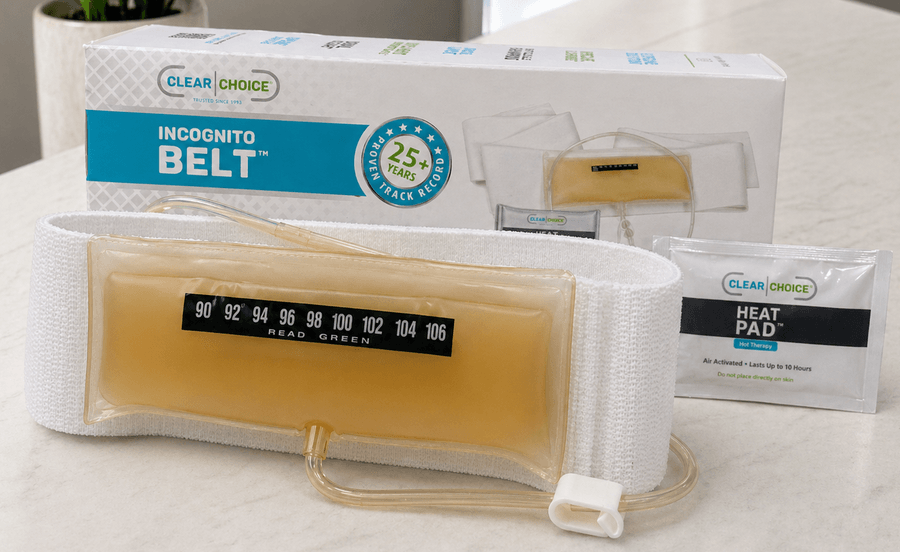
This is where a product like the Clear Choice Incognito Belt enters the scenario. It’s designed from the ground up for the most common testing situation: the unsupervised test where you’re alone in the restroom. Think of it as the streamlined, modern alternative to the Whizzinator’s overly engineered approach.
Let’s break down why it’s a superior competitor and a logical choice for most folks.
The Core Advantage: Simplicity and Discretion
The Incognito Belt is essentially a wearable, gravity-fed system. It’s a adjustable Velcro belt you wear under your clothes, holding a pre-filled bladder bag of synthetic urine connected to a tube with a simple clip. There’s no prosthetic to hide or position. The entire system is flat and lies against your torso. This directly addresses the intense anxiety over pat-downs. A thorough pat-down might feel a rigid bottle in a pocket, but a flat, flexible bag worn around the waist under a waistband is far less conspicuous. It’s a fundamental redesign focused on concealment.
The “Urinator vs. Whizzinator” Logic, Extended
When you compare products like the Whizzinator, you’re often comparing complexity. The Incognito Belt removes the most problematic variable: the prosthetic itself. For an unsupervised test, the monitor isn’t watching the urine leave your body. They’re listening for sounds and checking the temperature after. The belt’s gravity-fed flow is quiet—it doesn’t require pumps or aggressive squeezing that might make noise. You simply unfasten the clip. This eliminates the mechanical failure points and the “suspicious noise” fear entirely.
Addressing the Lab Detection Fear
A major purchase objection is the fear that modern labs can instantly spot synthetic urine. The Incognito Belt’s formula is built to avoid this. It contains the key chemical markers labs check for, like uric acid, urea, and creatinine, in the correct proportions to mimic human urine’s specific gravity and pH. While no method is 100% guaranteed, using a premixed formula from a reputable brand like Clear Choice is a more controlled scenario than mixing powders yourself or using an outdated brand that’s been flagged. It’s about reducing variables, not promising miracles.
The Practical, Stress-Reducing Choice
For the high-stakes user, stress is a huge factor. The Whizzinator adds layers of stress: assembly, temperature management with its pump, and the sheer risk of using a prosthetic. The Incognito Belt is designed to be pre-assembled and straightforward. You activate the heat pad ahead of time, verify the temperature on the strip, and wear it. The process has fewer steps, which means fewer chances for user error in a panic. It’s the difference between field-stripping a rifle and flipping open a canteen.
When you stack it up against other whizzinator competitors—like the Monkey Whizz belt or bottle-based kits like Quick Fix—the Incognito Belt holds its own by offering a dedicated, wearable system that doesn’t require you to fiddle with a bottle in your underwear. It’s a focused solution.
In short, if your scenario is an unsupervised test and you’re looking for a reliable, discreet method, the Incognito Belt is built for exactly that. It takes the core concept of synthetic urine delivery and strips away the unnecessary, risky components, leaving you with a tool that’s easier to use and easier to hide. It’s the practical evolution for a common problem.
GET YOUR INCOGNITO BELTChoosing a Synthetic Urine Solution: A Beginner’s Decision Guide
Alright, so you’re looking at your options and feeling the pressure. Let’s cut through the noise and give you a clear, staged plan. This isn’t about hype; it’s about following a logical sequence to reduce your risk.
Step 1: Determine Your Test Scenario
This is the absolute first variable you need to lock down. Is your test supervised or unsupervised?
- If it’s supervised (observed): Stop right here. The official protocol requires a same-gender observer to watch the urine leave your body. You’ll be asked to raise your clothing and turn around. In this scenario, any external device—like a prosthetic or a belt—is not just overkill; it’s a guaranteed failure. The observer is specifically looking for that, and if found, it’s documented as a refusal to test. So, for a supervised test, synthetic urine is simply not a viable path.
Step 2: For Unsupervised Tests, Choose Simplicity
If your test is unsupervised—meaning you’re alone in the restroom—then your goal is to find the solution with the fewest moving parts. More components mean more variables that can go wrong.
This is where you should seriously evaluate a simple, integrated kit like the Incognito Belt. It’s premixed, wearable, and designed to be a single unit. You’re not assembling a bottle, a prosthetic, and separate heating elements. The logic is straightforward: a complex device with straps, prosthetics, and multiple pieces introduces more points of failure, more noise, and more to hide. For an unsupervised scenario, a streamlined solution that masters the core challenge—temperature—is your most reliable estimate.
Step 3: Master the Critical Execution Factors
Once you’ve chosen your tool, your focus must shift entirely to execution. The lab’s protocol has one non-negotiable checkpoint that overrides everything else.
- Temperature is King: The sample must be between 90–100°F when you hand it over. The collector has only four minutes to check this with a strip. If it’s outside that range, the sample is rejected on the spot, regardless of its chemical makeup. This is the single most common reason for failure.
- Your Focus: With a system like the Incognito Belt, this means activating the heat pad at least an hour before your test, relying on the combination of the pad and your body heat. The temperature strip on the bag should read in the green zone before you walk in. Practice the dispensing motion at home with water to master the clip control and ensure your clothing conceals everything without kinking the tube.
By following this order—Scenario > Simplicity > Execution—you move from overwhelm to a controlled, step-by-step protocol. You’re not just buying a product; you’re implementing a procedure designed to navigate the lab’s own rules.
Purchasing Guidance: Where to Buy and What to Avoid
So, you’re considering the Whizzinator and the immediate question is, “Where can I buy a whizzinator near me?” Let’s break down the scenario. Your goal is a reliable product, not a counterfeit that fails at the worst moment. The variables here are source and authenticity.
The Official Source is Your Safest Bet
The most reliable method is purchasing directly from the official manufacturer’s website or their explicitly authorized retailers. This is your best estimate for getting a genuine, fresh product. The kits—from the Original to the Touch model—have specific components and seals that counterfeiters often get wrong. Buying direct minimizes the risk of receiving a kit with a faulty temperature strip, a missing syringe, or synthetic urine that’s past its prime.
A Major Red Flag: Third-Party Marketplaces
You might search for a “whizzinator amazon” listing or check sites like eBay hoping to find a cheap Whizzinator for sale. I must strongly advise against this. These platforms are high-risk for counterfeits. The products sold there often have blurry labels, misspelled ingredients, missing batch codes for validation, or are simply expired. The low price isn’t a deal; it’s a warning sign. The same caution applies to random online ads promising deep discounts.
Local Shops: Convenience vs. Risk
While you can use searches like “synthetic urine near me” to find local head shops, this path has its own variables. The anonymity is lower, and you cannot easily verify the product’s storage history or shelf life. The kit may have been sitting on a shelf for months, degrading its reliability.
Your Checklist for Authenticity
Before you buy, inspect for:
- Intact Seals: The box and any internal pouches must have unbroken, official seals.
- Crisp Branding: No blurry logos or mismatched colors.
- Batch Number: A valid code on the label that you can potentially verify with the manufacturer.
- Current Date: Check for an expiration or “best by” date well into the future.
Ultimately, if the price seems too good to be true, it almost certainly is. Investing in an authentic product from a trusted source is a critical step in managing the overall risk of your scenario.
Core Lessons for Informed Drug Test Preparation
Alright, let’s bring this all together. The core lesson here is pretty straightforward when you break down the variables of your specific scenario. The Whizzinator is, at its heart, a complex prosthetic device. It has a learning curve, multiple parts to assemble, and introduces significant risks—especially if your test is supervised, where a visual inspection would immediately flag it.
For the vast majority of standard, unsupervised urine drug tests where you’re alone in the restroom, a device of that complexity is simply overkill. You don’t need a prosthetic to discreetly submit a sample. This is where understanding your test protocol is everything. If it’s not observed, your goal shifts from mimicking urination to simply providing a valid, warm sample without detection.
That’s why simpler, more reliable alternatives have become the go-to for informed preparation. Solutions like the Incognito Belt are designed for this exact purpose—they’re unisex, discreet, and eliminate the mechanical failure points of a prosthetic. They focus on the two non-negotiables: getting the temperature right and providing a chemically balanced sample that passes lab validity checks.
So, take a breath. Your decision tree isn’t as overwhelming as it feels. First, estimate your test type. If it’s unsupervised, you can likely bypass the high-risk hardware entirely. Choosing a proven, straightforward method designed for discretion is often the calmer, more reliable path to the outcome you need.
