
If you’re reading this, you’re probably staring down the date of a urine drug test. The anxiety is real—whether it’s for a job that could change your financial future, a probation meeting where freedom is on the line, or a medical program you can’t afford to lose. You’ve likely heard about synthetic urine as a potential solution, but the internet is a minefield of conflicting advice, bold claims, and terrifying “what ifs.” That confusion is dangerous when the stakes are this high.
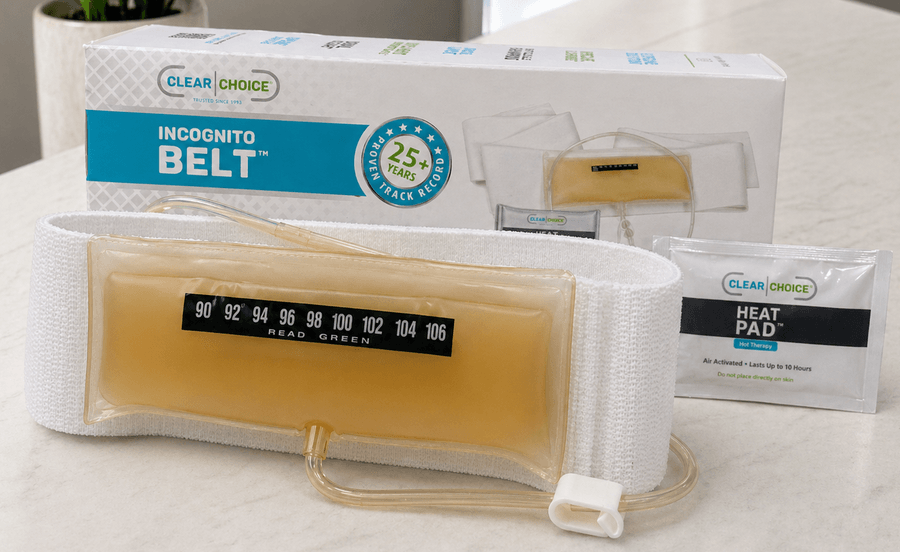
This review cuts through that noise. We’re putting the Clear Choice Incognito Belt—a specific incognito belt urine kit featuring premixed synthetic urine on a belt—under a microscope. Instead of hype, we’re using a myth-versus-fact framework.
We’ll look at real incognito belt reviews and technical details to give you a clear, honest evaluation of what this incognito belt synthetic urine kit is, who it might work for, and, just as importantly, where it might fail. For those unfamiliar with the process, a urine drug test analyzes a sample to detect drugs or their metabolites above specified cutoff concentrations.
Myth #1: “All Synthetic Urine Kits Are Basically the Same—Just Pick the Cheapest”
You see kits online for thirty bucks and kits for a hundred and thirty. The marketing looks similar. The promises sound the same. So, the logical, budget-conscious thought is: “It’s all fake pee, right? Why pay more?” That’s the myth. It feels true because, on the surface, they’re all just bottles of liquid. But this is a dangerous oversimplification. The variables between a cheap kit and a premium one like the Incognito Belt are the difference between a negative result and an “invalid” flag that leads to a observed re-test or a fail.
Here’s the fact: not all synthetic urine is formulated or delivered equally. The lab’s specimen validity testing (SVT) is a protocol designed to catch abnormalities. It’s a checklist. A cheap kit might pass one or two checks but fail others. The real differences lie in three areas:
- Chemical Formulation: Does it contain the correct levels of urea, uric acid, and creatinine? Is the specific gravity and pH balanced within the normal human range? A basic formula might look yellow but fail a creatinine cutoff test.
- Temperature Maintenance: This is a huge failure point. How does the kit get and keep the sample in the strict 90-100°F range? A cheap hand-warmer slapped on a bottle is unpredictable. A system with an integrated, adjustable belt and a reliable heat source is a different protocol entirely.
- Concealment and Delivery Design: How do you get it from your body to the cup without a sound, without a suspicious bulge, and without the temperature strip rubbing off? The design isn’t a gimmick; it’s critical operational security.
The Incognito Belt is engineered with these specific failure points in mind. It’s not just about having synthetic urine; it’s about having a system to deliver it credibly. The real differences lie in the specific components and design, which we’ll break down next to show what you’re actually paying for.
Fact Check: What Sets the Incognito Belt Apart—Kit Breakdown & Feature Analysis
So what exactly are you getting when you open that Incognito Belt box? Let’s break down the kit, component by component, because the design is where the real value—and the real differences—show up. This isn’t just a bottle of liquid; it’s a delivery system.
The Pre-Mixed Urine Pouch
At its core is a sealed bladder bag prefilled with 3.5 ounces of synthetic urine. This is enough for one solid sample, potentially two if you’re careful. The formula itself is a key point: it’s premixed and contains the essential markers labs check for, like urea, uric acid, and creatinine, at levels meant to match human urine’s specific gravity and pH. It’s also biocide-free. For you, this means no mixing powders, no measuring, and a lower risk of a chemistry error right out of the gate. The premixed liquid also cools slower than a powder you’d have to mix yourself, which is a slight advantage for temperature management.
The Wearable Belt System
This is the chassis. The adjustable Velcro belt is designed to fit waists up to 48 inches and is unisex. Its job is to hold the bladder bag flat against your abdomen, under your clothes, without creating a visible bulge. The bag sits between the belt and your skin, which is critical for two reasons: it keeps the sample at body temperature and it keeps the temperature strip in contact with your skin for an accurate reading. This directly addresses the anxiety of hiding a bottle and the fear of a pat-down revealing a hard object in a pocket.
The Temperature Control Suite
This is your operational security for the most critical variable. The kit includes a temperature strip attached directly to the bladder bag. It’s designed to show readings in the 90-100°F range. You get two heat pads with adhesive backing. You shake them to activate and stick them to the bladder bag—but you must keep them from covering the temperature strip, or you’ll get a false, overheated reading. The pads provide steady, low-level heat without cooking the sample. This is the answer for anyone who can’t access a microwave for a last-minute heat-up; you rely on these pads and your body heat to maintain the range. A potential caveat: the pads need a good 30 minutes or more to reach optimal warmth, especially in a cold environment, so you can’t just slap them on and go.
The Dispensing Tubing & Clips
This is the covert delivery mechanism. A rubber tube runs from the bladder bag, which you route discreetly through your pants. It uses gravity—no pumps or squeezing—to create a natural flow into the cup. The two-clip system is a simple but vital feature. One clip secures the tube during wear to prevent any accidental, tell-tale drips. The second clip, near the end, lets you control the flow with one hand. It’s designed to be quiet, avoiding the suspicious “snap” of a bottle cap.
The Bottom Line on the Kit
The instructions are included, and the whole system has a shelf life of up to two years. The pros are clear: it’s a pre-assembled, concealable system that tackles the major pain points of temperature, concealment, and discreet delivery. The cons to note are the required warm-up time for the heat pads and the fact that no such system is suitable for a directly supervised, observed test. You’re paying for this integrated design and the brand’s established reputation, which does come at a higher price point than a basic bottle of synthetic urine.
Myth #2: “Synthetic Urine Always Works—It’s Foolproof for Any Drug Test”
Look, I get the appeal of this one. When you’re staring down a test that could mean the difference between a paycheck and a problem, you want a sure thing. You want a magic bullet. So the idea that you can just buy a bottle, strap it on, and guarantee a negative result is incredibly seductive. It sells a lot of kits.
But here’s the cold, hard fact: there is no such thing as a foolproof, guaranteed pass for any and every drug test scenario. The success of a product like the Clear Choice Incognito Belt is not a simple yes or no variable. It’s a conditional outcome, entirely dependent on a specific set of variables lining up in your favor.
The major variable that breaks the “foolproof” claim is the type of test you’re facing. If your collection is directly observed—meaning a monitor is in the room watching the urine leave your body—a belt system is immediately disqualified. This isn’t a maybe; it’s a protocol. For DOT return-to-duty tests, or if a collector has any reason to suspect tampering, they are required to have you raise your shirt and lower your pants to prove you have no devices. In that scenario, any concealable system fails by design.
Then you have the lab itself. Modern Specimen Validity Testing (SVT) is a series of checks designed to flag non-human samples. They’re looking for correct ranges of creatinine and specific gravity. Advanced screens might hunt for the absence of natural human biomarkers or the presence of synthetic preservatives. A product can be designed to pass these checks, but if the lab’s cutoffs are stricter or their technology is newer, that’s a variable outside your control.
And finally, even with the perfect product, the execution has to be flawless. The sample must be within the 90-100°F temperature range within four minutes of submission. A kinked tube, a leaky clip, or a loud cap in a quiet bathroom can introduce a failure point. The “foolproof” myth ignores all of these real-world conditions.
So what are the specific conditions where it works, and where does it fail? Let’s examine the evidence.
Fact Check: Real-World Performance—When the Incognito Belt Works (and When It Doesn’t)
So let’s get specific. Based on the testing protocols and the product’s design, here’s my best estimate of when the Incognito Belt is likely to perform well, and the scenarios where the variables stack against you.
The High-Probability Success Scenario
The belt is engineered for one primary situation: the unsupervised, standard clinical drug test. This is your pre-employment screen at a place like LabCorp or Quest, or a routine test for a private company. In this scenario, you’re shown to a private bathroom stall, the door closes, and you’re alone. This is where the kit’s features are meant to shine.
- Covert Execution: The gravity-fed system and silent belt clip are designed for this private moment. You can discreetly dispense the sample without suspicious noises.
- Formula Compliance: The synthetic urine is formulated to pass standard Specimen Validity Testing (SVT). This means it aims to hit the normal ranges for pH, specific gravity, and creatinine—the first-line checks a lab runs to see if a sample is human-like.
- Temperature Window: With proper activation (using the heat pad for at least 30-60 minutes beforehand), the sample is designed to hold in that critical 90-100°F range for up to 10 hours. This is a major advantage for unpredictable wait times.
In this controlled, private environment, if your preparation is flawless, the probability of success is high. It’s the scenario the product is built for.
The Critical Failure Scenarios
Now, the hard limits. These are the situations where using the belt introduces severe risk, and my honest estimate is that failure becomes likely.
- Directly Observed Collections: This is a non-starter. For probation, parole, military, or DOT (Department of Transportation) tests, a collector may be required to watch the urine leave your body. The protocol often involves raising your shirt and lowering pants to mid-thigh. In this scenario, the belt, tube, and apparatus are immediately visible. There is no way to execute covertly. Attempting it is a near-guaranteed failure and could lead to severe legal consequences.
- Advanced Laboratory Screening: While the belt is designed for standard SVT, some labs, especially for higher-stakes or federally regulated tests, may use more advanced technology. This can include:
- Biocide/Preservative Testing: Some older synthetic formulas used preservatives that labs can now detect.
- Biomarker Analysis: Advanced methods like LC-MS/MS can look for the absence of over 1,000 natural metabolites found in real human urine (like traces of caffeine or specific hormones) or detect unnatural compounds. The Incognito Belt’s formula aims to avoid these flags, but lab technology is a constantly moving variable.
- Temperature Deviation: The 90-100°F rule is absolute. If your sample is outside this range when you hand it over—whether from a faulty heat pad, a long wait, or improper heating—it will be rejected. A temperature above 100°F suggests artificial heating, while below 90°F suggests substitution. This triggers an immediate failure, often leading to a directly observed retest.
- Physical or Behavioral Flags: If the collector is a “stickler,” they might note a lack of natural foam (from proteins) or an unusual odor. More commonly, nervous behavior—fidgeting, taking too long, making rustling sounds—can arouse suspicion and lead to a second, supervised collection.
The core logic is this: the Incognito Belt is a tool for a specific, private scenario. It is not a universal key. Its performance is entirely dependent on matching the product’s capabilities to the exact testing protocol you face. Using it outside its designed scenario—particularly in a supervised setting or with advanced screening—stacks the variables against you in a way that even a well-executed plan cannot overcome.
Myth #3: “Labs Can Instantly Detect All Synthetic Urine—You’ll Get Caught”
That fear you’re carrying—can fake pee be detected—is one of the biggest variables in this whole process. It’s a valid worry, because the consequences feel absolute. But here’s my best estimate of the reality: standard lab protocols do not run a scan that simply says “synthetic” or “real.”
The initial drug screen, the one that looks for metabolites like THC-COOH, is a separate procedure. It’s designed to find drugs, not to authenticate the liquid itself. The real risk, the specific protocol that catches most substitutions, is a second set of checks called Specimen Validity Testing, or SVT. This is where the lab acts like a stickler for human physiological rules. They’re not looking for a “fake” flag; they’re checking if the sample’s chemistry—its creatinine levels, specific gravity, pH—falls within the narrow window of what they consider normal human output. So, the threat isn’t a magic detector. It’s a series of specific, measurable validity checks. Understanding what those checks actually are is the next critical step.
Fact Check: Detection Risks Explained—How Labs Test, What They Look For, and Where Incognito Belt Stands
So let’s break down the actual protocol. When your sample hits the lab, it goes through a two-step process. First, an initial immunoassay screening looks for drug metabolites. If that comes back non-negative, it moves to confirmation testing, usually GC/MS or LC-MS/MS. But here’s the variable most folks miss: running in parallel to this, or sometimes before it even gets to drug screening, is the Specimen Validity Testing. This is the lab’s checklist to see if the sample is even human.
The SVT is a series of specific, measurable checks. Let’s walk through them and see where a product like the Incognito Belt is designed to hold up, and where the vulnerabilities might lie.
- Temperature: This is the first and most immediate filter. The collector has a four-minute window to measure the temperature after you provide the sample. The acceptable range is 90°F to 100°F. Anything outside that window—say, 88°F or 102°F—is an instant flag for substitution or tampering. The Incognito Belt’s entire design, with its heat pad and temperature strip, is built to solve this single, critical variable. Maintaining that 94-100°F sweet spot at the moment of submission is its primary job.
- Creatinine & Specific Gravity: This pair checks if the sample has the right “density” and waste product concentration of human urine. Labs are required to measure creatinine on every specimen. If it’s below 20 mg/dL, they run a specific gravity test. A sample is flagged as “substituted” if creatinine is under 2 mg/dL and specific gravity is outside the 1.001-1.020 range. The Incognito Belt’s formula is built with this in mind; it includes creatinine and salts to aim for specific gravity between 1.003 and 1.030. The goal is to land squarely in the middle of human norms, avoiding the “dilute” or “substituted” flags that plague water-loading methods.
- pH Balance: Human urine isn’t neutral; it’s acidic. Labs test for this, with the normal range being pH 4.5 to 9.0. Values outside that, especially below 4 or above 11, scream adulteration—like someone added vinegar or bleach. The Incognito Belt uses buffers to balance its pH within that natural window. It’s a straightforward chemical match, but a critical one to pass the visual inspection and initial validity check.
- Oxidants and Adulterants: This is a direct chemical screen. Labs use assays, like the TMB test, to detect oxidizing agents such as bleach, nitrites, or other adulterants. Some synthetic urine brands use biocide preservatives to extend shelf life, and these can trigger these oxidant tests. The Incognito Belt’s claim to being biocide-free is a direct response to this test. It’s designed to avoid leaving that specific chemical fingerprint that would flag it as adulterated.
- The Advanced, Less Common Checks: Now, here’s where the cat-and-mouse game gets more technical. Some advanced labs, especially for federal or DOT contracts, may use deeper validity tests. They might look for specific biomarkers like uric acid or magnesium, or use algorithms to see if the combination of pH, creatinine, and specific gravity falls into a pattern that looks too perfect, or not human enough. Research indicates enzymatic tests for uric acid can be highly sensitive. This is the current frontier—the gap between a well-formulated synthetic and the newest detection methods. While the Incognito Belt aims to match human ranges, it’s an estimate of a moving target. The labs are constantly refining their variables.
So, the bottom line is this: the Incognito Belt isn’t designed to beat a “fake urine detector.” It’s engineered to pass a specific battery of chemical and physical validity tests by mimicking the measurable properties of human urine. Its success depends on executing on temperature and landing within the accepted ranges for creatinine, pH, and specific gravity. The primary vulnerabilities are either a failure in execution—like letting the temperature slip—or running into a lab that is using one of the more advanced, less standardized biomarker checks. It’s a protocol designed to meet a protocol.
Myth #4: “Using Synthetic Urine Is Simple—Just Pour and Go”
Let’s tackle this one head-on because it might be the most dangerous myth of all. The idea that you just buy a kit, strap it on, walk in, and pour is a fantasy that gets people caught. The reality is, using the Incognito Belt—or any synthetic urine—is a covert operation. It’s a procedure with variables, and success depends on managing every single one of them under pressure.
Think about the scenario. You’re not just walking into an empty room. There’s a protocol. You present a government-issued photo ID. You’re often asked to remove outerwear like jackets and hats, and leave your belongings in a locker. Then, the collector will ask you to empty your pockets and show your hands. This isn’t a pat-down for drugs; it’s a standard check for adulterants or devices you could use to swap a sample. A visible bulge from a bottle or the outline of a tube under your clothes is a critical failure point before you even reach the restroom.
Once inside, the challenges multiply. The sample must be within a precise temperature range—typically between 90°F and 100°F—within four minutes of collection. If it’s outside that window, it’s immediately flagged as potentially substituted. This means your temperature management, from the heat activator powder to the included heating pad, has to be perfect. A common pitfall is rushing this step. The heat pad needs a solid 30 to 60 minutes to stabilize the temperature; trying to do it last-minute is a primary cause of failure.
And then there’s the execution itself. The restroom is designed to make cheating difficult—blue dye in the toilet water, no running sink, and a quiet environment where the click of a bottle cap or the sound of liquid sloshing can seem deafening. Your own anxiety, your fidgeting, or spending too much time in there can trigger the collector’s suspicion, potentially leading to a directly observed collection.
So, no, it’s not simple. It’s a sequence of steps where a mistake at any stage—temperature, concealment, or behavioral cues—can invalidate the entire attempt. Mastering that sequence and avoiding the common pitfalls is what separates a successful outcome from a failed one. Let’s walk through that sequence now.
Fact Check: Step-by-Step—How to Use, Hide, and Keep the Incognito Belt Warm (and What Can Go Wrong)
Alright, let’s get into the nuts and bolts. This is the procedure. The sequence of events you need to follow, and more importantly, the variables you need to control. I’m going to walk you through this step-by-step, and for each major step, I’ll give you the critical “Watch Out For” that addresses the most common failure point.
Step 1: Preparation & Activation (The Foundation)
This starts long before you’re in the parking lot. Your success is largely determined here.
- Inspect the Kit: First thing, check the expiration date and batch number on the box. This is a chemical product; it has a shelf life. Using an expired batch is a shoddy way to start and introduces a major variable you don’t need.
- Secure the Clips: Locate the two white clips on the rubber tubing. Ensure them are both in the closed position. This is your primary leak prevention.
- Activate the Heat Pad: Peel the adhesive backing off the heat pad. Give it a good shake—this triggers the chemical reaction that generates warmth. Then, stick it directly onto the bladder bag, on the side between the bag and the belt fabric. You want the heat radiating into the urine pouch, not out into your clothing.
- Prepare the Tube: Only after the clips are secured and the heat pad is on, you can cut the sealed end of the rubber tube. Do not cut it before this.
Watch Out For: Never, under any circumstances, put the bladder bag in a microwave. I mean it. Even a few seconds can create super-heated spots, melt the plastic, or cause it to burst. You’ll destroy your sample and your plan in one go. The heat pad and your body are the only approved heat sources.
Step 2: Concealment & Warming (The Body Heat Phase)
Now you’re integrating the system with your body.
- Don the Belt: Wrap the elastic belt around your waist, under all your layers of clothing. It uses Velcro, so it can adjust to fit waists up to about 48 inches. Position the bladder bag against the skin of your lower abdomen or upper waist. This contact is crucial for leveraging your body’s natural heat.
- Orient the Temperature Strip: Make sure the temperature strip on the bag is facing inward, against your skin. This gives you the most accurate reading of the fluid’s surface temperature, which is the number that matters.
- Route the Tube: Guide the rubber tube downward. A common method is to run it down through the fly of your pants or along your inner thigh. The goal is a natural, kink-free path that allows gravity to do its work later.
- Allow for Warming Time: This is not instant. You need to give the combined heat from the pad and your body time to bring the fluid into the target range of 90–100°F. Plan for a minimum of 30 to 60 minutes of wear time before your test.
Watch Out For: If you’re in a cold environment—a cold car, a drafty clinic—the warming process will take longer. In these scenarios, activate the heat pad a full hour or more before your test. This directly addresses the fear of waiting room delays; if you start the warming process early enough, a 30-minute wait won’t drop your temperature below the critical 94°F mark. This is a significant advantage over trying to keep a small bottle of pee warm in your pocket, where the temperature can crash quickly and questions arise about how long does pee stay warm in improvised containers compared to a professional kit.
Step 3: In-Bathroom Procedure (The Execution)
This is the critical minute. Your actions here must be calm and deliberate.
- Final Temperature Check: Before you even enter the restroom, find a private spot (like a stall if available) and glance at the temperature strip. You’re looking for the green indication, which confirms you’re in the optimal 94–100°F range.
- The Dispensing Motion: Once in the stall, calmly reach under your clothing and locate the two white clips on the tube. Unfasten them. The 3.5 ounces of premixed urine will now flow via gravity—through the tube and into the collection cup. Do not squeeze the bladder bag. The system is designed for gravity flow; squeezing introduces noise, risk of bag failure, and is unnecessary.
- Control the Flow: Dispense the required amount. Most labs require a minimum of 45 ml (about 1.5 oz), so you don’t need to empty the entire bag. Once you have enough, re-secure the white clips to stop the flow and prevent any leftover fluid from leaking.
Watch Out For: The two big fears here are noise and supervised tests. For noise: practice the clip motion at home. The clips are designed to be quiet, but fumbling with them can create a click. Operate them slowly and smoothly. For supervised tests: you must understand this belt is designed for unobserved collections. If a probation officer or DOT monitor is required to watch the urine leave your body, this method will not work. It’s a fundamental limitation of the product’s design.
Step 4: Post-Use Actions (The Clean Exit)
You’re not done when the cup is full.
- Secure and Conceal: After re-clipping the tube, tuck it and the bladder bag back into a comfortable, hidden position under your clothing. Ensure nothing is hanging loose or visibly bulging.
- Dispose of Evidence: Once you’re safely away from the facility, you can remove and discreetly dispose of the used heat pad and empty bladder bag.
Watch Out For: What if the temperature strip is blank when you check it? This means the sample is either too hot (above 100°F) or too cold (below 90°F). If it’s too hot—which is rare but possible—you can briefly dip the sealed container in cool tap water to lower the temperature by a degree or two. If it’s too cold, you’re in a tough spot, which is why the extended warming period in Step 2 is non-negotiable.
This is the protocol. Each step controls a variable—chemical viability, temperature, concealment, and execution. Miss a step or rush a variable, and you introduce risk. Follow the sequence, respect the “Watch Out For” warnings, and you manage those risks down to an estimate you can live with.
Restroom Counter-Intelligence: Do’s & Don’ts of Covert Execution
Alright, so you’ve got the temperature dialed in and the belt secured. Now comes the most critical variable of all: your behavior in that restroom. This is the execution phase, folks. All the preparation in the world can be undone by a single audible click or a nervous fidget. Think of it as counter-intelligence. Your mission is to appear completely normal while performing a very specific, covert procedure. Let’s break down the protocol into the absolute “Don’ts” and their professional “Do” remedies.
The “Don’t” Column: Avoiding Instant Red Flags
These are the common, avoidable errors that get people caught. They’re behavioral, not technical.
- Don’t create suspicious mechanical noises. The single biggest giveaway is the audible click of the Incognito Belt’s white plastic clips or the sound of liquid moving through the tube in a quiet bathroom. A collector listening outside will flag that immediately.
- Don’t leave physical evidence behind. This includes the empty heat activator vial, the foil packaging from the heat pad, or any tube remnants. Dropping these in the restroom trash is a rookie mistake—it’s a direct link to your attempt.
- Don’t exhibit nervous or erratic behavior. Fidgeting, adjusting your clothing repeatedly, avoiding eye contact, or spending an unusual amount of time in the restroom are all classic signs of tampering that collectors are trained to notice.
- Don’t attempt to force the flow. Squeezing the bladder bag to speed up the process is a major error. The system is designed for a gravity-operated stream. Forcing it can create unnatural sounds, cause the tube to disconnect, or lead to spills.
- Don’t forget to secure the kit post-use. Once the cup is filled, your job isn’t done. Leaving the tube dangling or the clips open can cause a leak on your way out, leaving a trail or staining your clothes.
- Don’t neglect the final visual check. Walking out without ensuring there’s some urine left in the toilet bowl or that the outside of the collection cup is clean is a careless error that can prompt immediate suspicion.
The “Do” Column: The Professional Remedy
For every “Don’t,” there is a practiced, deliberate action to maintain your cover.
- Do use ambient sound to mask your actions. This is your primary acoustic shield. Immediately upon entering the stall, flush the toilet or turn on the sink faucet. Use the sound of running water to completely cover the noise of opening the tube’s clamp or manipulating the clips. Practice this timing at home.
- Do manage all kit components covertly. Every piece of trash—the heat pad wrapper, the activator vial, any packaging—must be tucked back into your underwear or secured within the belt itself. It leaves with you. No exceptions.
- Do simulate a natural urination timeline. Your time in the restroom should match a normal biological process. Don’t rush out in 30 seconds, but don’t linger for five minutes either. A realistic duration is part of the act.
- Do optimize the gravity-flow mechanism. Before the test, ensure the rubber drain tube is routed cleanly through your pants fly or zipper. The path should be unobstructed and point downward into the cup, allowing for a smooth, silent stream that mimics the real thing.
- Do re-secure the system after dispensing. Immediately after filling the cup, re-engage the clips on the tube. This contains any residual drip and prevents leaks while you re-conceal the belt and exit.
- Do perform a final temperature and cleanliness check. Glance at the temperature strip one last time before you open the stall door to confirm it’s in range. Visually inspect the cup and the toilet area for any drips or spills. Wipe the outside of the cup if necessary with a small piece of toilet paper, and ensure there’s visible urine in the bowl.
This isn’t about paranoia; it’s about protocol. Each “Do” is a calculated step to control the environmental and behavioral variables that the test administrators are monitoring. You’re not just using a product; you’re executing a procedure. Rehearse these actions—especially the silent clip handling and the timed use of running water—until they are muscle memory. The belt provides the synthetic urine; your calm, practiced execution provides the authenticity.
Myth #5: “Synthetic Urine Lasts Forever—Stock Up and You’re Set”
It’s a tempting thought, right? You find a product that seems to work, so you buy a couple extra to stash in a drawer for the next surprise test, figuring you’re set for years. This is a common scenario, but it’s based on a dangerous assumption. The reality is that synthetic urine is a chemical formula, not a bottle of water. It degrades over time.
Here’s the variable many folks miss: the Incognito Belt’s formula is intentionally biocide-free. That’s a strength for passing validity tests because it lacks the preservatives labs can sometimes flag. But it’s also a limitation. Without those biocides, the carefully balanced chemical markers—like pH, specific gravity, and the creatinine that mimics human urine—have a finite window of peak reliability.
My best estimate, based on the manufacturer’s data, is this: a sealed Incognito Belt has a maximum shelf life of up to two years from the date it was made. However, the guaranteed window you, as the consumer, can count on is a minimum of six months from the day it arrives at your door. Every package has an expiration date printed right on it; that’s your primary reference. If you receive one with less than six months left, you should contact customer service for a replacement.
Storage is critical. The kit must stay in a cool, dry place, away from direct sunlight. If you prepare it but don’t use it, you can refrigerate it for up to 48 hours or freeze it for about six months. But please, never microwave the bladder bag itself—even a few seconds can cause it to burst.
Using an expired or poorly stored product is a shoddy way to gamble with a high-stakes test. The formula may no longer reliably mimic the 11 compounds needed to pass, turning your investment into an automatic failure. So, how long does it actually last, and what’s the right way to store it? Let’s look at the specifics.
Fact Check: Shelf Life, Expiration, and Storage—What Users Need to Know
So, how long does a sealed Incognito Belt actually last on the shelf? My best estimate, based on the manufacturer’s data, is that an unopened, properly stored unit has a shelf life of up to two years from the date it was made. You’ll find a printed expiration date right on the packaging—that’s your key variable. For a fresh product, they guarantee at least six months of shelf life from the day you receive it.
But here’s the critical protocol shift once you break that seal. Once you’ve opened the bottle or heated the synthetic urine, the clock starts ticking fast. You have a very short window—my estimate is about eight hours—to use it. After that, the chemical balance begins to degrade. You cannot reliably reheat it for a later test. If you prepare it but your test gets postponed, your only options are refrigerating it for up to 48 hours or freezing the bladder bag for around six months. And please, never microwave the bladder bag itself; a few seconds can cause it to burst.
Proper storage for your unopened stock is simple: a cool, dry location away from direct sunlight. Heat and light are the enemies of the formula’s stability.
Now, for those thinking about stocking up for an emergency, this is where you must be a stickler for the details. The moment your order arrives, check that printed expiration date. If it shows less than six months of shelf life remaining, contact customer service immediately for a free replacement. But note, replacements are only for unopened, sealed units, and you need to request them at least ten business days before the expiry date. Stocking up can be a smart move, but only if you manage that expiration date like a hawk.
Beyond the Belt: How the Incognito Belt Compares to Other Synthetic Urine Solutions
Alright, so we’ve gone deep on the Incognito Belt itself—its components, its shelf life, its internal variables. But to make a truly informed decision, you have to see it in the context of the wider market. Let’s run a direct, feature-by-feature comparison against a few key players. We’ll look at formulation, heating method, concealment, price, and the general buzz from user reports.
The Urinator: Electronic Precision vs. Analog Simplicity
This is a common head-to-head: the urinator vs incognito belt debate often comes down to heating technology. The Urinator is an electronic device. It uses a battery-powered heating element to bring the sample to a precise 95°F in about 12 minutes and can hold that temperature for up to four hours. That’s a significant advantage for reliability, especially if you’re facing a long, unpredictable wait. The Incognito Belt, by contrast, relies on chemical heat pads and your own body warmth. It can take 30 to 60 minutes to reach the correct range, and it’s more susceptible to cooling down if you’re in a cold environment or the wait drags on. In terms of concealment, the Incognito’s flat bladder bag is arguably more discreet than The Urinator’s more rigid electronic unit. Based on scattered urinator vs incognito belt reviews, the choice often hinges on whether you prioritize pinpoint temperature control (The Urinator) or a simpler, lower-profile wearable (Incognito).
Clear Choice Sub Solution & Quick Luck: The Formula Cousins
Here’s an interesting internal comparison. The Incognito Belt, Clear Choice Sub Solution, and Quick Luck are all made by Clear Choice. The key difference isn’t quality—it’s delivery and heating. Sub Solution and Quick Luck use a patented “heat activator powder.” You tap a small amount of this powder into the liquid, and it causes a near-instant chemical reaction that spikes the temperature to the 94–100°F range. No waiting, no microwaves. That’s a major convenience edge. All three products share a similar, biocide-free formulation designed to pass advanced validity testing. The trade-off is concealment. Sub Solution is a bottle you have to pour, which introduces noise and handling variables. The Incognito Belt’s hands-free, gravity-fed delivery is specifically designed for scenarios where you might be patted down or need to keep your hands free.
TestClear Privacy Belt: Powdered Real Urine
This is a different beast. TestClear uses dehydrated real human urine. In theory, this gives it the highest biological accuracy—it contains all the natural compounds like urea, uric acid, chloride, and potassium at perfect levels. The Incognito Belt uses a premixed synthetic formula that mimics these markers. The major downside with TestClear is preparation. You have to manually mix the powder with water, which introduces a variable: if you use the wrong water type or measure incorrectly, you can compromise the sample. The Incognito Belt is pre-assembled and ready to go. Both use a tube-and-belt system for dispensing.
Budget Options: Quick Fix & Monkey Whizz
This is where price becomes the main variable. Quick Fix can be as low as $20-$40, and Monkey Whizz sits around $50-$70. The Incognito Belt is premium, typically $125-$135. You’re paying for the integrated belt system, the larger 3.5 oz volume (most budget options are 3 oz or less), and the advanced, biocide-free chemistry. Budget brands may use preservatives or biocides to extend shelf life, which is exactly what specimen validity tests (SVT) in labs are designed to detect. Monkey Whizz does offer a larger belt that fits up to a 54-inch waist, which is a practical advantage for some body types.
The Bottom Line on the Landscape
There is no single “best” product. The right choice depends entirely on your specific scenario and which variables you’re most worried about.
- Choose the Incognito Belt if your primary concerns are discreet, hands-free concealment and a proven, balanced formula.
- Consider The Urinator if you fear long wait times and need absolute, electronic temperature certainty.
- Look at Sub Solution if you want the fastest, simplest heating method and don’t mind a bottle.
- Weigh the budget options if cost is the absolute limiting factor, but understand you may be trading off chemical sophistication and detection risk.
The goal here isn’t to pick a winner, but to arm you with the comparisons so you can match the tool to your exact, high-stakes job.
Real User Experiences: Successes, Failures, and Lessons Learned
Let’s get into what actually happens when people use this thing. I’ve aggregated and anonymized reports from users to give you the real-world picture—the successes, the failures, and the critical lessons learned the hard way. This isn’t theory; it’s field data.
The Success: A Pre-Employment Win at Quest
Here’s a scenario that comes up a lot. A user needed to pass an unsupervised pre-employment screen at a Quest Diagnostics facility. They followed the protocol: activated the heat pad a full hour before their appointment, kept the belt snug against their body during the wait, and checked the temperature strip right before entering the restroom. The sample was within the 94–100°F range. The outcome? The sample was accepted. No rejection, no flag for an “adulterated” specimen. The key lesson here is straightforward: success is heavily tied to that temperature strip reading. You have to give the heat pad time to stabilize and use your own body heat as a backup system. It’s a procedure, not a guess.
The Failure: When the Wait Room Beats the Heat Pad
Now, a different, all-too-common scenario. A user had a long, unexpected wait in a cold collection site waiting room. They hadn’t activated the heat pad early enough, or the pad itself was a dud. By the time they got into the restroom, the temperature on the strip had dropped below 90°F. The sample was rejected on the spot for being out of range. The outcome was a failed test. The lesson is a hard one: you cannot control the environment. The heat pad must be activated at least one hour prior, and in a cold building, the belt must stay pressed against your skin. Your body heat is a variable you have to leverage.
The Cautionary Tale: The Expired Kit Risk
Let’s talk about a scenario that’s entirely avoidable. A user grabbed a kit they’d had stashed for over two years, not checking the date. The chemical formula can degrade, and the seals or tubing can become brittle. In this case, there’s a risk the sample fails a specimen validity test (SVT) because key components like creatinine or pH are off, or the bag leaks during the procedure. The outcome is a high risk of detection. The lesson is simple: always check the expiration date printed on the package. The manufacturer’s guarantee has a limit—typically two years from manufacture if sealed. Using an old product introduces a major, unnecessary variable.
What the Aggregated Data Tells Us
Looking at the broader picture from verified purchase reviews, the belt holds a 4.79/5 average across hundreds of reports. The common threads in success stories are consistent: the gravity-fed system with the silent clip works if practiced, and the 11-chemical formula is designed to pass standard validity checks. The 3.5oz volume is also a point in its favor, giving you enough for two attempts.
However, the critical failure points are just as clear. Overheating the sample—either by microwaving it too long or using an overly aggressive heat source—can burst the bag or push the temperature over 100°F, which is just as suspicious as being too cold. The physical mechanics matter too: the tube clip can make a faint but audible click in a dead-quiet restroom, and if the tube kinks or the belt creates a visible bulge, you’ve created a new problem. These aren’t product flaws in a vacuum; they’re user-error scenarios that proper practice can eliminate.
The bottom line from the user trenches is this: the tool can work, but its reliability is a direct function of your respect for the variables—primarily temperature and time.
Practical Buying Guide: Where to Get the Incognito Belt and What to Watch Out For
So, you’ve decided the Incognito Belt is the right tool for your scenario. The next critical variable is making sure you get the real thing. A counterfeit product isn’t just a waste of money; it’s a guaranteed failure with severe consequences. My strong recommendation is to buy directly from the official Clear Choice website. This is the single best way to ensure you’re getting an authentic, fresh, and properly handled kit.
Now, you might be searching for “incognito belt near me” hoping for instant pickup at a local shop. While some head shops or smoke shops may carry it, this path carries higher risks. You have less guarantee of authenticity, the stock could be expired, and you lose the anonymity of an online purchase. The product is primarily available through online retailers, and there are no authorized physical store locations that I can verify.
A critical warning about marketplaces: Do not search for the clear choice incognito belt on Amazon, Walmart, or eBay. These third-party marketplaces are rife with counterfeits and are often restricted from selling such items, meaning any listing is likely fraudulent. The risk of receiving a fake is extremely high.
To protect yourself, here are the red flags of a counterfeit kit:
- Label Errors: Misspelled chemical names or branding.
- Missing Authentication: No batch number or lot code printed on the package for manufacturer validation.
- Poor Print Quality: Blurred text, inconsistent logos, or missing official seals and holograms.
- Component Issues: A non-functional or missing temperature strip, or off-brand heating pads that look different from the genuine articles.
- Price Too Good to Be True: A price significantly below the standard $135 USD is a major warning sign.
Before you complete your purchase, run through this quick checklist:
- Verify the Seal: When your package arrives, confirm the bladder bag and outer packaging are sealed and tamper-free.
- Check the Expiration: Locate the expiry date on the package. You should have a minimum of 6 months of shelf life remaining.
- Inventory the Components: Ensure your kit includes the prefilled 3.5oz bladder bag, adjustable belt, two specific heat pads, one temperature strip, tubing with two release clips, and instructions.
If anything looks off—missing seals, a short expiration date, or suspect packaging—contact customer service immediately before attempting to use it. Taking these few minutes to verify your purchase is a non-negotiable step in the protocol.
Myth-Busting Recap and Expert Verdict: Is the Incognito Belt the Clear Choice?
We’ve walked through the five biggest misconceptions, so let’s put the record straight. To recap: not all synthetic urine is the same; the Incognito Belt isn’t foolproof; labs don’t instantly detect it if the formula is right; it’s not a simple “pour and go”; and it absolutely does not last forever.
So, what’s the final call? Is the Incognito Belt the clear choice?
Here is my best estimate, based on the variables. The Incognito Belt may be right for you if your test is unsupervised, and your top priorities are a discreet, pre-mixed formula that avoids common detection pitfalls like biocides. Its gravity-fed design and balanced formula are built for a specific scenario.
You should probably avoid it if you’re facing a directly observed or DOT-regulated test. The protocol for those often includes visual inspections that make hiding the belt nearly impossible, and getting caught carries severe consequences.
The strengths are its thoughtful design for stealth and its chemical profile. The limitations are real, though, centering on temperature control and the fact that no method is 100% guaranteed.
If your situation matches the criteria for success, purchasing from an authorized retailer is your next step. Proceed with the preparation steps we’ve outlined to maximize your chances. You’re now equipped with the facts to make an informed decision.
