
Facing a drug test can feel like a panic button, especially if you’re a regular cannabis user. The fear of losing a job opportunity or facing legal trouble is real, and it leads many to search for a quick fix. One name that pops up is Monkey Whizz synthetic urine. It’s a pre-mixed substitution device marketed as a novelty item. But let’s be clear: using any synthetic urine to defraud a test is illegal in many states and carries serious risks, from felony charges to immediate job termination. This guide is here to help you troubleshoot. Not every test scenario is the same, and a product’s reliability can change drastically based on your specific situation. Before you consider any solution, you need to understand your own constraints.
Identifying Your Test: Scenarios and Key Constraints
Alright, so the first diagnostic step is to identify your exact test scenario. The constraints are different in each case, and a product like Monkey Whizz can fail in very specific ways depending on the playbook you’re operating under. Let’s break down the main scenarios.
Pre-Employment Tests (Private Sector):
This is often the most common scenario. The key constraint here is that these tests are typically unsupervised—you’re in a private restroom. However, “unsupervised” does not mean “unmonitored.” Collectors may listen for suspicious noises, and your sample’s temperature will be checked immediately. The core risk for Monkey Whizz in this scenario is a temperature failure. The sample must be between 90°F and 100°F the moment you pour it. A long wait in the lobby, a cool car ride, or a faulty heating pad can easily push the temperature outside that range. If the temperature is off, it can trigger suspicion, a failed test, or even a demand for an observed collection, which makes the whole attempt pointless.
DOT & Probation/Court-Ordered Tests:
This is a high-risk scenario with strict federal or legal protocols. The key constraint is the high probability of a directly supervised or observed collection. For DOT-regulated jobs (like trucking, aviation, or pipelines), the rules are explicit. If there’s any reason to suspect tampering—including an abnormal temperature—the collector must conduct an observed collection. Probation tests are frequently observed from the start, requiring a specific strategy for how to pass a drug screen for probation. Using a device like Monkey Whizz here is exceptionally risky. The anxiety of a pat-down, emptying pockets, and the high likelihood of direct observation create a scenario where substitution is often logistically impossible and the legal consequences for getting caught are severe, potentially including felony charges.
Random Workplace Tests:
The core constraint here is the element of surprise. You might get called for a random test with little to no warning. The risk for Monkey Whizz is preparation time. The kit requires heating, often with a microwave, and careful temperature management. If you’re pulled into a random test on the spot, you likely won’t have the 15-30 minutes needed to properly prepare the sample, leading to an immediate temperature failure.
So, your first move is to diagnose: What type of test are you facing? The level of supervision and the time you have to prepare are the two biggest variables that determine if a substitution method is even a plausible option for your specific case.
Inside the Monkey Whizz Kit: Components and Common Concerns
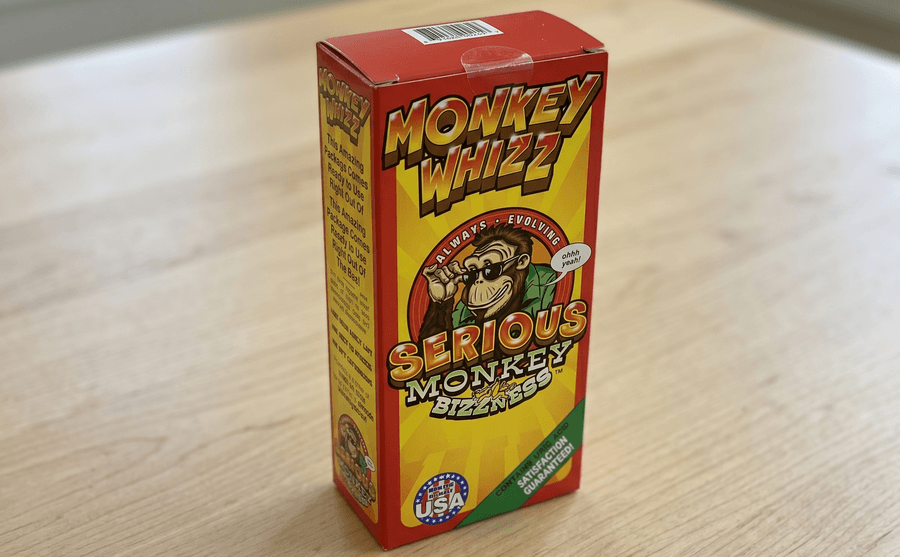
All right, let’s look at the actual tools Monkey Whizz gives you for your scenario. When you open the box, you’re essentially getting a pre-packaged substitution system. The intended design is to be ready-to-use, but as we’ll see, the gap between that design and real-world user reports is where the anxiety starts.
Here’s a breakdown of the kit’s components and the common concerns that come with each one.
The Core Components and Their Paired Problems
- The Pre-mixed Synthetic Urine Pouch/Belt System: The kit provides over 3.5 ounces of synthetic urine housed in a soft reservoir. This pouch connects to an adjustable cotton elastic belt, designed to be worn around your waist, thigh, or rib cage to keep the sample at body temperature. The intended purpose is discretion and temperature maintenance. However, a frequent concern is that the adjustable belt can feel bulky or be visible under slim or tight clothing, which immediately raises the stakes if your test scenario involves a visual inspection or pat-down. Furthermore, user reports indicate small leaks can occur from the bladder, valve, or tube, which would be a catastrophic failure during submission.
- The Organic Heating Pads (x2): These are the engine of the operation. Their sole purpose is to heat and then maintain the synthetic urine within the critical 90-100°F range. They are air-activated—you unwrap them from their plastic and shake to start the chemical reaction. You’re instructed to apply one pad’s sticky side directly to the back of the urine pouch, opposite the temperature strip. The stated heating time varies; some sources say activation occurs within minutes, while others advise allowing 45 to 60 minutes for the pad to bring the urine to the target range. This inconsistency in the protocol itself is a red flag. A major point of failure is that these pads can struggle to reach or maintain the correct temperature in cold weather or cool rooms, and their performance can vary from lot to lot. It’s also critical to note they are single-use; once the exothermic reaction is spent, the pad is dead.
- The Temperature Strip: This is your primary diagnostic tool. It’s attached to the urine reservoir, and you’re relying on it to show a green color indicating a reading between 98-100°F immediately before you walk in. The intended purpose is to give you a go/no-go confirmation. The common, and frankly terrifying, concern is that this strip frequently does not read correctly. Users report it can rub off against the skin, become difficult to read accurately under pressure, or simply malfunction, causing last-minute panic and improper timing.
- Tubing with Security Clips & Instructions: The kit includes tubing for gravity-fed delivery and a set of instructions. The protocol is to securely close the plastic clips, cut the hose to length on the day of use only, and then follow the steps. The concern here is twofold: first, a sticky or faulty valve can prevent a smooth, quiet release of urine into the cup. Second, the setup complexity can confuse first-time users, leading to activation errors—like breaking the seal too early or misapplying the heat pad—which can compromise the entire attempt before you even leave the house.
A Note on Variants and Unaddressed Gaps
You may encounter the product marketed as either a “flask” or a “belt” system. The core components and concerns are largely similar, with the belt aiming for more discreet wear. A significant gap in the provided instructions and general data, however, is the lack of clear, female-specific usage considerations. The protocol for positioning the tubing and belt for a discreet, clean pour is not equally addressed for all body types, which adds another layer of unspoken anxiety and potential for error.
So, you have a kit with several moving parts—a strip that might lie, a pad that might underperform, and tubing that might clog. Each component is a potential point of failure in a high-stakes procedure. This sets the stage for understanding exactly where and why this system can fall short when the pressure is on.
Where Monkey Whizz Falls Short: Temperature, Detection, and Practical Failures
Alright, let’s get into the core of the issue. You’ve got the kit in your hands, you’ve looked at the parts, but now you need to understand the variables that can go wrong. When we talk about Monkey Whizz failing, we’re not talking about a single point of failure. We’re looking at a system with multiple weak links, and any one of them can invalidate your entire test. The protocol seems simple, but the real-world application is where things get shaky. Let’s break down the three major categories of failure: temperature, detection, and the practical nightmares of simply using the thing.
Temperature: The Most Common Point of Failure
This is the big one, folks. The acceptable window for a submitted urine sample is narrow—typically between 90°F and 100°F. The temperature is checked within four minutes of you handing over the cup. If it’s outside that range, the specimen is immediately considered altered or substituted. It’s a fail before they even run the drug test.
Here’s where the variables stack up against you. The heating pad included with Monkey Whizz is your primary tool to hit that range, but it’s not a precision instrument. In a cold car or a chilly waiting room, it can struggle to get the sample to the lower end of the acceptable limit. Conversely, if you overheat it—even slightly, to 102°F—that triggers instant suspicion. The temperature strip on the bottle is another variable; user reports frequently mention it rubbing off, being hard to read, or just giving a false reading, causing panic and poor timing. And then there’s the waiting room delay. If your appointment runs late and you’re sitting there for 30 minutes, that pad has to work overtime. The sample cools down, and you’re left holding a bottle that’s now below 90°F. That’s a direct path to a failed test.
Detection Risks: What the Lab is Actually Looking For
Now, let’s estimate the detection risk. You might pass the visual and temperature check, but the lab’s specimen validity testing (SVT) is where the real scrutiny happens. They’re not just looking for drugs; they’re checking if this is human urine.
Labs like Quest and Labcorp routinely measure pH, creatinine, and specific gravity. The manufacturer claims Monkey Whizz can pass these basic checks if the levels are in range, and some users report success. However, the risk is in the details. If the creatinine level is off, or the specific gravity falls outside the normal human range of 1.003–1.030, it flags the sample as dilute or substituted. More advanced labs are now screening for biocides—preservatives added to synthetic urine to prevent bacterial growth. Their presence is a dead giveaway. There’s also emerging technology that looks for a panel of biomarkers, like uric acid. Synthetic formulas often have significantly lower uric acid levels, and enzymatic tests can show 100% sensitivity in distinguishing them from the real thing. To truly understand how can fake pee be detected, you have to consider that a lab using layered validity checks presents a much higher, and very real, detection risk.
Practical Nightmares: The Stress of the Act Itself
Beyond the science, there’s the sheer practical stress of using the kit. This is where the anxiety becomes physical. The belt and tube system can feel bulky under fitted clothing, making you paranoid about being visually detected. The setup has several connection points—the bladder, the valve, the tube—and any of them can leak, creating a disastrous and obvious failure.
Then there are the sounds. In a quiet clinic bathroom, the click of the bottle cap or the slosh of liquid in the tube can sound like a fire alarm to your paranoid ears. Some users have reported that the valve sticks, preventing a smooth pour when you need it most. And if the collector decides to give the sample a smell test? A common complaint is that synthetic urine, including some batches of Monkey Whizz, can be odorless or have a faint chemical smell, which is a major red flag compared to authentic human urine.
These aren’t just hypotheticals; they’re the source of real-world panic. You’re not just fighting a lab test; you’re fighting your own nerves, the equipment’s reliability, and the unpredictable environment of the testing site. The system has too many points where a slight variable—a cold day, a sticky valve, a long wait—can cascade into a failed outcome. This understanding of the specific failure points naturally leads to the next logical question: if you’re in that waiting room, feeling the bottle get cold, what are your actual options? That’s where we need to talk about troubleshooting in high-risk scenarios.
Warning Signs: How to Spot a Failing Monkey Whizz Kit Before Your Test
All right, so you’ve got the kit, you’ve gone through the preparation steps, but now you’re in that critical window—the hours or minutes before your test—and a sense of dread is creeping in. Is this thing actually going to work? The single most important variable you can monitor right now is temperature. If that’s off, nothing else matters. Let’s break down the specific red flags that tell you your Monkey Whizz kit is in the failure zone.
The Temperature Strip: Your Primary Diagnostic Tool
The built-in temperature strip is your first and most important line of defense. How to read the Monkey Whizz temp strip is non-negotiable knowledge. It uses heat-sensitive liquid crystals; you should see a distinct green indicator aligned with a number on the strip, ideally between 98°F and 100°F as the manufacturer specifies.
Here’s where it gets tricky. A major warning sign is when the Monkey Whizz temp strip is not reading correctly. If you look at the pouch and the strip remains completely black, showing no color change at all, that’s a critical failure. It means the strip is defective or has lost adhesion, leaving you flying blind. Similarly, if you see a faint, “ghost” reading or multiple green indicators, the strip is unreliable. You cannot trust it.
What to do if the temp strip is not reading: Your only safe option is to use a separate, reliable digital thermometer to check the liquid’s temperature directly. If you don’t have one, you’re operating on pure guesswork, which is an enormous risk. Trusting a faulty strip is a guaranteed path to an out-of-range sample.
The Heating Pad: A Source of Inconsistent Variables
The Monkey Whizz heating pads are meant to be your steady heat source, but their performance is a common point of failure. A major red flag is inconsistency. You activate the pad as directed, but after 30-60 minutes, the bottle feels lukewarm or even cold to the touch against your skin. Body heat alone is often insufficient, and if the pad is a dud, your sample’s temperature will plummet, likely falling below the 90°F threshold that signals a substituted or stored specimen to the collector.
Conversely, overheating risks are just as severe. If the bottle feels uncomfortably hot—hotter than your body—and the temp strip reads over 102°F or goes blank, you’ve overshot the mark. Temperatures above 100°F suggest artificial heating. Worse, excessive heat degrades the synthetic chemicals like urea and creatinine, potentially causing the sample to fail the lab’s validity checks even if the temperature is later corrected.
Physical and Chemical Red Flags
Beyond the numbers, use your senses.
- Audible Warning: Listen for a distinct ‘click’ or ‘crackle’ from the heating pad. While some noise is normal, loud or persistent crackling could indicate a faulty pad that might overheat or fail entirely.
- The “Pour Test” (At Home): Before you leave, do a test pour with water. Real urine creates a slight foam or “head” when poured. If your Monkey Whizz sample pours like plain water with zero bubbles, it might lack this characteristic, potentially raising suspicion during a visual inspection by a astute collector.
- Physical Sensation: When you secure the bottle to your body, it should feel consistently warm. If you feel a cold spot developing, the heat distribution is failing.
Logistical Red Flags: The Waiting Room Clock
You can have the perfect temperature walking in, but the battle isn’t over. A critical logistical red flag is an unexpected, prolonged wait. The heating pads are estimated to how long does pee stay warm for up to 8 hours, but that’s under ideal conditions. If you’re stuck in a waiting room for 45 minutes to an hour, especially in a cool clinic, your sample is losing 1-2°F per minute in ambient air. That 98°F can easily drop into the failure zone. This is the scenario that causes the most panic, because your control over the variable is gone the moment you sign in.
The Reheating Dilemma
A final, crucial warning sign relates to preparation. If you heated the bottle once, let it cool, and are now considering reheating the urine to get it back to temperature, be aware this is a high-risk maneuver. Repeated heating and cooling cycles damage the chemical composition of the synthetic urine, creating inconsistent readings and increasing the chance of a validity test failure. If you find yourself needing to reheat, consider the kit’s integrity already compromised.
In summary, your pre-test diagnostics are a checklist: a functioning temp strip showing a steady 98-100°F, a reliably warm bottle without hot or cold spots, a quiet heating pad, and a clear, short timeline at the testing facility. Any deviation from this is a red flag telling you the scenario has become high-risk. When multiple variables start failing—the strip is blank, the pad is cold, and you’re facing a long wait—the probability of a successful outcome with this method plummets. It’s in these high-stress, multi-variable failure scenarios that you need to consider if a more physically integrated and temperature-stable solution, one that isn’t reliant on a separate bottle and pad, might have been the more reliable protocol from the start.
Troubleshooting Monkey Whizz in High-Risk Test Scenarios
All right, so you’ve identified your test is high-risk. The variables are stacking against you. Let’s go through a few common failure scenarios and what you can attempt to do, because I want you to understand the limitations of each fix.
Scenario 1: The Temperature Failure
- Symptom: You check the strip before you go in, and it’s reading outside the 90–100°F window, or it’s not showing a reading at all.
- Likely Cause: The heat pad wasn’t activated long enough beforehand, or your environment (like a cold car) cooled the sample down. Conversely, too much microwave time or a pad pressed directly against the strip can overheat it.
- Quick Fix: If it’s too cold, your only option is to wait, ensuring the pad is active and the pouch is against your skin. If it’s too hot, you can briefly remove the heat pad to let it cool.
- The Limitation & Remaining Risk: This is a major one. The protocol at the lab is strict—they check the temperature within four minutes of you handing over the cup. If you’re in the restroom trying to re-warm or cool the sample, that delay itself can look suspicious. Worse, if you overheat it, you can actually degrade the key chemicals like urea and creatinine in the formula. So even if you get the temp right, the sample might now fail the subsequent validity checks. And if the heat pad is sitting right under the temperature strip, it can give you a false high reading, making you think it’s hotter than it really is.
Scenario 2: The Observed Collection Dead End
- Symptom: The collector informs you that this will be a directly observed collection. This can happen if your temperature was off previously, or you’re just randomly selected.
- Likely Cause: Department of Transportation (DOT) rules and other strict protocols mandate this if there’s any suspicion of tampering.
- Quick Fix: There is no effective workaround for a belt system like Monkey Whizz in this scenario.
- The Limitation & Remaining Risk: The procedure requires you to raise your clothing and turn around. The observer’s job is to watch the urine stream leave your body. Any concealed tube, belt, or pouch is almost certainly going to be detected. If you refuse any part of this procedure, it’s considered a refusal to test, which carries the same consequences as a positive result—like losing the job or facing legal issues.
Scenario 3: The Dispensing Failure
- Symptom: The flow is inconsistent, it stops and starts, or you hear a leak or a click from the clip.
- Likely Cause: The tube got kinked during wear, the clip wasn’t fully closed, or you’re fumbling with it because you’re nervous and haven’t practiced.
- Quick Fix: Before you wear it, make sure the tube is routed smoothly, the clip is secure, and practice the entire process with water at home.
- The Limitation & Remaining Risk: Any audible noise—the click of a clip or a sloshing sound—in a quiet restroom can be a red flag. If it leaks, it can create a visible wet spot or an unnatural odor. Collectors are trained to note nervous behavior, and first-time handling errors under pressure are common, which can increase your visible anxiety and draw scrutiny.
Scenario 4: The Concealment Detection
- Symptom: You notice a bulge, or the collector’s eyes linger on your clothing, or you’re constantly adjusting yourself.
- Likely Cause: Wearing tight clothes, improper positioning of the belt, or just acting nervous.
- Quick Fix: Wear loose, layered clothing. Position the belt low and secure. Try to remain calm.
- The Limitation & Remaining Risk: Trained collectors are observant. If they suspect a device, they may ask you to remove outer garments or inspect the area. If a device is found, the test is stopped, documented as a refusal, and your employer or probation officer is notified immediately.
Each of these “fixes” is really just a gamble against the core design limitations of a bottle-and-pad system. When you’re troubleshooting multiple failures at once, the protocol becomes incredibly fragile. It forces you to ask if there’s a method where the temperature is more stable, the concealment is more integrated, and the dispensing is simpler by design.
When to Escalate: Considering More Reliable Alternatives
If the scenarios and risks we’ve outlined—the temperature gambles, the concealment anxiety, the fragility of the protocol—sound like too much stress for your situation, it’s worth acknowledging that a more reliable path does exist. This isn’t about finding a “magic bullet,” but about selecting the correct tool for a high-stakes job. When the cost of failure is a lost career opportunity or legal trouble, escalating to a more robust solution is a logical step, not an overreaction.
Let’s do a quick quick fix vs monkey whizz comparison first. From a pure chemistry standpoint, these two are often ranked similarly for basic pre-employment screens. Both are premixed, both claim to have the key markers like urea and creatinine, and both are in a similar price bracket. The core issue is that they share the same fundamental design limitations: a bottle you must hide and a separate heating element you must manage. If one fails for reasons of detection or temperature instability, the other is likely to fail for the same reasons.
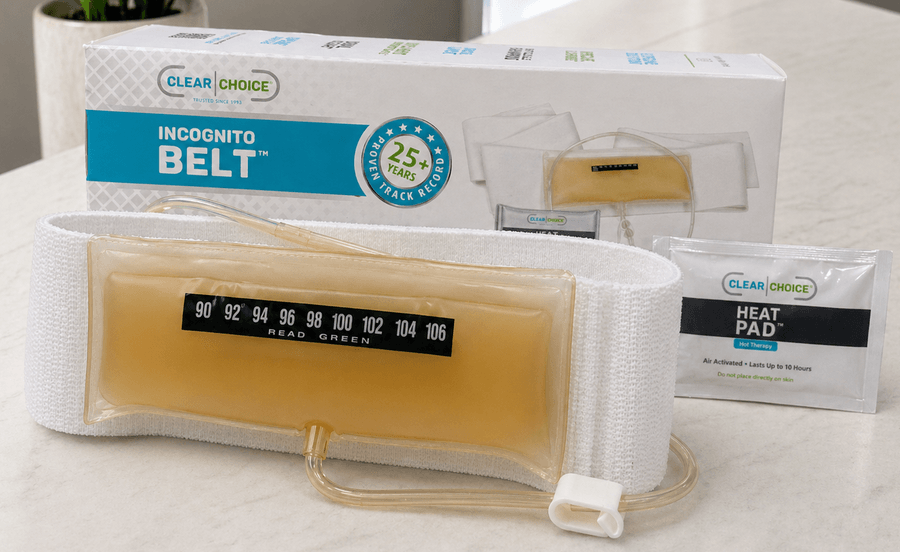
This is where considering a different category of product becomes the expert recommendation. The Clear Choice Incognito Belt is frequently positioned as the superior alternative precisely because it’s engineered to address the specific failure points of bottle-based systems.
Here’s the direct justification:
- Solves Hiding and Pat-Down Anxiety: The entire system is a wearable belt. It’s not a loose item in your pocket; it’s secured against your body, drastically reducing the risk of detection during a pat-down or visual inspection. This directly addresses a major source of panic.
- Addresses Temperature Fears with Redundancy: It uses a dual-heat system—chemical heat pads plus natural body contact. This creates a more stable and forgiving thermal environment, helping to maintain the sample in the 90–100°F range for several hours, even with waiting room delays.
- Designed for Modern Lab Scrutiny: Its formula contains 11 chemical compounds and is balanced for pH and specific gravity. While no product can guarantee to pass every advanced validity check, this one is specifically formulated to pass the standard panel of tests that flag simpler formulas.
Yes, it’s a premium product with a higher price point. You’re paying for the integrated design, the advanced chemistry, and the reduced operational complexity. For a high-risk scenario—especially one involving supervision or suspicion—that investment is for reliability and peace of mind. Choosing the most reliable brand means choosing the system where the components are designed to work together seamlessly, minimizing the variables you have to control in a stressful moment.
Of course, once you start considering a more advanced kit, practical questions immediately arise about shelf life and preparation—how long can you keep it, and what’s the setup process? We’ll get into that planning next.
Shelf Life, Storage, and Preparation: Planning Your Kit Purchase
Alright, so you’re thinking about buying a kit in advance. Smart. Let’s talk about the logistics of keeping it on hand. The main question is, how long does Monkey Whizz last after opening, and before? We need to look at the shelf life and storage requirements to plan this right.
First, the unopened kit. The manufacturer, Serious Monkey Bizzness, prints a “use by” date on the box. My best estimate is that an unopened kit has a shelf life of about one year from the date you buy it. Here’s the variable: even with an intact seal, water molecules can slowly evaporate through the vinyl bladder over many months. After roughly 18 months, the urine inside can become too concentrated and dark, which is a red flag. So, while it might still be bacteria-free if the seal is perfect, the chemical makeup changes. For longevity for emergency prep, I’d recommend not stocking up more than 6-9 months in advance.
Now, the critical part: shelf life after opening. Once you break that safety seal or expose the sample to air, the clock starts ticking fast. You have to treat it like milk. Bacteria begin growing immediately. Some sources say it’s unusable after just 1-2 days at room temperature. Others suggest refrigeration can stretch it to a few days maximum, but that’s a tight window and introduces new variables. If you cut the hose but keep the clamp sealed so no air gets in the bladder, it stays sterile—but the moment you see cloudiness or swirling particles, it’s contaminated and invalid.
Proper storage requirements are simple for the sealed kit: keep it in a cool, dry place away from sunlight. A closet shelf works. Don’t leave it in a hot car or a damp garage. And remember, the heat pads have their own, separate shelf life. Older pads may heat slower or not get as warm, which is a major variable for temperature control.
A final note on preparation: you can reheat and cool the synthetic urine itself multiple times without degrading its chemical properties. That’s a slight advantage. But do not, under any circumstances, microwave the heat pads or the urine pouch. The pads are designed for air activation only. My strong advice is to practice the full sequence at home—opening, heating, checking the temp strip—so you have the muscle memory down. It reduces the variables when you’re under stress. Knowing these timelines and steps helps you plan, but it also highlights the delicate balance you’re managing. You’re relying on a product with a finite window of reliability, where storage and handling introduce risks. For a scenario where failure isn’t an option, some folks start looking for a system with fewer logistical pitfalls and a more robust design for unpredictable, real-world conditions.
Brand Reputation and Safe Purchasing: Avoiding Counterfeits
Alright, so you’ve looked at the preparation steps and the timelines, and you’re thinking about the actual purchase. The big question becomes: who do you trust? When you’re searching for “monkey whizz near me,” you’re really searching for reliability in a high-stakes scenario. Let’s break down the purchasing variables.
Monkey Whizz has a specific distribution footprint. Your primary hunting grounds are going to be local, specialty retail stores—think smoke shops, head shops, and vape shops. You might find it at a place like De Soto Smoke Shop or KC Smoke & Vape. Now, a common question is about availability at a chain like Planet K. The data isn’t conclusive on that specific retailer, but the pattern is clear: you won’t find this at Walmart, Target, CVS, or Walgreens. It’s not on Amazon or eBay, either. This limited, physical-store availability creates a key variable: inventory and freshness. You’re relying on that local shop to have it in stock and, critically, to have a batch that isn’t near its expiration date. My strong advice is to call ahead.
The official online channel is the manufacturer’s site, Serious Monkey Bizzness, where the kit retails for $49.95. Physical stores often mark it up due to their overhead. Here’s the critical protocol: purchasing from any unofficial site or third-party seller introduces a major risk—counterfeits. A fake kit could mean missing safety seals, incorrect formulas, or faulty temperature strips. If your package arrives and the seal is broken or absent, that’s a red flag. You’d need to contact the manufacturer immediately, but in a time-sensitive test scenario, that’s a catastrophic delay.
This is where the contrast with a more robust system becomes clear. For a scenario where failure isn’t an option, many folks escalate to a product with a more controlled and verified distribution chain. The Incognito Belt, for example, is sold exclusively online through authorized retailers. This model is designed to cut out the middleman, reduce the counterfeit variable, and ensure you’re getting a genuine, effective product directly. It’s a higher price point at $135, but for that, you’re buying a layer of supply-chain certainty that a spotty local inventory simply can’t match. When your job or freedom is on the line, that reliability is the core variable you’re actually purchasing.
Modern Lab Detection: Why Synthetic Urine Formulas Are Tested
Let’s get right into the core of your fear. You’re asking, “Will this stuff actually pass?” and the answer lives in a specific scenario: the modern lab. These facilities, like Quest Diagnostics, LabCorp, or Concentra, aren’t just looking for drug metabolites anymore. They’re running a mandatory protocol called Specimen Validity Testing, or SVT. Think of it as a background check on your urine itself, designed to catch exactly what you’re trying to do.
All right, so here’s the procedure. Before they even test for drugs, every single sample goes through SVT. It’s a non-negotiable step for federally regulated tests and most major employers. The lab’s job is to look for three big variables: dilution (you added water), adulteration (you added chemicals to break down the drugs), and substitution (you used something that isn’t human urine). That third one, substitution, is the direct threat to any synthetic formula.
The lab’s protocol is a multi-parameter approach. They’re not just guessing; they’re measuring specific compounds that must be in human pee at certain levels. Here are the key markers they check, and where a formula can fail:
- Creatinine: This is a waste product from your muscles. Human urine has a specific range. Labs measure it precisely. If the level is below 2 mg/dL, that’s a major red flag. Paired with an odd specific gravity, it can confirm a substituted sample.
- Specific Gravity: This measures the concentration of your urine. Normal human range is roughly 1.003 to 1.030. Labs measure this to four decimal places if creatinine is low. A value outside that human range is a huge indicator something’s off.
- pH: Normal urine pH is between 4.5 and 9.0. If it’s outside that, it suggests an adulterant was added.
- Oxidants/Nitrites: Tests for chemicals like bleach or nitrites that people add to destroy drug metabolites.
- Advanced Biomarkers: This is the cutting edge. Modern labs, especially for higher-stakes tests, are looking for things like uric acid, urea, and specific magnesium levels. Human urine has these; many synthetic formulas either skip them or get the concentrations wrong. Some labs even screen for biocides—preservatives used in synthetic products to keep them shelf-stable. Finding those is a direct admission of tampering.
So, the estimate is this: if you’re facing a test at a major lab like Quest or LabCorp, especially for a 10-panel drug test, the lab’s detection methods are sophisticated. They use initial screening and then confirmation with highly accurate machines like GC-MS or LC-MS/MS. Older, cheaper, or less meticulously formulated synthetic urines have a much higher chance of being flagged by these checks. A formula that hasn’t been updated to match the latest SVT parameters is a significant risk variable.
This is precisely why the reliability of the formula you choose is the single most important factor. You need a product whose creators understand these lab protocols and have engineered their formula to pass them, not just once, but consistently as labs update their methods. It’s a moving target, and your solution needs to be designed to move with it.
User Case Studies: Real-World Outcomes with Monkey Whizz
So, we’ve talked about the lab variables—the creatinine, the specific gravity, the pH. But what does that actually look like when someone uses Monkey Whizz and walks into a clinic? Let’s look at a couple of anonymized, real-world scenarios based on aggregated user reports and reviews from 2024 and 2025. This is where the theoretical risks meet the practical, stressful reality.
Case Study 1: The “Seemed to Work” Scenario
- Situation: “Alex” needed to pass a pre-employment screen for an office job. The test was unsupervised at a local clinic. He purchased Monkey Whizz, followed the heating instructions, and the temperature strip read 98°F. He reported no pat-down, was in and out in 15 minutes, and received the all-clear from his employer a week later.
- Analysis: This is the success story you’ll find on some forums. In this scenario, several variables aligned in Alex’s favor: a short wait time kept the temperature stable, the test likely used basic immunoassay screening (which synthetic urine can sometimes pass if the formula is “good enough”), and the clinic’s protocol may not have included rigorous specimen validity testing (SVT) for that particular batch. For a simple, low-scrutiny test, some users do report a pass. However, it’s critical to understand this is a best-case scenario with minimal variables.
Case Study 2: The Temperature Failure
- Situation: “Jordan” faced a random test for a warehouse job. He used Monkey Whizz but faced a 45-minute wait in the lobby. He’d kept the bottle against his skin, but by the time he was called, the temperature strip was unreadable—he guessed it was around 90°F. He submitted it anyway. The collector immediately noted the temperature was out of range, the test was flagged as invalid, and Jordan was required to take an observed test the same day under direct supervision, which he could not pass.
- Analysis: This is one of the most common failure points reported on Reddit and other sites in 2025. The protocol is a stickler for temperature (94-100°F). A long, unpredictable wait is a massive variable that a simple heating pad and body heat can’t always overcome. Once the temperature fails, suspicion is immediately raised, and the protocol often escalates to a much more difficult testing scenario.
Case Study 3: The Detection Failure
- Situation: “Sam” used Monkey Whizz for a test at a major national lab chain. The temperature was correct, but he received a call from the Medical Review Officer (MRO) a few days later. The MRO stated the sample was “inconsistent with human urine” based on validity testing. The creatinine and specific gravity were outside the normal human ranges. Sam’s job offer was rescinded.
- Analysis: This outcome aligns with the lab-focused drawbacks. When a sample hits the SVT panel and key markers like creatinine are off, it’s flagged as adulterated or synthetic. This isn’t a maybe; it’s a definitive fail that can have serious consequences. These reports have become more frequent as labs tighten their procedures.
All right, so what’s the estimate here? The pattern from recent monkey whizz reviews and reddit 2025 discussions suggests a gamble. It might work if your test is basic, unsupervised, and quick. But if any single variable goes wrong—especially temperature or lab scrutiny—the failure is often immediate and conclusive. This is the core of the brand unreliability concern. You’re betting that every single one of these variables breaks in your favor. For a high-stakes test, that’s a significant risk.
Making Your Decision: Selecting a Reliable Method for Your Test
All right, so let’s bring this all together. Your first step is always to identify your test scenario. Is it unsupervised? Is there a chance of a pat-down or a long wait? Knowing this tells you which variables you’re up against. For Monkey Whizz, the major risks in a high-stakes situation are clear: temperature failure from a faulty pad or a cool-down in the waiting room, potential detection by modern lab validity checks, and the sheer anxiety of hiding a bottle during a pat-down.
When the cost of failure is your job or your freedom, you need more than a gamble. You need a tool designed to control those variables. That’s why, for complete certainty in an unsupervised test, the Incognito Belt is my recommended expert choice. Its prefilled bladder bag, dual heat pads with an accurate strip, and discreet wearable design directly address the core points of failure we’ve discussed.
So, make your decision based on the scenario and the stakes. Choose the reliable tool that gives you the best estimate for success. Secure your future, pass the test, and move on with your life.
