
Facing a hair follicle drug test can feel like standing at the edge of a cliff. The stakes are high—your job, your commercial driver’s license, maybe even custody of your child could hang in the balance. You’ve probably heard that a specialized hair follicle drug test shampoo might be the answer, but the internet is a minefield of conflicting claims, expensive products, and outright scams. It’s enough to make your head spin.
Let’s cut through the noise. This guide isn’t here to sell you a miracle or give you generic, one-size-fits-all advice. Its purpose is to serve as a clear, scenario-based troubleshooting map.
We’ll break down the variables of your specific situation—how much time you have, your usage history, your hair type—and point you toward a proven action plan. Think of it as finding the right tool for your exact job, not just being handed a random wrench.

The core tool in many of these plans is a detox shampoo for hair drug test preparation. These aren’t your everyday shower gels. They’re formulated with specific ingredients intended to penetrate the hair shaft and help flush out the metabolites that labs look for. The goal is to find the best hair detox shampoo for drug test success that aligns with your scenario, understanding both its potential and its limits.
We’ll get into the science, the protocols, and the honest user experiences. All right, let’s start by diagnosing your situation.
Quick-Start Diagnostic: Identify Your Detox Path
⚠️ READ THIS FIRST: Your 60-Second Diagnostic
All right, folks, before we dive deep, let’s get you on the right path immediately. Your single most important step right now is to correctly identify your scenario. Taking the wrong action is the fastest way to fail. Find yourself below and lock in your primary focus.
- 🚨 The “Emergency” Path (Your Test is in <72 Hours):
- Your Critical Action: You must perform multiple, spaced detox shampoo washes starting now. Aim for 2-3 washes per day, each with a full 10-15 minute dwell time, and space them at least 8 hours apart. Your final wash must be within 24 hours of when they collect your hair, followed immediately by a same-day finisher like Zydot Ultra Clean. There is no time for anything else.
- 🔄 The “Heavy User” Path (Chronic/Daily Use History):
- Your Critical Action: You must begin an intensive, multi-day preparation targeting a total of 10-15 detox wash applications. If your test is more than 3 days out, this is your protocol. However, a crucial estimate: if you were a heavy, daily user within the last 1-2 months, no shampoo method alone can reliably guarantee a pass. Time and verified abstinence are the only certain reset for that recent use.
- 🦵 The “Body Hair” Path (Bald, Short Hair, or They Might TakeFromBody):
- Your Critical Action: You must determine if body hair will be used. If your head hair is too short or absent, be prepared for a sample from your arm, leg, chest, or armpit. This is a major variable because body hair grows slower and provides a detection window of up to 12 months, unlike the ~90-day window for head hair. Your preparation must account for this extended timeline.
Identify your path, understand its single critical action, and then proceed to the detailed scenarios and product evaluations that follow. This is how you avoid a preventable failure.
The Science Behind Hair Follicle Drug Tests and Why They’re Challenging
Alright, let’s get into the mechanics of why this test feels like such a fortress. You’re not just dealing with a simple surface check; the procedure is designed to look deep into your recent history. Here’s the core of the challenge.
Think of your hair like a tree trunk, adding a new ring every month. When you ingest substances, the metabolites—those are the chemical byproducts your body creates—travel through your bloodstream. As new hair cells are forming at the root, these metabolites get passively diffused into them. Then, as those cells harden and keratinize to become the hair shaft you see, the metabolites become permanently locked inside the inner layer, called the cortex.
This is the fundamental variable that makes the test so daunting. The standard collection is about a 1.5-inch sample taken close to your scalp. Given that head hair grows roughly half an inch per month, that sample estimates a 90-day window of use. Now, a critical caveat: metabolites typically take 5 to 7 days to appear in the hair above the scalp after exposure, so the test can’t detect use from just a couple days ago. But anything older than that week? It’s likely in the record.
Here’s the major pain point for most folks: standard shampoos and even harsh cosmetic treatments like bleaching or perming only interact with the outer protective layer, the cuticle. They might reduce surface contaminants or, in the case of severe chemical damage, lift the cuticle scales enough to allow some metabolite loss—studies estimate a 40-80% reduction depending on damage and drug type. But that’s a wide estimate, and it often requires frying your hair. The goal for a lab is to find metabolites inside the cortex, and a simple wash doesn’t reliably reach that deep.
So, if the metabolites are locked in the core, and superficial methods are a shoddy, damaging way to maybe get a partial reduction, the logical question becomes: what specific scenario or protocol could possibly create a pathway to clean the cortex itself? That’s the variable you need to solve for.
Assessing Your Situation: Key Factors for Hair Drug Test Preparation
Right, so if the core problem is that metabolites are locked inside the hair cortex, and generic advice is unreliable, then your first step isn’t grabbing a product—it’s grabbing a notepad. Your situation is a unique combination of variables, and your plan must be too. A method that works for a one-time user with a month to prepare will fail completely for a daily user with a test tomorrow. Wasting time on the wrong protocol is as bad as doing nothing.
Here is the diagnostic checklist. Be brutally honest with yourself and note your specific combination of these four key factors.
1. Time Until Test:
- Urgent (72 hours or less): This is a crisis protocol scenario.
- Short-Term (1-2 weeks): You have a window for intensive action, but it’s tight.
- Standard (1-3 months): This is the typical preparation timeline.
- Long-Term (3+ months): You have the most options, including natural detox.
2. Usage Pattern:
- One-Time or Experimental: A single use in the last 90 days.
- Occasional/Weekend Use: A few times per month over recent months.
- Chronic/Daily Use: Heavy, consistent use, especially within the last 1-2 months. This is the hardest scenario to clean.
3. Hair Type & Collection Site:
- Head Hair (Standard): The 1.5-inch sample represents ~90 days. Note if your hair is very thick, ethnic, or chemically treated.
- Body Hair (Armpit, Leg, Chest, Beard): If you’re bald or have very short head hair, this is your reality. The detection window can extend up to a year due to slower growth cycles.
- Dreadlocks or Very Long Hair: Presents unique challenges for saturation and may be collected differently.
4. Budget:
- Flexible ($200+): Can invest in the most proven, intensive protocols.
- Limited ($50-$150): Must prioritize and possibly combine methods strategically.
- Very Tight (Under $50): Reliant on household items, which carry higher risk and variable results.
Write this down. Your specific answers—like “Urgent, Chronic Use, Body Hair, Limited Budget”—create your unique scenario. The following sections are detailed playbooks for the most common and high-stakes combinations, starting with the most urgent: when time is almost out.
Scenario 1: Urgent Preparation for Tests Within 72 Hours
If your test is in days, not weeks, every hour counts. Let’s be direct: a 72-hour window is a high-risk, urgent scenario. The standard, multi-week protocols designed for heavy users are off the table. Your goal shifts from a guaranteed deep cleanse to a damage-control, intensive scrub that gives you the best possible chance under severe time constraints.
This is where you need the fastest-acting tool available. For this specific scenario, the only product I can recommend with any confidence is Old Style Aloe Toxin Rid Shampoo. Its formulation is designed for deep, repeated use to gradually break down and flush metabolites from the hair shaft. Cheaper, single-use shampoos simply don’t have the mechanism or potency to work this quickly. If you’re asking how to pass a hair follicle test in one day or how to pass a hair follicle test in 2 days, this is your primary weapon.
Here is the condensed, high-intensity protocol. Understand this is an estimate based on user reports, not a guarantee.
The 72-Hour Emergency Protocol:
- Immediate Abstinence: You must stop all drug use right now. Any new metabolites entering your hair during this critical window will undermine everything.
- Product Acquisition: Your first variable is getting the shampoo. If you can’t get it shipped overnight or find it locally, your odds plummet. This addresses the “I can’t get the product in time” objection—without it, you’re relying on far riskier household methods that often cause severe damage with less payoff.
- Condensed Wash Schedule: You’ll need to perform multiple, aggressive washes.
- For a test in ~24 hours (one day): Your only shot is to perform 3-4 complete wash cycles back-to-back, as many as your scalp can physically tolerate. This will be extremely harsh.
- For a test in 2-3 days: Aim for 2-3 complete wash cycles per day, spacing them at least 8 hours apart. Complete your final wash within 12-24 hours of the test.
- The Day-Of Requirement: On test day, you must use a Zydot Ultra Clean shampoo as a final step to strip any surface residue and masking agents. This is non-negotiable for this protocol.
The Harsh Variables & Realistic Odds:
Your success hinges on factors you can’t fully control: your drug history (type, frequency, last use), hair type, and individual metabolism. A light, infrequent user has a better estimate of passing than a chronic daily user. The physical risks are significant and dose-dependent: expect severe scalp irritation, redness, burning, and potential hair damage from this many chemical washes in a short period.
The Critical Caveat: Even if you pull off a negative result this time, consider this a wake-up call. This emergency scrub addresses the metabolites currently in your hair, but it doesn’t solve the underlying contamination from heavy or long-term use. For that, you need a completely different, more thorough approach—which is exactly what we’ll get into next.
Scenario 2: Addressing Heavy or Long-Term Substance Use
If you’re a daily or long-term user—whether it’s THC, cocaine, meth, or opioids—your first thought is probably something like, “I’m doomed. There’s no way a shampoo can fix years of use.” Let’s be clear: that feeling is valid. Your scenario is the most challenging one. The metabolites aren’t just sitting on the surface; they’re locked deep in the cortex of your hair shaft, accumulated over months of growth. A simple, one-time wash with a mild shampoo won’t even make a dent. This scenario demands a fundamentally different, far more aggressive protocol.
Standard detox shampoos fail here because they can’t penetrate the hair’s protective cuticle layer effectively. What you need is a multi-stage chemical assault designed to forcibly open that cuticle, extract the embedded toxins, and then cleanse them away. This is where the Macujo Method enters the picture. It’s not a gentle wash; it’s a detailed Macujo Method steps built around one core, potent ingredient: Macujo Aloe Rid shampoo.
Think of it this way: if a light user needs a spot cleaner, you need a industrial-strength degreaser. The Macujo Method uses acidic agents like white vinegar and astringent to first crack open the hair’s protective layer. Only then is the Macujo Aloe Rid shampoo applied, allowing its key cleansing agents, like propylene glycol, to penetrate deep into the cortex and bind to those stubborn metabolites. For your scenario, this Macujo Aloe Rid + Zydot Ultra Clean shampoo combo is often the recommended finishing step on the day of the test, acting as a final flush.
Now, let’s talk numbers and reality, because this is where estimates matter. The required effort is directly tied to your use. For a heavy, daily THC user over 90 days, you’re looking at an estimate of 10 to 15 complete Macujo Method cycles. For cocaine, the estimate is 4 to 6 washes per half-gram used. Daily opiate or methamphetamine users may need up to 15 cycles. Each cycle takes 2 to 3 hours. This is a significant time and physical commitment.
The Physical Toll is Real and Dose-Dependent
This protocol is harsh. Repeating these chemical washes will cause scalp irritation, redness, burning, and temporary hair brittleness. The risk of chemical burns or dermatitis increases with each cycle. This is not a process for anyone with sensitive skin, open scalp wounds, or recent chemical treatments. You must be prepared to manage this damage with gentle, moisturizing conditioners between cycles, not during the method itself.
A Critical Caveat on Effectiveness and Authenticity
Success here is never guaranteed. It’s an estimate based on procedural adherence. Opiate metabolites, for instance, bind strongly and may only be partially removed. Furthermore, the market is flooded with counterfeit products. Knowing where to find Macujo shampoo near me is less important than knowing where to find the authentic product. Purchasing from unofficial retailers risks buying a diluted or fake formula that will waste your time and money. You need the real, potent formula to have any chance.
The bottom line for your scenario: passive hope won’t work. You need an active, proven, and aggressive chemical protocol. The Macujo Aloe Rid shampoo is the non-negotiable core of that protocol for a reason—it’s built for this depth of contamination. But this level of difficulty doesn’t stop with your hair’s history. If testers can’t get a sample from your head, they’ll take it from your body, and that introduces a whole new set of variables and complications.
Scenario 3: Handling Body Hair, Short Hair, or Dreadlocks
So, what happens if the tester can’t get a good sample from your scalp? This is a major variable that sends a lot of folks into a panic. If you’re bald, have a buzz cut, or for any other reason don’t have the required inch and a half of head hair, they will move to an alternate specimen. Most commonly, this means body hair—arm, leg, chest, underarm, or beard hair. And this changes the entire scenario, because body hair is a fundamentally different testing material.
Here’s the critical variable you need to estimate: body hair grows much slower and has a different growth cycle than scalp hair. While scalp hair gives a roughly 90-day window, body hair can provide a detection window of up to 12 months. It also can’t be segmented month-by-month like head hair; the lab just gets one big, pooled history. This means if you have any use in the past year, the risk is significantly amplified. Furthermore, studies estimate that drug concentrations, particularly for THC, can actually be higher in body hair like leg or chest hair. So, if you’re in this scenario, the challenge isn’t just about cleaning—it’s about penetrating hair that may hold a more concentrated, year-long record of metabolites.
For Body Hair Application:
Your protocol needs to be adjusted. The standard wash cycle designed for head hair may not be sufficient. You’ll likely need to extend the timeline and number of washes, applying the shampoo meticulously to the target body area (like an arm or leg) for several days leading up to the test. However, a major caveat: the skin on your body is often more sensitive than your scalp. Using a potent, acidic clarifying shampoo on your chest or underarms carries a high risk of severe irritation, burning, or a rash. A weaker, generic detox shampoo is almost certainly not going to be potent enough to handle the deep-set metabolites in body hair. For this tough scenario, a product like Old Style Aloe Toxin Rid is your best estimate for having the cleansing power needed, but you must proceed with extreme caution to avoid painful skin damage. Patch testing is non-negotiable.
For Dreadlocks, Braids, or Very Thick Hair:
This presents a different kind of complication. The density of dreadlocks or tight braids makes it incredibly difficult for any solution—shampoo or chemical wash—to fully penetrate to the scalp and the inner cortex of each lock where metabolites are stored. There’s a very high risk that the sample will be “destroyed” during collection if the tester has to cut a whole lock, and even if they get a sample, the internal portions may still be contaminated. A standard, quick lathers-and-rinse will not work. Your protocol must be modified: you need to carefully and repeatedly work the product into the roots and along the length of each lock, ensuring full saturation. This is time-consuming and uses a lot of product. Again, the potency of your shampoo is the primary variable. A less effective formula may fail to penetrate at all, while a premium, deep-cleansing shampoo has a fighting chance if applied correctly and thoroughly.
The bottom line for these non-standard scenarios is that they introduce more uncontrollable variables and demand more from the product. A cheap, off-the-shelf shampoo is a very risky bet when the sample itself is harder to clean and the detection window is longer. This naturally raises the question of cost: if you need extended use of a premium product, is there any way to save money? That leads us directly into the next scenario.
Scenario 4: Budget Considerations – DIY vs. Premium Shampoos
When money is tight, spending hundreds on a shampoo feels impossible. I get it. Your brain starts looking for loopholes, for the cheap fix you can grab at the grocery store. That’s where the world of home remedies to pass a hair follicle drug test comes in, primarily the two big DIY protocols: the Macujo Method and the Jerry G Method. Let’s estimate the real trade-offs here.
You’re essentially choosing between two paths. Path A is the DIY chemical assault. Path B is the specialized commercial tool. The variables you’re weighing aren’t just dollars—they’re your scalp’s health, your time, and the probability of actually passing.
Path A: The DIY Route (Vinegar, Bleach, and Baking Soda)
This is the “how to pass hair follicle test with vinegar and bleach” approach. The logic is sound on paper: use household acids and oxidizers to blast open the hair cuticle and wash out the metabolites.
- The Cost Estimate: The Jerry G Method, which relies on bleach and dye, is estimated at $100-150. The Macujo Method, which uses vinegar, baking soda, and Tide, runs an estimated $200-250. On the surface, this seems cheaper than a premium shampoo.
- The Physical Toll: This is the variable people underestimate. The Macujo Method is notorious for causing severe scalp irritation, chemical burns, redness, and flaking. Using baking soda to pass a hair drug test as an abrasive, combined with the acidity of vinegar and the harsh surfactants in Tide detergent, can strip your scalp’s protective lipid barrier. The Jerry G Method, with its bleach and dye, leads to extreme dryness, breakage, and split ends. You might pass the test but show up with a visibly damaged scalp, which can itself raise flags.
- The Success Rate & Risk: User reports claim high success rates—some sources cite 90% or higher for the Macujo Method when followed precisely. But here’s the critical estimate: that success is highly variable. It depends on your drug type, usage history, hair type, and your strict adherence to a painful, multi-hour, multi-day protocol. A single misstep can ruin it. Furthermore, the Jerry G Method can leave hair so chemically treated that a lab technician might deem it “untestable” and switch to body hair—which is often older and more contaminated.
Path B: The Commercial Route (Premium Detox Shampoos)
This is the calculated investment. You’re paying for a formula designed specifically for this one job, with a protocol that’s less brutal on your body.
- The Cost Reality: Yes, a bottle of a premium shampoo like Old Style Aloe Toxin Rid costs $134 to $170. A full system with a day-of cleaner like Zydot can be $170-$235. That feels like a lot. But frame it against the cost of failing: losing a CDL job worth $60k+ a year, or facing legal fees from a probation violation. Suddenly, it’s not a shampoo—it’s insurance.
- The Protocol & Physical Impact: These shampoos use deep-cleansing surfactants and propylene glycol to penetrate the cortex without relying on outright acid or bleach burns. The process is still intensive and can cause dryness, but the risk of open wounds, scabs, or severe dermatitis is significantly lower. It’s a controlled procedure, not a chemical assault.
- The Probability Estimate: This is where the investment argument gets strong. While no method is guaranteed, premium shampoos have a higher estimated probability of success because they’re engineered for the problem. They represent a consistent, repeatable protocol. You’re not hoping you mixed the right household chemicals in the right order; you’re using a tool built for the task.
So, to the objection that “you could’ve saved money and used vinegar and baking soda”—my best estimate is that you’re trading dollars for risk. The DIY path is cheaper upfront but carries a higher estimated risk of physical harm and test failure. The premium path costs more but buys a higher probability of a clean result without the burns.
The choice isn’t just about your wallet today. It’s a risk assessment: are you willing to bet your job or your freedom on a homemade chemical experiment, or do you invest in a specialized tool designed to navigate the specific variables of your scenario? That calculation is the core of your budget decision.
Evaluating Detox Shampoos: A Ranked Comparison for Different Needs
Alright, let’s get into the actual products. This is my independent evaluation—the data here isn’t from any manufacturer’s marketing team. We’re ranking these based on a few key variables: unique formulation, evidence of deep-cortex penetration, and the highest reported success rates across the toughest scenarios, like heavy use or body hair samples.
Here’s the ranked comparison.
#1: Old Style Aloe Toxin Rid Shampoo (TestClear Version)
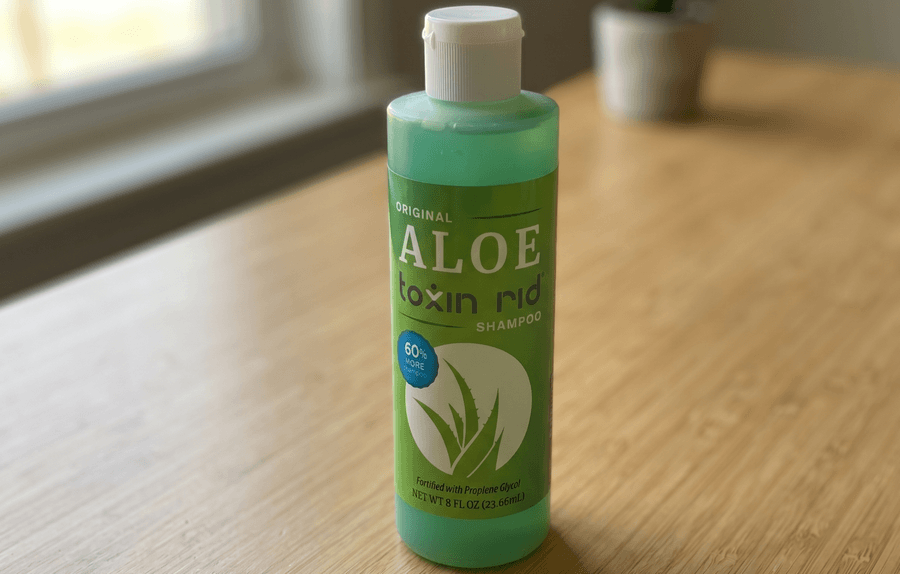
This is the top-ranked shampoo, and it earns that spot for specific reasons. Its formulation is built around propylene glycol—a key penetrating agent—and aloe vera, designed to work into the hair shaft over multiple applications. It’s not a one-wash miracle; it’s the engine in a multi-day protocol, typically used 10-15 times over 3-10 days with a 10-15 minute dwell time each wash.
Why it’s #1 for high-stakes scenarios:
- Deep Penetration: The propylene glycol is the critical variable. It’s what allows the formula to reach metabolites embedded in the hair cortex, which is why it’s recommended for heavy, long-term exposure.
- Protocol Flexibility: It’s the core of both the Macujo and Jerry G methods, which are the most discussed multi-step protocols for a reason. User reports indicate it can be effective for thick, ethnic hair, and even dreadlocks when the hair is properly sectioned during application.
- The Critical Verification Step: You must verify you have the correct version. Look for propylene glycol in the ingredients and the specific UPC barcode sold by TestClear. This is the recreation of the original Nexxus formula believed to be most effective. A single bottle runs $134-$170 and yields 5-10 uses, so the cost-per-wash is a key variable to estimate for your protocol.
#2: Nexxus Aloe Rid (Original Branded Formula)
This is ranked second primarily due to availability. This is the original branded version that the Old Style Aloe Toxin Rid is based on. The original formula was discontinued years ago; what’s currently sold as “Nexxus Aloe Rid” is a newer formulation with more conditioning agents like avocado oil and ceramides. While it may clean hair, the community consensus and user reports suggest the older formula’s higher concentration of solvents like propylene glycol was the key to its efficacy. If you can somehow source verified, unexpired original bottles, it would be potent, but for practical purposes, the TestClear version is the accessible equivalent.
The Competitors: Strengths and Critical Limitations
Now, let’s look at the other players. I’ll give you their baseline strength—their selling point—and then the critical limitation that makes them a riskier choice for a high-stakes test.
High Voltage Detox Folli-Cleanse Shampoo
- Baseline Strength: It’s a single-bottle, moderate-strength shampoo that’s safe for color-treated hair and claims an effective window of up to 36 hours after one use. It’s more affordable at ~$35.
- Critical Limitation: Its formula and single-use design make it less consistent for heavy or chronic exposure. Furthermore, user reviews indicate it struggles with dense or tightly styled hair (like cornrows or locs) because the product has difficulty accessing the scalp and root zone thoroughly. It’s a lighter tool for a lighter job.
Zydot Ultra Clean Shampoo
- Baseline Strength: It’s a budget-friendly, three-part system (shampoo, purifier, conditioner) designed for same-day, final-stage use, priced at $35-$36. It’s commonly used as the final rinse in the Macujo and Jerry G methods.
- Critical Limitation: As a standalone solution, it’s weak. Studies indicate a single application removes only a minimal amount of metabolites—for example, one study showed THC levels reduced by only 36%. For a high toxin load, relying on Zydot alone is a significant gamble. It’s best understood as a supplement, not a primary weapon. For a deeper dive into its specific role, you can look into evaluations of Zydot Ultra Clean effectiveness.
Rescue Detox Shampoo Concentrate
- Baseline Strength: It’s a rapid-action, same-day product marketed to work “within one wash” with effects lasting up to 24 hours. It’s the cheapest option at $20-$30.
- Critical Limitation: The evidence suggests it operates through chemical coating—masking toxins on the hair’s surface rather than removing them from the cortex. This makes it ineffective for heavy or chronic use histories. It’s a temporary mask, not a deep cleanse.
Nutra Cleanse Folli-Clean Shampoo & Toxin Wash
- Baseline Strength: They claim quick cleansing action (within 60 minutes for Folli-Clean).
- Critical Limitation: There is a severe lack of independent user data or detailed formulation analysis available for these products compared to the top-ranked options. When the stakes are this high, betting on an under-documented product adds another layer of risk.
Addressing the “Full Bottle” Objection
I see this comment a lot: “The bottle is full in the review video, so it’s a paid promotion and a lie.” Let’s break that down. A single bottle of Old Style Aloe Toxin Rid is designed for 5-10 washes. A proper multi-day protocol for a heavy user might require two bottles. A reviewer showing a full bottle could simply be at the start of their protocol. The proof isn’t in an empty bottle; it’s in the verified, long-term user follow-ups that show passed tests months later. You have to look for the outcome, not just the unboxing.
The bottom line of this ranking: The top-ranked shampoos earn their place through a specific, deep-cleansing mechanism and a body of user-reported outcomes in difficult scenarios. The competitors have their place—perhaps for very light, recent use, or as a final-day supplement—but they carry critical limitations that make them riskier variables for a test that could determine your job or your freedom.
Choosing the right product is the first step. Knowing how to use it correctly for your specific scenario is the next critical protocol.
Practical Guide: Using Detox Shampoos Effectively and Safely
Choosing the right shampoo is only half the battle. Using it wrong will waste your money, and in a high-stakes scenario, that’s a risk you can’t afford. Think of it like a prescription: the correct dosage and timing are just as critical as the medication itself. Let’s break down the execution protocols.
The Universal Core Protocol: Old Style Aloe Toxin Rid
This is the foundational procedure for our top-ranked shampoo. For the active ingredients to interact with the hair shaft and help flush out metabolites, you must follow these steps. This is your baseline.
- Wet your hair thoroughly with warm water to open the cuticle layer slightly.
- Apply a generous amount of Old Style Aloe Toxin Rid shampoo, massaging it deep into the scalp and along the hair shaft. Ensure full saturation from root to tip.
- Let it dwell. Leave the shampoo in your hair for 10–15 minutes. This contact time is non-negotiable; it’s the window where the cleansing agents are designed to work.
- Rinse thoroughly with warm water.
- Repeat the process. Apply a second lather, massage, and let it dwell for another 10–15 minutes before a final, thorough rinse.
This two-wash sequence is considered one “detox wash.” For pre-test preparation with 7-10 days remaining, the general estimate is to aim for 10–15 total detox washes spread over that period.
Scenario Adjustments: Modifying the Core Protocol
Your specific variables—time, usage history, and hair type—require adjustments to this baseline.
Scenario 1: The 72-Hour Crunch (Condensed, Intensive Schedule)
If your test is in three days or less, you shift to a high-frequency protocol. The estimate here is to perform 2–3 complete detox washes per day, spaced out (e.g., morning, afternoon, evening). This intensive schedule attempts to accelerate the cleansing process within a severely limited window. It will likely require using the product more aggressively and may increase the risk of scalp irritation.
Scenario 2: Heavy or Long-Term Use (Longer, More Frequent Protocol)
For a history of daily, heavy, or long-term substance use, the number of required cycles increases significantly. Where a light user might see results with 5–8 full Macujo Method cycles (which incorporate Aloe Toxin Rid), a heavy user’s estimate jumps to 10–15 cycles or more. This means starting your protocol earlier and committing to a more prolonged, intensive regimen of washes to address the higher concentration of metabolites stored in the hair cortex.
Scenario 3: Body Hair or Dreadlocks (Modified, Careful Application)
- For Body Hair (Armpits, Chest, Legs): The process is similar, but application can be trickier. You may need to lather and let the shampoo dwell on the area for the full 10–15 minutes, possibly using a clip to hold body hair in place if it’s long. The key is ensuring full, prolonged contact with the hair shaft.
- For Dreadlocks or Very Thick Hair: Penetration is the major challenge. You must meticulously work the shampoo into each lock, ensuring it reaches the core. This may require more product and longer massage times. Some individuals with dreadlocks report needing to saturate their hair with the shampoo and cover it with a shower cap for the dwell time to prevent it from simply sitting on the surface.
Critical “What to Avoid” Mistakes
Even with the right product, simple errors can compromise your results. Here’s what not to do:
- Do NOT use conditioner or other hair products before your detox washes. Conditioners coat the hair cuticle, creating a barrier that can block the detox shampoo from penetrating.
- Do NOT rinse inadequately. Any residual product left in your hair can interfere with the process or raise flags during testing. Rinse longer than you think is necessary.
- Do NOT re-contaminate your hair. After a detox wash, avoid wearing old hats, using unwashed pillowcases, or being in smoky environments. Drug metabolites from these sources can re-deposit onto your clean hair.
- Do NOT assume one wash is a magic bullet. This is a multi-step protocol. Skipping sessions or cutting the dwell time short reduces the estimated effectiveness.
- Do NOT ignore scalp health. If you experience severe burning, open sores, or an allergic reaction, continuing the protocol is not advised. The method’s effectiveness is highly dependent on strict adherence, and that becomes impossible if you injure your scalp.
Remember, even perfect execution of these protocols is an estimate of improved odds. Your individual outcome depends on all the variables we’ve discussed. Managing what you can control—the method, the timing, the avoidance of errors—is your best strategy. This sets the stage for a realistic understanding of what success might look like for your specific situation.
Setting Realistic Expectations: Timelines and Success Rates
Let’s talk honestly about what’s possible. You’re looking for a guarantee, and I can’t give you one. What I can give you is a clear-eyed estimate of your odds based on the variables in your scenario. This isn’t about hope; it’s about understanding the clock, the biology, and the protocol.
First, the baseline: the standard hair follicle test looks at the newest 1.5 inches of hair growing from your scalp. This segment is the biological record of the last approximately 90 days. The core goal of any detox shampoo protocol is to cleanse metabolites from that specific 1.5-inch window. If the drugs aren’t in that newest growth, you pass. If they are, you fail. Simple in theory, complex in execution.
Your odds hinge on a few key variables:
- Usage Pattern & Recency: This is the biggest factor. A single, isolated use two months ago leaves a very different trace than daily, chronic use that ended last week.
- Your Hair Growth Rate: The 90-day window is an average. Your hair might grow faster or slower due to genetics, age, or health. Faster growth means the 1.5-inch sample covers a shorter time period. Slower growth means it covers a longer one—and potentially older drug exposure.
- Protocol Adherence & Timeline: How many washes can you complete? Did you follow every step precisely, or did you skip the vinegar soak because it burned? More washes over more days generally improve the estimate of effectiveness.
- Collection Site: This is a critical, often overlooked variable. If they take head hair, you’re dealing with the 90-day window. If you’re bald or they choose body hair (armpit, chest, leg), the detection window extends dramatically. Body hair grows much slower, so a 1.5-inch sample from your arm could represent a year or more of history. No shampoo protocol is designed for that timeline.
So, what does this mean for your specific situation? Here’s a simplified, scenario-based odds assessment:
- Last-Minute, Single Use (Test in 3-7 days): This is possible but risky. The metabolite band in your hair is narrow. A rigorous, multi-wash protocol might reduce the concentration enough to fall below the detection cutoff. However, the odds are not in your favor, and any error in the process can lead to a positive result.
- Heavy, Chronic Use with 2+ Weeks Preparation: This is where a strict protocol has its highest chance of success. The combination of stopping drug use immediately and performing 10-15+ washes over 10+ days provides the best estimate for stripping accumulated metabolites. User reports suggest high success rates in this scenario when every step is followed without deviation.
- Any Use with Body Hair Collection: Your odds drop significantly. The extended detection window of body hair (up to 12 months) means metabolites from use many months ago are still present in the sample. Standard detox shampoos are not formulated or tested for this deep a historical cleanse. This is the scenario where many well-intentioned protocols fail.
The bottom line is that time is your most valuable asset. The more days you have between stopping use and your test date, the better your estimated odds become. A perfect protocol can’t overcome a biological record of heavy use from last month. It can only work on what’s in the hair now, and that requires both the right product and, crucially, enough clean-hair growth time.
Understanding these odds is the first step. The next is understanding the risks involved in pursuing them—both to your health and the risk of the lab detecting your efforts.
Understanding Risks and Avoiding Tampering Detection
Your safety and avoiding a ‘tampering’ flag are paramount. Let me be direct: the methods you’re considering to pass this test carry real, tangible risks that go beyond just failing. I’m not here to scare you, but to give you the clear, honest variables so you can make an informed estimate. We need to talk about your health, the lab’s detection methods, and the legal landscape.
The Physical Cost: Health Risks of Aggressive Methods
First, let’s talk about your scalp and hair. The desperation to strip metabolites can lead people to protocols that cause severe damage. The Macujo method, which involves acidic vinegar and harsh detergents, is notorious for this. If you follow that path, you’re likely to experience significant scalp dryness, flaking, redness, and irritation. The surfactants in many detox shampoos—and household items like Tide—are designed to strip oils. Overuse or using them on a sensitive scalp can disrupt your skin’s protective lipid barrier, leading to burning sensations, chemical sensitivity, and even open wounds or chemical burns.
The Jerry G method, which relies on bleaching and dyeing, introduces its own set of variables. Bleach is a powerful oxidizer that doesn’t just remove color; it fundamentally damages the hair’s protein structure. This leads to dryness, breakage, split ends, and further scalp irritation. Even dedicated detox shampoos like Old Style Aloe Toxin Rid or Zydot Ultra Clean can cause dryness, mild stinging, and increased breakage if used more frequently than instructed. If you have pre-existing skin conditions like eczema or psoriasis, or simply sensitive skin, your vulnerability to this damage is heightened. The bottom line is this: aggressive, repeated chemical cleansing carries a real risk of cumulative damage, leading to chronic inflammation or even hair loss. If you experience severe burning or irritation, discontinue use immediately.
How Labs Spot the Loophole: Detecting Tampering
You might think the worst that can happen is a positive result. Not so. Labs are sticklers for procedure, and they are trained to spot signs of adulteration. They aren’t just looking for metabolites; they’re analyzing the hair’s condition. Oxidative treatments like bleaching leave chemical biomarkers—compounds like PTCA and cysteic acid—that sophisticated tests can detect. Fluorescence microscopy can reveal altered melanin, and amino acid ratios can indicate chemical damage.
If your hair appears fried, brittle, has inconsistent color, or shows obvious cosmetic damage, that raises an immediate red flag during lab processing. Furthermore, unusual chemical residues from detox products can be detected during analysis. The consequence isn’t just a failed test. If the lab determines you attempted to cheat, they can invalidate the result, trigger a retest under direct observation, or issue a “refusal-to-test” designation, which is often treated as equivalent to a positive result for employment or legal purposes.
The Legal and Professional Fallout
This is where the stakes escalate from personal to legal. Getting caught isn’t just embarrassing; it can be criminal. In at least 15 U.S. states, including Texas, Florida, Illinois, and New Jersey, knowingly attempting to defraud a drug test is a misdemeanor or even a felony. Penalties can include fines up to $15,000 and prison time.
For employment, especially DOT-regulated positions, being caught tampering means immediate termination for misconduct, making you ineligible for unemployment benefits. It can also be reported to the FMCSA Clearinghouse, severely limiting your future employment prospects. If your test is for probation or family court, the consequences are even graver. Tampering constitutes a violation of a court order, and the pressure of passing a drug screen for probation carries risks like contempt charges, extended probation, or jail time. The stakes are simply too high for reckless experimentation.
The Hard Truth: No Guarantees Exist
I must be unequivocal about this final point: there is no 100% foolproof method. No detox shampoo has independent, peer-reviewed clinical evidence proving it reliably changes a confirmed positive hair test to a negative one. The efficacy claims are largely based on anecdotal user reports, not scientific validation. For heavy or chronic users, metabolites form strong bonds within the hair cortex that resist even extended washing protocols. A perfect protocol can’t erase a biological record of heavy use from last month. It can only work on what’s in the hair now, and its success is an estimate, not a guarantee.
Understanding these risks is about managing your expectations and making a calculated decision. The theory and warnings are one thing; seeing how this played out for real people in similar situations is another. The next section provides that crucial social proof.
User Experiences: Successes, Failures, and Key Takeaways
You don’t have to take my word for it. Here’s what happened to others. These are anonymized composites from real user reports, and they tell the story better than any product description.
Case 1: The Last-Minute CDL Hopeful
- Scenario: “Marcus” had 72 hours’ notice for a pre-employment hair test for a trucking job. He was a moderate, weekend marijuana user who had quit two weeks prior.
- Method Used: He purchased Old Style Aloe Toxin Rid and followed a strict, 10-wash protocol over three days, using Zydot as a final step on test day.
- Outcome: Passed. He reported his hair felt clean but not fried.
- Key Lesson: For light-to-moderate users with a short lead time, a dedicated, high-frequency wash schedule with the top-tier product can work. His quick action after quitting was a critical variable.
Case 2: The Heavy, Daily User’s Grueling Protocol
- Scenario: “Jessica” was a daily THC and occasional cocaine user. She had 10 days’ notice for a family court test. “Life will change drastically bad if it doesn’t,” she said.
- Method Used: She combined Old Style Aloe Toxin Rid with the full Macujo Method steps (vinegar, Clean & Clear, etc.), doing 15 total washes over 8 days. She endured significant scalp soreness.
- Outcome: Passed. She noted her hair was visibly damaged but metabolite-free.
- Key Lesson: For heavy, chronic use, a multi-method, multi-day assault is often the estimated path. It’s arduous and painful, but the user felt the alternative was worse. This underscores the need for time and tolerance for discomfort.
Case 3: The Budget DIY Attempt That Backfired
- Scenario: “David” was a daily marijuana smoker with a test in 5 days. He couldn’t afford a specialty shampoo, so he pieced together a DIY method from online forums: daily washes with vinegar, baking soda, and Tide detergent.
- Method Used: Household products only, applied aggressively.
- Outcome: Failed. He also developed open sores on his scalp. “Lol you could’ve saved money and used Vinegar and Baking soda bro,” he lamented, full of regret.
- Key Lesson: The intense chemical damage from unregulated DIY methods is a major risk. While cheap, they often lack the specific surfactants needed to target cortex-level metabolites and can cause injury, making the situation worse.
Case 4: The Body Hair Curveball
- Scenario: “Alex” had short head hair. The tester took hair from his armpit. He was a light, infrequent user but had used once about 60 days prior.
- Method Used: He had only prepared his head hair with a detox shampoo, assuming that’s what they’d take.
- Outcome: Failed. “I did every major step! Just for them to pull from my armpit hair… I failed do not buy,” he stated, feeling the product was useless.
- Key Lesson: If testers can’t get 1.5 inches from your head, they will take it from your body. Body hair has a different, often longer, growth cycle and can hold metabolites for much longer. Your protocol must account for this variable if you have short head hair.
The pattern is clear: success correlates with using a proven product, following a strict protocol matched to your use level, and having enough time. Failures often stem from cutting corners, using unproven methods, or being blindsided by a testing variable like body hair. These stories likely spark more specific questions. The FAQ section is designed to rapid-fire answer the most urgent ones that are still on your mind.
FAQ: Honest Answers About Hair Detox Shampoos
FAQ: Honest Answers About Hair Detox Shampoos
Let’s rapid-fire through the most common questions and doubts. I’ll be direct. My answers are based on the science and the patterns we see, but remember, this is my best estimate for your specific scenario.
Q: Does this stuff actually work for hard drugs like cocaine or meth, or just weed?
This is a critical variable. The lab isn’t just looking for the drug itself; it’s looking for metabolites your body produces after ingestion. The evidence suggests detox shampoos are less effective at removing these metabolites for stimulants and opioids compared to THC. One in-vitro study showed a detox shampoo reduced THC levels by over 50% with multiple uses, but only reduced cocaine concentrations by about 5%. The bonds formed with the hair cortex for different substances are a key factor. For heavy users of hard drugs, the protocol must be even more aggressive, and even then, the odds are a tougher estimate.
Q: I’m bald. Can I use this on my beard, chest, or leg hair?
You can, and you’ll likely have to. If head hair isn’t available, collectors will take body hair, which has a different growth cycle and can hold metabolites for up to a year. The same cleansing principle applies—you need to open the cuticle and attempt to flush the cortex. However, body hair is often coarser and the process can be more irritating. The key variable is that body hair grows slower, so the detection window is a different estimate. Your protocol must account for this.
Q: I see people saying this is a scam. Why should I trust it?
Look, I understand the skepticism. The internet is full of conflicting information. The “scam” argument usually comes from two places: 1) People who bought a counterfeit product (a major problem with popular brands), and 2) People who used it incorrectly for their scenario—like a heavy daily user doing a single wash and expecting a miracle. No shampoo guarantees a pass. The goal is to significantly reduce metabolite levels to improve your odds. The top-ranked products have the longest track record of anecdotal success, but they are not magic.
Q: Why is this shampoo so expensive? I can’t swing $300.
I hear you. The cost is a major pain point. The price is driven by the proprietary formulations and, frankly, the high-stakes demand. If you’re looking at the top-tier options like Old Style Aloe Toxin Rid, you’re paying for a specific, sustained-release cleansing mechanism designed for repeated use. Are there cheaper household methods? Yes, and we discussed those in the budget scenario section. But the trade-off is a stark one: extreme physical damage to your scalp and hair for a less predictable outcome. You’re estimating cost against risk.
Q: Will using a hemp oil shampoo make me fail? Can it cause a false positive?
This is a specific concern. The short answer is: it’s highly unlikely, but the data is incomplete. Standard hemp oil or CBD shampoos contain negligible to no THC, the psychoactive compound that triggers a positive. However, the industry is poorly regulated. A low-quality “hemp” product could theoretically contain trace THC above legal limits. More importantly, labs test for specific metabolites from drug ingestion, not the external presence of hemp oil. The bigger risk is external contamination from the environment, which we covered earlier. There is no robust clinical evidence that a hemp-based shampoo alone will cause you to fail a drug test from internal use. It’s a low-probability variable.
Q: If I use this, will the lab know I tried to cheat?
It’s a risk you must estimate. Labs are sticklers. They look for signs of chemical damage—extreme dryness, breakage, inconsistent color from bleaching. A harsh DIY method like the Macujo protocol can leave your hair fried and your scalp raw, which is a red flag. A quality detox shampoo aims to cleanse without leaving that obvious, damaged signature. However, if your hair comes in looking unnaturally stripped, a collector can document it and the sample may be flagged for scrutiny or even rejected. The protocol is about walking a fine line.
Q: What’s the single biggest reason people fail even after using these products?
From the patterns, it’s a mismatch between the protocol and their scenario. A light, one-time user does ten washes and damages their hair unnecessarily. A chronic, heavy user does two washes and thinks they’re clean. Or, they get blindsided by a body hair test when they only prepped their head. There is no one-size-fits-all answer. You must honestly assess your use level, hair type, and time, then follow a strict, scenario-matched protocol. Cutting corners is the variable that leads to failure.
Taking Action: Your Personalized Next Steps
So, let’s bring it all together. Your scenario—your timeline, your history, your hair, your budget—is the variable that dictates your best plan. There is no universal answer, only a personalized protocol. Based on everything we’ve covered, here is your decisive, scenario-based summary for taking action.
If you have 3 days or less: Your path is narrow and urgent. Your immediate next step is to order Old Style Aloe Toxin Rid with overnight shipping. Begin an intensive wash protocol—2-3 applications per day—until the test. On test day, follow it with a Zydot Ultra Clean sequence. This is the most aggressive, time-sensitive protocol available.
If you have 7-10 days: This is a more manageable window. Your best estimate for success involves daily washes with a premium shampoo like Old Style Aloe Toxin Rid or Macujo Aloe Rid, aiming for a total of 10-15 washes. Use Zydot Ultra Clean as your final step on the morning of the test.
If you have several weeks: You have the advantage of time. Maintain a clean routine, space out your 10-15 total washes over the period, and use a finisher shampoo like Zydot Ultra Clean the day before or morning of your test.
For everyone, regardless of timeline: avoid re-contamination. In the 24-48 hours before your test, steer clear of sweating, smoky environments, and keep your hands off your hair.
Now, a practical note on sourcing. If you’re searching for detox shampoo for hair drug test at CVS or typing hair follicle drug test shampoo nearby into your phone, your local options are likely limited. Detox shampoo for drug test near me searches often point to general retailers, but they rarely stock these specialized products. Your most reliable path for where to buy detox shampoo immediately is through the official vendor websites we’ve discussed, which offer expedited shipping. Zydot Ultra Clean is the exception; you can use their online store locator to check physical retail stock.
This guide is your roadmap for how to pass a hair follicle test. You now have the science, the scenarios, and the product evaluations to make an informed choice, not a fear-based guess. Bookmark this guide as your reference, assess your variables honestly, and execute your chosen protocol with precision. You’ve got this.
