
Can fake pee be detected? If you’re staring down a test that could decide your job or your freedom, that’s the only question that matters. The short answer is yes, it’s possible. But it’s not a simple yes or no, and understanding why is your first step. The reality is, detection isn’t about the drug test itself finding “fake” chemicals—it’s about a separate process checking if the sample is even human. This is my best estimate of the current landscape: labs are actively looking for substitution, and the technology they use is always improving.
Here’s the critical scenario: when you provide a sample, it goes through two checks. First, the standard drug screen—whether it’s a 5-panel drug test or a 10-panel drug test—looks for specific drug metabolites. That panel won’t flag synthetic urine on its own. The second, simultaneous check is called Specimen Validity Testing, or SVT. This is the protocol designed specifically to answer “can labs detect fake urine” by testing if the sample’s chemistry matches human urine. So, to the core question “can synthetic urine be detected by a lab,” the direct answer is that the lab’s SVT protocol is the tool built for that exact purpose.
The key takeaway is that synthetic urine can be detected in a drug test if the lab performs comprehensive SVT, which is standard for most regulated tests. To understand where this is all heading, we first need to break down what synthetic urine actually is and why labs are so motivated to find it.
What Is Synthetic Urine and Why Do Labs Care?
Alright, so we’ve established that labs have a specific protocol designed to answer the question of can synthetic urine be detected by a lab. But to really understand that process, we first need to be crystal clear on what we’re even talking about. What is this stuff, and why is there such a direct conflict over it?
Let’s start with the basics. In simple terms, synthetic urine is a lab-made liquid. It’s engineered to copy the look, the chemical makeup, and the physical properties of real, human urine. Think of it as a recipe designed to fool a machine.
The core ingredients in that recipe are pretty straightforward. You’ve got water as the base, of course. Then, to mimic the chemistry, formulators add key compounds like urea, creatinine, and uric acid—these are natural waste products your body makes. They also mix in the right balance of salts to get the specific gravity (that’s the density, or how “thick” the liquid is) into the normal human range. Finally, they add a yellow dye so it passes the most basic visual check.
Now, it’s important to estimate that this stuff wasn’t originally invented to cheat tests. It has legitimate uses, like calibrating the urinalysis machines in the lab itself or for research. But here’s where the conflict kicks in.
The entire purpose of a drug test is to see what metabolites are in your system. When someone uses synthetic urine, they’re committing what the industry calls specimen substitution. It’s a form of tampering. And labs care deeply about this for a few major reasons.
First, there’s the integrity of the program. If fake samples slip through, the whole system is worthless. Employers can’t make safe hiring decisions, probation officers can’t monitor compliance, and safety-sensitive jobs—like operating heavy machinery or commercial driving—become dangerously risky. An undetected fake is a false negative, and that can have real-world consequences.
Second, labs are motivated by money and liability. Their business is built on providing accurate, trusted results. If they get a reputation for letting fakes pass, they lose contracts and face legal trouble. So, they are absolutely financially and legally driven to crack down on this.
The prevalence of these attempts is estimated to be somewhere between 1% and 4% of all workplace and court-mandated tests. That might sound small, but for a lab processing thousands of samples, it’s a constant threat they have to screen for.
So, we’ve defined the product and laid out the fundamental clash: you need a sample that looks human, and the lab needs to prove it isn’t. This sets the stage perfectly for the logical next question: given that labs are so motivated to catch fakes, what specific methods and tests do they actually use today to do it?
How Labs Detect Fake Urine Today: Standard Methods and Their Limits
Alright, so you’re walking into that clinic, heart probably pounding a bit, and you hand over your sample. What happens next? Let’s break down the standard, step-by-step protocol—the “first line of defense”—that every certified lab uses to screen for fakes. Think of it as a series of checkpoints, each with a specific job and a known blind spot.
The Standard Detection Sequence
1. Visual Inspection & Temperature Check (The Immediate, On-Site Gatekeeper)
This happens right there in the collection bathroom, within the first four minutes. The collector is looking at two main variables.
- What it checks: First, they glance at the sample. Does it look like urine? Is it the right shade of yellow? Then, the critical check: temperature. They read the strip on the cup. Fresh human urine exits the body at roughly 98°F, so the acceptable range is 90°F to 100°F. This is a simple but powerful filter for someone who brought in a cold bottle of something from their bag.
- The Limitation: This is a snapshot in time. It only confirms the sample was in the right range at the moment of the check. If you can get your synthetic sample to that 94-100°F sweet spot right when you pour it, this checkpoint is passed. It says nothing about what the sample is made of.
2. The Lab-Based Validity Tests (The Chemical Checklist)
If the sample passes the temperature check, it’s sealed and sent to the lab. Before anyone even looks for drugs, it goes through Specimen Validity Testing (SVT). This is a series of basic chemical assays. Here are the key ones:
- Creatinine Check: This is a big one. Creatinine is a waste product from your muscles. Labs test for it to see if the fluid actually came from a human body. There’s a normal range (about 20–300 mg/dL), and a critical fail point. If the creatinine is below 2 mg/dL, the lab calls it a “substituted” specimen—meaning, they believe it’s not human urine. The limitation? This test checks for the presence of one key marker, not the full, complex cocktail of hundreds of compounds in real urine. A synthetic formula can be designed to include creatinine and hit the right number.
- Specific Gravity & pH: These are concentration and acidity tests. Specific gravity measures if the sample is too watery or too concentrated (normal range 1.002–1.030). pH measures acidity (normal range 4.5–8.0). The lab has cutoffs for both. The limitation here is similar: these are broad measurements of consistency. A well-made synthetic can be formulated to land squarely within these normal, human ranges.
- Oxidant Adulterant Screen: This test checks for common chemicals people add to real urine to destroy drug metabolites—things like bleach, nitrites, or certain household chemicals. If any of these are detected, the sample is flagged as “adulterated.” The limitation? This test is looking for specific, known cheating chemicals. A synthetic urine that doesn’t contain those specific oxidizing agents won’t trip this alarm.
So, the standard protocol is a series of hurdles: get the temperature right, include the basic chemicals like creatinine, match normal human ranges for concentration and acidity, and don’t add any obvious, testable cheating chemicals. A product that clears all these hurdles passes the first line of defense.
But here’s the critical thing to understand: these standard checks are just the beginning. They are the cost-effective filter for the most common attempts. The real chemical detective work, the advanced tests that look for the subtle signatures of a truly human sample, happens when a lab decides to dig deeper. And that’s where the arms race gets interesting.
What Labs Test For: Chemical Markers and Detection Limits
Alright, so let’s break down exactly what happens in that lab analysis phase, because this is where the “chemical detective work” I mentioned really comes into play. It’s not one single test; it’s a series of checks for specific markers that tell a story about whether that sample came from a living human body.
First, let’s address a common question: what does a urine drug test detect? At its core, the initial screening looks for drug metabolites—the chemical leftovers your body produces after processing substances like THC, opiates, or amphetamines. But running in parallel, often on the same sample, is a separate process called Specimen Validity Testing, or SVT. This is the gatekeeper.
SVT doesn’t look for drugs. It looks for proof the urine is real. Here are the key variables they measure and what out-of-range values signal:
- Creatinine: This is a waste product from muscle metabolism. Normal human urine has a creatinine level typically between 20 and 300 mg/dL. If the lab finds a level below 20 mg/dL, it triggers a mandatory check of the next marker. A level below 2 mg/dL is a massive red flag—it’s a scenario that’s physiologically implausible for human urine and strongly suggests the sample is either heavily diluted water or a synthetic substitute.
- Specific Gravity: Think of this as the “density” or “thickness” of the urine compared to water. It measures how many dissolved particles are in it. Normal human urine ranges from about 1.0030 to 1.0200. A sample near 1.0000 is essentially water. The lab uses a precision instrument called a refractometer for this. Critically, the specific gravity must correlate with the creatinine level. If the numbers don’t match up logically, suspicion rises.
- pH: This measures acidity or alkalinity. Normal human urine pH falls between 4.5 and 9.0. A pH that’s too low (very acidic) or too high (very alkaline, like above 9.0) can indicate someone poured a chemical adulterant into the cup to try and mask drug metabolites. It gets reported as “invalid,” which is a shoddy way to get your test flagged.
- Oxidants/Nitrites: Labs test for the presence of strong oxidizing chemicals like nitrite, bleach, or chromate. Normal urine has almost no nitrite. If a test finds a high level—say, above 500 mcg/mL—it’s clear evidence of an added adulterant, a direct attempt to cheat the system.
Now, here’s a crucial point to calm some advanced fears: the standard, routine immunoassay drug test itself does not specifically screen for synthetic urine. Detection happens via this separate SVT process. The drug test asks, “Are there drug metabolites?” SVT asks, “Is this even human?”
But what about more sophisticated detection? This is where we get into biological markers versus the basic chemical markers like specific gravity and pH. Advanced labs, especially for high-stakes tests, can go further. They can test for endogenous biomarkers—substances naturally present in human urine that synthetic versions often miss. We’re talking about things like uric acid, urobilin (which gives urine its yellow color), or other metabolic byproducts. If a sample has the right creatinine and pH but is missing these deeper biological signatures, a lab with the right technology can deem it unnatural.
And to answer a couple of other specific scenarios that come up: can a urine drug test detect pregnancy? No, a standard drug test and SVT panel does not look for the hCG hormone. That requires a completely separate test. Similarly, how early can a lab urine test detect pregnancy is a different medical question entirely, unrelated to the drug testing protocols we’re discussing.
So, the takeaway is this: labs have a defined checklist of chemical and biological markers. Passing means your sample’s numbers all fall within the known ranges for human urine and, ideally, show the presence of key human-specific compounds. The intensity of this scrutiny, however, isn’t the same for every test—it depends heavily on who ordered it and what panel is being run. That’s the variable that changes your risk level.
Are All Drug Tests Created Equal? Panels, Providers, and Risk Levels
Alright, so you’re asking, how far back can a urine drug test detect substances? The answer isn’t a single number, because not all tests are created equal. The type of test, who’s ordering it, and which lab is running it creates a whole spectrum of risk.
Think of it like this: a quick temperature check at a local clinic is one scenario. A federally mandated Department of Transportation (DOT) test is a completely different ballgame with much higher stakes.
Let’s break down the variables.
The Common Test: Non-DOT Workplace Screens
For most pre-employment or random workplace tests, you’re dealing with a Non-DOT test. The employer chooses the details:
- The Panel: This is the list of drugs they’re testing for. A standard 5-panel checks for marijuana (THC), cocaine, opiates, amphetamines, and PCP. A 10-panel expands that to include things like benzodiazepines, barbiturates, and methadone—common for probation or more safety-conscious jobs.
- The Provider: A major lab like Quest Diagnostics or LabCorp follows standardized protocols. They’ll run the sample through an initial immunoassay screen and, if anything looks off, send it for confirmation testing. A small, local clinic might only do a visual inspection and a temperature check, offering a much lower detection threshold.
The differences in detection windows between panel types are mostly about which drugs are flagged, not necessarily how long they’re detectable. But the cutoff levels—the concentration that triggers a positive—can vary by employer, which can slightly shorten or lengthen that window.
Here’s a rough estimate of how long can a lab detect drugs in urine for common substances on these panels:
- Cocaine: Its metabolite, benzoylecgonine, is typically detectable for 2-4 days after occasional use, but can be found for up to 3 weeks in heavy users.
- Opiates (like codeine/morphine): Usually 1-3 days.
- Amphetamines: Averages 2-3 days.
- THC: This is the outlier. A single use might be gone in 3 days, but chronic use can be detected for 10-15 days, or 30+ days for heavy users.
The High-Stakes Test: DOT and Legally Supervised Scenarios
Now, the risk level skyrockets with DOT testing. This is federally regulated (49 CFR Part 40) for anyone in a safety-sensitive transportation job. The protocol is rigid:
- It uses a strict 5-panel (expanded in 2018 to include semi-synthetic opioids).
- Collectors are specially trained.
- Every single result is reviewed by a Medical Review Officer (MRO), a licensed physician.
- The consequence of getting caught using synthetic urine isn’t just a failed test—it’s immediate removal from your job and potential felony charges in many states.
Even more intense are probation, parole, military, or court-ordered tests. These are often directly observed, meaning someone watches the urine leave your body. In that scenario, attempting to use a hidden device isn’t just risky; it’s practically impossible. The protocols for these are strict, and anyone researching how to pass a drug screen for probation needs to understand that the rules and scrutiny are on a completely different level.
So, how long does a urine drug test detect alcohol? Ethanol itself clears the blood and urine quickly, often within hours. However, labs can test for specific metabolites like ethyl glucuronide (EtG) which can extend the detection window to up to 80 hours, depending on the test used.
The bottom line is this: your risk isn’t just about the chemistry of the fake urine. It’s a calculation that includes the panel, the provider’s rigor, and the legal framework behind the test. A standard pre-employment screen at a commercial lab is one variable. A DOT or probation test is an entirely different equation with much steeper consequences.
And that’s the key question looking forward: if the current methods already have these limits and variations, what’s coming next that could change the game entirely? The protocols are evolving.
The Next Generation: Advanced Technology and Evolving Lab Protocols
So, we’ve established that not all tests are created equal, and the risk varies. But what’s on the horizon? The trend is clear: labs are actively upgrading their technology to close the loopholes. This isn’t a static game. The protocols are evolving, and the detection methods are getting more specific and harder to fool. Think of it like a weather forecast for the testing landscape—you need to know what’s coming.
The cornerstone of this evolution is confirmatory testing. That initial immunoassay screen is just the first filter. When a sample is flagged, it often goes to a lab for a much deeper look. This is where techniques like gas chromatography-mass spectrometry (GC-MS) come in. In simple terms, GC-MS separates all the individual components in the urine and then identifies their exact molecular structures. It’s like taking a sample apart and analyzing every single piece. If the lab suspects a sample is synthetic, GC-MS can be used to identify specific compounds that shouldn’t be there, or to confirm the absence of ones that should.
And the labs are getting smarter. A major emerging practice is testing for biocides. Biocides are preservatives—like sodium azide—that some cheaper synthetic urine brands add to prevent bacterial growth in the bottle. Here’s the critical variable: these biocides are not naturally found in human urine. So, their presence is a direct, smoking-gun indicator of adulteration. Many laboratory testing facilities now specifically screen for these preservatives during initial sample processing as a standard practice. If your synthetic urine contains an easily detectable biocide, you’re essentially walking in with a sample that has a built-in alarm bell.
This points to the direction of movement. The next generation of detection isn’t just about checking for the right temperature or creatinine levels. It’s about molecular analysis and biomarker screening. Advanced methods like liquid chromatography-tandem mass spectrometry (LC-MS/MS) can analyze for dozens of endogenous biomolecules—compounds that are naturally present in human urine. Synthetic products often lack many of these. By checking for the absence of these natural markers and the presence of synthetic ones, labs can confirm a fake sample with very high confidence.
The bottom line is this: the arms race is escalating. The technology to detect synthetic urine is becoming more precise and more routine. But here’s the estimate I’ll leave you with—even with all this advancing tech, the most common reasons for detection are still practical, human errors. That’s the critical piece of the puzzle we need to look at next.
What Makes Synthetic Urine Fail? Real-World Factors That Trigger Detection
Alright, let’s get into the real-world scenario where things go sideways. You can have the most advanced formula on the planet, but if you fumble the procedure, the sample gets rejected before it ever reaches the lab’s high-tech machines. The failure point is almost always human error, and it starts with one critical variable.
The Temperature Tightrope: The #1 Reason for Instant Rejection
Here’s the estimate: the single most common reason a synthetic sample is flagged isn’t some fancy lab test—it’s the temperature. Federal guidelines, like those from SAMHSA and DOT, are sticklers for this. The acceptable range is a razor-thin 94°F to 100°F. The collector has to check this within four minutes of you handing over the cup. If it’s outside that window, it’s an automatic red flag.
Think of it this way: your body produces urine at a specific temperature. If the sample is too cold—below 90°F—the protocol assumes it was stored, diluted, or substituted. If it’s too hot—above 100°F—it suggests you artificially heated it to mimic a fresh sample. Either way, the collector marks the form as invalid, and you could be facing an immediate, directly-observed retest. This is why the anxiety around waiting rooms and heat pads is so valid; a pad that fails or detaches during a long wait can drop your sample below 94°F, sinking the whole attempt. Many beginners wonder how long does pee stay warm in a pill bottle or other makeshift containers, and the answer is usually not long enough to pass a supervised check.
Beyond Temperature: Other Practical Pitfalls
While temperature is the main event, other variables can trigger failure before you even leave the collection site.
- The Overheating Spike: A huge user error is adding too much heat activator powder at once. The chemical reaction is fast and irreversible, often spiking the temperature above 100°F in seconds. If you overheat it, your only option is to wait for it to cool naturally, which can take precious minutes you may not have.
- The Expired or Counterfeit Product: Synthetic urine isn’t timeless. Over months, the chemical balance—things like pH, specific gravity, and creatinine levels—can drift outside acceptable ranges, even in a sealed bottle. Worse, counterfeit products are everywhere and may lack the correct chemical markers entirely. The only way to estimate freshness and authenticity is to validate the batch number on the manufacturer’s official site.
- Faulty or Improper Equipment: Using a regular hand warmer is a shoddy way to heat your sample; they’re designed to get much hotter, often 130°F+, and can easily overheat your sample past the 100°F cutoff. The specialized heat pads in quality kits are calibrated for a narrow, steady output. But even they can fail if the adhesive doesn’t stick properly in a cold environment, or if you’re dealing with an unusually long wait.
- The Blank Temperature Strip Panic: If your strip shows no reading—just a clear or black line—it means the sample’s temperature is outside the strip’s measurable range. If the bottle feels warm, you’re overheated. If it feels cool, you’re too cold. Not rechecking that strip right before you pour is a critical, avoidable mistake.
- Behavioral Red Flags: Taking too long in the bathroom, visible nervousness, or fumbling with clothing can make a collector suspicious, potentially leading to a more scrutinized collection or an observed test.
All these factors are about the procedure failing, not necessarily the formula. But here’s the question that follows logically: if a sample fails for being too cold, too old, or chemically imbalanced, how does the lab distinguish that synthetic urine from a sample of old, diluted human urine? That’s the next diagnostic step they take.
Failure Point Diagnostic: Is Your Sample Already Flagged?
Okay, let’s get into the practical side of this. You’ve got your sample, you’ve gone through the motions, but there’s that nagging voice asking, “Is this actually going to work?” Before you even walk into that clinic, you can run a quick, private diagnostic. Think of this as your pre-flight checklist. The goal here is to move from a vague feeling of “I hope this is okay” to a concrete, protocol-based inspection. If your sample fails any of these checks, you have a major problem that needs fixing before you’re standing in that bathroom.
Failure Point Diagnostic: Is Your Sample Already Flagged?
Ask yourself these five questions. Be brutally honest. The clinic’s collector is trained to look for exactly these kinds of discrepancies.
1. The Visual & Tactile Inspection: Does anything about the container or liquid look “off”?
First, look at the bottle itself. Is there any sticky, visible seal residue left around the rim from the manufacturer’s seal? That’s a potential red flag for tampering. Now, look at the liquid. Hold it up to a light. Real human urine isn’t perfectly clear like water; it has a slight, natural cloudiness due to trace minerals and cells. If your sample is crystal clear, like bottled spring water, it fails the “eye test.” Also, check for any floating particles—lint from your clothing, a stray fiber, or, if you’re using a heat activator powder, any undissolved granules around the rim. Any foreign object is an immediate cause for suspicion.
2. The Temperature Strip Calibration Check: Have you verified it’s accurate?
This is a huge variable. That built-in temperature strip is your primary tool, but it can be faulty or misread. Did you test it against a known, reliable secondary thermometer after you heated the sample? A common user error is assuming the strip is correct. Here’s a scenario: you heat the bottle, the strip reads 98°F, but your digital forehead thermometer reads 102°F. Which one do you trust? If you don’t verify, you’re flying blind. Remember, the acceptable range is 90–100°F, and the collector checks it within four minutes. An inaccurate strip means your sample could be rejected before it’s even poured.
3. The Foam Test: Does it bubble like the real thing?
This is a subtle but critical check. Normal human urine contains proteins, like Tamm-Horsfall protein, that act as a natural surfactant. When you pour real urine into a cup, it creates a thin, transient layer of froth or bubbles. Many cheaper or older synthetic formulas lack these protein analogs. If you pour your sample into a clean glass and it behaves like water—no foam, just a flat surface—that’s a “dead giveaway” to an observant collector. It lacks a basic physical property of the real thing.
4. The Scent Evaluation: Is there a mild, organic odor?
We’re not talking about a strong smell here. Fresh human urine has a mild, slightly ammonia-like or “organic” scent. It’s not perfume, but it’s not odorless either. Some synthetic urines, particularly budget options, are reported to be completely odorless. While no federal rule says “urine must smell,” an odorless specimen combined with, say, perfect clarity or no foam, creates a cumulative picture of something that’s not right. If you open the bottle and it smells like absolutely nothing, that’s a potential informal red flag.
5. The Dry Run Timing & Procedure: Can you execute the full sequence cleanly in under 90 seconds?
This isn’t about the sample’s chemistry; it’s about your performance under stress. Test day anxiety degrades fine motor skills. Have you practiced the entire sequence—retrieve the sample from concealment, check the temperature, give it a gentle shake (to mimic natural urine), pour it into a cup (checking for foam), re-conceal the empty container, and flush—within a 90-second window? If you’re fumbling, taking too long (say, 8-10 minutes in the bathroom), or making noise, you’re flagging yourself behaviorally. The procedure itself becomes the failure point. A dry run isn’t optional; it’s a core part of the protocol to ensure the delivery of the sample doesn’t compromise it.
If your sample passes all five of these checks, you’ve significantly reduced the user-error variables. You’ve moved from hope to a verified procedure. If it fails even one, you know exactly what the weak link is and can address it—whether that’s getting a better formula that foams and smells right, calibrating your temperature method, or practicing until the physical procedure is second nature. This diagnostic turns generalized fear into a specific, solvable checklist.
Synthetic Urine vs. Other Urine Issues: How Labs Tell the Difference
All right, so you’ve run your own diagnostic on the sample. You’ve checked the variables you can control. But what happens when that cup is taken away? What is the lab actually looking for? Here’s the critical thing to understand: labs see “abnormal” urine samples all the time. The question isn’t if your sample gets flagged, but how it gets categorized on their diagnostic flowchart. That categorization determines everything.
Let’s break down the two main flags they look for, because they mean very different things.
1. The “Dilute” Sample: The Over-Hydrated Human
This is the most common abnormality. It happens when someone drinks a huge amount of water before the test. The lab sees this as your urine, just watered down. The key markers here are proportional:
- Creatinine: Low, usually between 2 and 20 mg/dL.
- Specific Gravity: Also low, between 1.001 and 1.003.
The important part is that both values drop together. The urine still contains all the other trace human elements—uric acid, urea, electrolytes, even a few sloughed-off skin cells—just at lower concentrations. The lab result comes back as “negative dilute.” It’s suspicious, but it’s still considered a valid human specimen.
2. The “Substituted” Sample: The Non-Human Imposter
This is the flag for synthetic urine. The lab’s protocol looks for a mismatch that doesn’t add up to a hydrated person. The classic tell is discordant values:
- Creatinine: Can be extremely low (<2 mg/dL) or even absent.
- Specific Gravity: Might be perfectly normal, or impossibly low (≤1.0010).
The math doesn’t work for a living human. A sample with rock-bottom creatinine but normal specific gravity isn’t dilute; it’s wrong. This is where labs start running deeper checks. They test for uric acid and magnesium—markers that are almost always absent or severely depleted in synthetic formulas but remain in diluted human urine. They look under a microscope for the total absence of any cellular debris.
This is also where more advanced labs can bring in gender-specific checks. While not standard for every pre-employment test, some protocols, especially in forensic or compliance monitoring, test for hormones like HCG (human chorionic gonadotropin). A sample from a male donor that tests positive for HCG, or a female sample with testosterone levels wildly out of expected range, is an immediate, massive red flag for substitution.
So, the core question of can a drug test detect age of urine or gender through these markers? The answer is yes, if the lab’s protocol includes that specific panel. The diagnostic flowchart is designed to spot inconsistencies that prove the sample didn’t come from the person standing in front of them. A synthetic sample fails not because it’s “too perfect,” but because it lacks the complex, messy signature of a real human specimen at a biochemical level.
Can Synthetic Urine Still Pass? Risks, Loopholes, and Limitations in 2026
Can Synthetic Urine Still Pass? Risks, Loopholes, and Limitations in 2026
So, after all this, here’s my best estimate on the core question: can you still use synthetic urine to pass a drug test in 2026? The answer is a cautious yes, but only under a very specific set of conditions. It’s not a magic bullet, and the margin for error is razor-thin. Let’s break down the scenario where it can work, and the significant risks where it will absolutely fail.
The passing scenario has three critical variables that must align perfectly:
- The Test Type Must Be Standard and Unsupervised. This is the primary loophole. We’re talking about a typical pre-employment or random workplace test at a clinic like Quest or LabCorp, where you are given privacy in the restroom. The moment a collector, probation officer, or military observer is watching you urinate, the scenario collapses. Substitution becomes impossible.
- The Formula Must Be Chemically Modern. The product must contain the key markers—urea, creatinine, uric acid, balanced electrolytes—within normal human ranges. It has to pass the initial Specimen Validity Testing (SVT) for things like specific gravity and pH. Older or shoddy formulas get flagged here as “substituted.”
- Temperature Execution Must Be Flawless. This is the most common point of failure. Your sample must be between 90°F and 100°F within the four-minute window from when you pour it to when the collector checks the temp strip. If it’s outside that range, it’s an automatic fail and will likely trigger an immediate, observed retest.
Now, the major risks and limitations that can invalidate this entire approach:
- Legal Loopholes Are Closing: At least 18 states have laws making it a crime to use synthetic urine to defraud a test. Getting caught isn’t just a failed test; it can mean misdemeanor or felony charges, especially in a federally regulated (DOT) or probation context.
- The “Unobserved” Loophole Can Snap Shut: A collector who is suspicious for any reason—nervous behavior, the sound of a bottle, an unusual smell—often has the authority under protocol to mandate an observed collection on the spot.
- Not All Labs Are Equal: While a basic immunoassay screen might let a good formula slide, some labs do run more advanced confirmatory tests (like GC-MS) on flagged or random samples. These tests can potentially identify the absence of specific human biomarkers that even the best synthetics might miss. The data on how often this happens is the missing piece of the puzzle.
The bottom line: Using synthetic urine in 2026 is a high-stakes gamble that plays in the gaps of the testing system. It can work if you have a standard, private test and a premium product used perfectly. But you are betting against protocol, technology, and the law. For anyone weighing this option, understanding the full landscape of how to pass a urine test for thc is essential for making an informed, risk-aware decision.
Given these current risks and loopholes, the real question becomes: what key trends will determine success or failure in the coming years?
What’s Changing Next? Key Trends Shaping the Future of Synthetic Urine Detection
So, you’ve seen the current state of play—the loopholes, the protocols, the variables that can trip you up. The natural next question is: where is this all heading? If you’re considering a synthetic urine strategy, understanding the direction of this arms race is just as critical as knowing today’s rules. Based on the clear signals in the industry, we can estimate a few key trends that are making the landscape progressively more difficult to navigate.
1. The Technology Creep: From High-Risk to Routine Testing
Right now, the most sensitive detection methods—like Gas Chromatography-Mass Spectrometry (GC-MS) or even Liquid Chromatography-Tandem Mass Spectrometry (LC-MS/MS)—are largely reserved for high-stakes scenarios. We’re talking Department of Transportation (DOT) tests, legal probation screenings, or confirmatory tests after an initial flag. The standard pre-employment test at a local clinic often uses simpler immunoassay methods.
Here’s the trend: that technology is spreading. As the cost of advanced testing comes down and labs compete on “accuracy,” the more sensitive, specific methods are gradually filtering into broader pre-employment and random testing pools. The practical effect for you is that the “easy” test you might have faced five years ago is becoming less common. The margin for error in your product’s formula is shrinking, because these advanced machines are sticklers for the exact chemical signature of human urine.
2. The Legal Crackdown: States Closing the Loophole
This isn’t just a lab-science issue; it’s becoming a legal one. As of 2025-2026, at least 18 states have passed laws that specifically make it illegal to sell or use synthetic urine to defraud a drug test. The penalties vary—a misdemeanor here, a felony charge there, with fines that can hit $5,000—but the direction is unmistakable. States like Indiana, Florida, and South Carolina are actively prosecuting.
This trend means the risk profile is changing. It’s no longer just about failing a test and losing a job opportunity. In a growing number of jurisdictions, getting caught can mean criminal charges. And even in states without a specific ban, like California or New York, prosecutors can often fall back on general fraud or tampering statutes. The legal variables are stacking up against the practice.
3. The Continuous Arms Race: Formulas vs. Assays
This is the core dynamic: for every new marker labs add to their testing panels, product manufacturers scramble to add it to their formulas. We saw it with uric acid, then with biocides. Labs are now continuously updating their assays to look for the latest preservatives or biomarkers that distinguish the newest synthetic batches.
Your takeaway here is that a product that was “undetectable” two years ago might be on a lab’s radar today. The cycle of innovation and detection is speeding up. Relying on an outdated formula is one of the biggest failure points in this entire scenario.
The bottom line isn’t that synthetic urine is dead. It’s that the playing field is tilting. The tests are getting smarter, the laws are getting stricter, and the old “quick fixes” are getting weeded out. Navigating this shifting landscape successfully isn’t about finding a magic bullet; it’s about choosing a solution that’s engineered with these exact trends in mind—a product designed not just for today’s tests, but with an eye on tomorrow’s protocols.
Navigating Detection: Choosing Reliable Synthetic Urine in a Shifting Landscape
So, given all that—labs getting sharper, protocols tightening, the old loopholes closing—the logical question becomes: how do you choose a product that actually stands a chance in this environment? The selection criteria aren’t just about marketing claims anymore; they’re about specific, technical variables that directly counter the detection methods we’ve just outlined.
First, you need a formula that mirrors human urine in the key areas labs scrutinize. That means balanced specific gravity and pH, and it absolutely must include creatinine. These aren’t fancy extras; they’re the basic validity checks any reputable lab runs. A product missing any of these is an immediate red flag and likely to be flagged as invalid.
Second, the formula itself matters. Modern detection is looking for biocides—the preservatives used in some older or cheaper formulas to prevent bacterial growth. A reliable product today should be biocide-free, relying on other methods to ensure stability. This is a direct response to labs cracking down on those chemical giveaways.
Third, and this is a huge variable for many folks, is temperature management. This is where a lot of anxiety lives, and for good reason. The sample has to be between 94°F and 100°F the moment you hand it over. This is why the heating mechanism is critical. You need a system that isn’t just a basic hand warmer, but something with more control and reliability—like a heat activator powder or a robust, long-lasting heat pad. A faulty or underpowered heating method is one of the most common failure points in real-world scenarios.
Now, let’s address a couple of the big fears head-on. If you’re worried about lab detection, focus on those first two criteria: a modern, biocide-free formula with the right chemical markers. If your fear is the temperature dropping during a long wait, that’s where that advanced heating system pays for itself. And if you’re facing a directly supervised test, I have to be the honest broker here: no synthetic urine product is designed for that scenario. The risk is simply too high, and the procedure is built to prevent substitution.
Choosing wisely means looking past the hype and evaluating these concrete variables. It’s about matching the product’s engineering to the specific protocols you’re likely to face.
Expert-Backed Options: The Incognito Belt and Quick Luck Synthetic Urine
All right, so if we’re applying those criteria—modern formula, reliable heat, and discreet design—a couple of products consistently come up as engineered answers to these exact scenarios. Think of them as case studies in addressing the specific variables and fears we’ve been discussing. I’m not here to tell you what to do, but I can outline how these tools are built to work.
The Incognito Belt: Solving for Discretion and Temperature Anxiety
The core engineering problem the Incognito Belt tackles is the physical act of smuggling a sample and keeping it at the right temperature. It’s a wearable system.
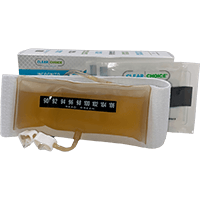
- The Design: It’s a kit with an adjustable belt, a bladder bag that holds the premixed urine, and a tube. You wear it under your clothes, against your body. This directly addresses the pat-down fear and the worry about a bottle making noise or being seen.
- The Temperature Mechanism: This is the key protocol. The belt uses your own body heat as a primary regulator, combined with two specialized heat pads. The idea is that by positioning the fluid against your skin, it naturally stabilizes within the required 90–100°F range. The included temperature strip lets you monitor it. This is a direct response to the anxiety of a sample cooling down during a long wait or a heat pad failing.
- The Formula: The premixed liquid is formulated to be biocide-free and contains the expected markers like urea, creatinine, and uric acid. It’s balanced for pH and specific gravity. The premixed nature eliminates preparation errors for a short-notice test.
The caveat, and I have to be the honest broker here, is that it requires planning. You can’t just slap it on cold and expect instant results. The manufacturer advises against microwaving the bag, so you rely on the pads and body heat, which needs a good 30–60 minutes to reach the target cutoff. In a very cold environment, that process slows down.
Quick Luck: Addressing Formula and Heating Precision
Quick Luck is built around a different set of variables: the fear of an outdated formula that fails modern validity checks, and the risk of faulty or slow heat pads.
- The Heating Innovation: Its standout feature is the heat activator powder. This is a packet of inorganic salts you add directly to the premixed urine. When used as directed, it creates an exothermic reaction that can bring the sample to the correct temperature in seconds. This directly answers the anxiety about a heat pad being a dud or not working fast enough in an emergency. You also get traditional adhesive heat pads for maintenance.
- The Formula Defense: The liquid is specifically designed to pass standard specimen validity testing (SVT) at major labs. It’s chemically aligned with human urine and is biocide-free to avoid triggering adulterant screens that look for certain preservatives. This addresses the fear that a lab will instantly spot an old or shoddy formula.
- The Practical Form: The flat bottle with a flip-up spout is designed for quiet, one-handed use in a restroom, tackling the fear of suspicious noises.
The important limitation here is with the heat activator powder. You must follow the instructions precisely. Adding too much can overheat the sample above 100°F, which is an automatic rejection. It’s also critical to remember that no synthetic urine product, including this one, is designed for a directly supervised test where someone is watching.
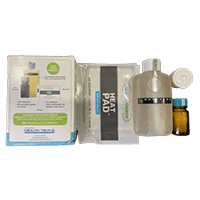
If you want to see the full specifications and kit contents for either of these engineered solutions, you can review the product details for the Clear Choice Incognito Belt and Quick Luck. Examining how they’re built can help you make a more informed decision based on the specific test protocol you’re facing.
Final Takeaways: Staying Ahead in the Evolving World of Drug Testing
The core message here is that detection isn’t a fixed wall you’re trying to climb over—it’s a moving target. The protocols and technology labs use are always evolving, which means your strategy has to be dynamic, not static. You can’t just know the rules of today; you have to anticipate where the procedure is headed tomorrow.
If you take away just a few things, let them be these: First, your sample’s temperature the moment you hand it over is the non-negotiable, number-one variable. Get that wrong, and nothing else matters. Second, the type of test you’re facing—especially if it’s a federal or DOT protocol—directly dictates your level of risk and the scrutiny applied. And third, because this is an arms race, any product you consider must be forward-looking, built to pass not just today’s standard checks but also the emerging ones.
This knowledge is your best tool. It replaces panic with a plan. Stay informed, understand the variables at play, and prepare accordingly. That’s how you navigate this process with confidence.
